See your story and tell it.

  • See your story and tell it.

    Tips to writing deeply and comfortably.

    Stretch – either standing or sitting in a chair. Do whatever whatever stretching feels good to you.

    Sit easily in a comfortable chair.

    Take a deep breath in through your nose, exhale out through your mouth, like you are blowing out a candle.

    Take several deep breaths and whoosh out on the exhalations.

    Relax into your chair.  Smile.  Escort your inner critic out the door.

    Shed your ideas about what perfect writing means.

    Give yourself permission to write the worst stuff possible.

    Writing isn’t about talent, it’s about practice and going into another dimension.

    Creative writing is an act of discovery.

    Take another deep breath. Relax into your breathing. Exhale with a satisfying sigh.

    Rather than write for an audience, write from an instinctual level.

    Immerse yourself in writing. Let go of your worries and write. Just write to a satisfying inner desire to go to a meaningful place.

    Go deeper into the recesses of your mind and really write.

    Write from the well that stores the fears. Let the tears come. Let the stomach tie up in knots.

    It’s okay to write the story that is difficult to tell.

    Get through the barriers to go to a deeper level.

    See your story and tell it.

    When you are writing, if you run out of things to say, write “I remember. . .” and see where that takes you.

    Or write, “What I really want to say . . .”

    You can use the prompts on this blog to jumpstart your writing.

    beach filled heart

    Photo by Jeff Cullen. Click here to see Jeff’s portfolio on fotolia.

  • In a perfect world . . . Prompt #56

    Prompt:  In a perfect world . . .

    Set timer for 12 minutes. Write.

    Post your writing here. Come on . . . share your writing with us.

    In a perfect world . . .

    IMG_1607


  • SmokeLong publishes flash fiction up to 1000 words

    SmokeLong Quarterly publishes flash fiction up to 1000 words.

    The SLQ aesthetic remains an ever-changing, ever-elusive set of principles, but it most likely has to do with these kinds of things:

    •  language that surprises
    • narratives that strive toward something other than a final punch line or twist
    • pieces that add up to something, oftentimes (but not necessarily always) meaning or emotional resonance
    • honest work that feels as if it has far more purpose than a writer wanting to write a story

    We have a special place in our hearts, more often than not, for narratives we haven’t seen before. For the more familiar stories—such as relationship break-ups, bar scenarios, terminal illnesses—we tend to need something original and urgent in the writer’s presentation.

    Click here for submission guidelines.

    Sonoma County author and writing teacher Stephanie Freele has been published in SLQ:   Breathing Oysters

    Have you, or someone you know, been published in Smokelong?  Let me know, and I’ll post on my Facebook Writing Page.

    Submit, so we can add your name to the list!

    Freele Stephanie Freele

  • Guest Blogger Nina Amir and writing goals

    The following is from Nina Amir’s Blog, Write Nonfiction Now. Nina posts writing prompts on Fridays.  I really enjoyed Prompt #10 and thought you might like it, too.

    Create Book Ideas to Support Your Goals: Nonfiction Writing Prompt #10 by Nina Amir.

    If you want to write and publish books, the first step involves developing ideas. You may be a nonfiction writer with just one book idea or with many. However, if you have nonfiction writing goals, your book ideas should support your goals.

    I have many book ideas. Despite the fact that some of them really excite me, I have put quite a few on hold. I have them queued up in a logical order, one following the other so they help move me toward my goals.

    Sometimes those goals could be simple, such as get a traditional publishing deal. That may not sound “simple,” but, for example, I put aside some projects of mine that were outside my area of expertise to pursue that goal. I used my expertise to accomplish it. With traditionally published books under my belt that have performed well—a track record—I can move into other categories more easily, should I want to pursue traditional publishing for my other ideas. I can also pursue self-publishing now more successfully.

    Your goals could be to:

    • Attract more clients
    • Make more money
    • Develop authority
    • Tell your story
    • Serve others
    • Teach
    • Build a business around a book
    • Get more freelance assignments
    • Become a professional speaker

    Whatever your goals, it’s time to develop book ideas that support them.

    Write down your top two or three nonfiction writing goals. For each goal, also write down one or two reasons why you want to achieve that goal.

    Next, brainstorm tentative titles or subjects for books that would support those goals. Come up with at least one, preferably two for each goal. Prioritize them based on which will help you achieve your goal fastest.

    If you come up with other nonfiction book ideas you’d like to write during this process, write them down as well, but put them away for later.

    How many ideas did you come up with? Tell Nina in a comment by clicking here.  Scroll down to the bottom for the comments section. 

    Note:  Nina’s original post includes a chart and examples. . . to view the complete post, click here.

    Nina’s newest book, The Author Training Manual is now available.  Be one of the first to own a copy of The Author Training Manual : Develop Marketable Ideas, Craft Books That Sell, Become the Author Publishers Want, and Self-Publish Effectively.

    Nina Amir, author of How to Blog a Book and The Author Training Manual, transforms writers into inspired, successful authors, authorpreneurs and blogpreneurs. Known as the Inspiration to Creation Coach, she moves her clients from ideas to finished books as well as to careers as authors by helping them combine their passion and purpose so they create products that positively and meaningfully impact the world. A sought-after author, book, blog-to-book, and results coach, some of Nina’s clients have sold 300,000+ copies of their books, landed deals with major publishing houses and created thriving businesses around their books. She writes four blogs, self-published 12 books and founded National Nonfiction Writing Month, aka the Write Nonfiction in November Challenge.  Nina will be the November 20, 2014 Writers Forum Presenter.

    Nina Amir

  • Find the truth of the scene — Actor Will Forte

    In an interview with The Costco Connection, Will Forte – an eight-year vet of Saturday Night Live – talks about his experience working with Bruce Dern in the movie “Nebraska.”  When asked what he learned from Bruce Dern, Will answered, “Bruce would always give me this advice: ‘Be in the moment. Just find the truth of the scene.’ I’m not a trained actor, so that just seemed like drama school hogwash, but the further we got into the  movie, it really made a lot of sense to me, and then I started thinking, maybe that’s what I’m supposed to do in comedy too. The truths might be very different, the levels of reality might be different, but you have to commit 100 percent either way.”

    Note from Marlene: I think this is true with writing also.  When “the truth of the scene” is conveyed, writing is strong and readers feel a visceral reaction.

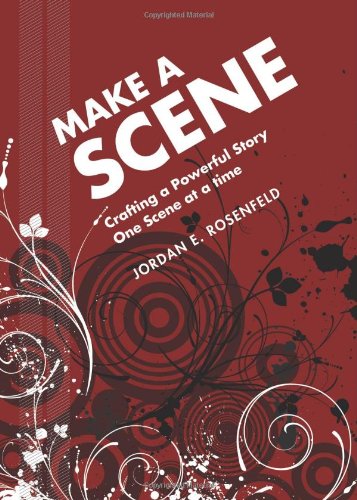
    Excellent resource book for writing good scenes:  Make A Scene by Jordan Rosenfeld.

    Make A Scene.Rosenfeld


  • In this photo . . . Prompt #55

    This is a two-part prompt.

    Part 1:  Get a photo of yourself.  We’ll wait.

    Toe tapping . . . humming.  Photo in hand?  If not . . . close your eyes for a moment and picture a photo of yourself.

    Write,  starting with:  “In this photo . . . ”

    Go! Now! Write before reading Part II.

    Wait. . . did you write on the prompt?

    If yes . . . proceed to the next part.  If not, take 10 or 15 minutes to write, “In this photo . . . ”

    We’ll wait for you to catch up.  Maybe we’ll hum a little tune. . . la. . . de. . . dum. . .

    Ready?

    Part II:

    Add three sentences after every sentence you have just written.  Start first additional sentence with “I felt” and then add two sentences after that.

    Example of adding three sentences to what you have already written.

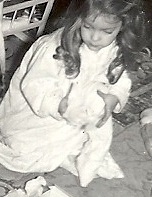
    Original Sentences:  In this photo, I’m opening a present. I’m four years old. It’s Christmas.

    Original sentence #1 plus three sentences:  In this photo, I’m opening a present. I felt happy. I loved being surrounded by my parents, grandparents, aunts and uncles. I’m excited to open this present.

    Original sentence #2 plus three sentences:  I’m four years old. I felt happy.  I am older than my sister. I liked playing with her.

    Original sentence #3 plus three sentences:  It’s Christmas. I felt content. I liked being in Nana’s living room. She made the nightgown and robe that I’m wearing in the photo.

    This is one way to go deeper in your writing.

    I first experienced this writing prompt with Adair Lara, at a writing class in her home, Summer 2009.  She teaches classes in her home. If you live in the San Francisco Bay Area and are interested, contact her. Click here for information about Adair Lara.

    scan0001


  • One pearl is better than a whole necklace of potatoes.

    Constance Hale launches Sin and Syntax, How To Write Wicked Good Prose with:

    “The French mime Étienne Decroux used to remind his students, ‘One pearl is better than a whole necklace of potatoes.’ What is true for that wordless art form applies equally to writing: well-crafted prose depends on the writer’s ability to distinguish between pearls and potatoes. Only some words are fit to be strung into a given sentence. Great writers are meticulous with their pearls, sifting through piles of them and stringing only perfect specimens upon the thread of syntax. The careful execution of beautiful, powerful prose through beautifully, powerful words is guided by my five principles.”

    Hale’s five principles:

    • Relish Every Word
    • Aim Deep, But Be Simple
    • Take Risks
    • Seek Beauty
    • Find The Right Pitch

    Peruse Sin and Syntax to discover the pearls of wisdom of these principles and how to distinguish between words that are pearls and words that are potatoes. Read a review of Sin and Syntax, How To Write Wicked Good Prose by clicking here.

    IMG_1451

  • Klutz or dazzling . . . Prompt #54

    Tell a story from your past that has something to do with being a klutz or a time you were dazzling.

    Green Thing

  • WriterAdvice seeks flash fiction, memoir, and . . .

    WriterAdvice seeks flash fiction, memoir, and creative non-fiction running 750 words or less. Enlighten, dazzle, and delight us. Finalists receive responses from all judges. First prize is $200. Submit to the 9th WriterAdvice Flash Prose Contest by April 18, 2014. Complete details at www.writeradvice.com

    advice

    Is Writer Advice’s Manuscript Consultation Service right for you?  Details here  Scroll down column.

  • Crafting scenes a reader can see—and sense by Constance Hale

    Crafting scenes a reader can see—and sense by Constance Hale

    Place looms large in all the work I do—whether in travel writing (when I’m trying to capture the essence of another country or culture), or in narrative journalism (when I often begin with a scene to draw my reader into the story), or even in Facebook status updates (when I try to sketch a place with a few poetic images).

    When crafting scenes, many writers make the mistake of loading up adjectives. But, as always, nouns and verbs do the best detail work. Take for example this description by the Indian writer Arundhati Roy, in The God of Small Things:

    May in Ayemenem is a hot, brooding month. The days are long and humid. The river shrinks and black crows gorge on bright mangoes in still, dustgreen trees. Red bananas ripen. Jackfruits burst. Dissolute bluebottles hum vacuously in the fruity air. Then they stun themselves against clear windowpanes and die, fatly baffled in the sun. The nights are clear, but suffused with sloth and sullen expectation.”

    Roy doesn’t shy from adjectives, but she starts out by grounding us in a specific time and place (May, Ayemenem). She fills the scene with concrete things (crows, mangoes, dustgreen trees, red bananas, jack- fruits, bluebottles), and she uses nouns to give us big ideas (sloth and expectation).

    William Finnegan relies on verbs in his 1992 New Yorker opus on surfing, “The Sporting Scene: Playing Doc’s Games.” He fills his entire story with sentences that use active verbs to make inanimate things animate, like this one:

    The waves seemed to be turning themselves inside out as they broke, and when they paused they spat out clouds of mist—air that had been trapped inside the truck-size tubes.

    These passages are taken from the all-new edition of Sin and Syntax, which also contains exercises and writing prompts.

    Laconic landscapes, and not so laconic ones

    In Bad Land, a book about the settling—and abandonment—of the Great Plains, Jonathan Raban uses extended metaphor to sketch a scene in Eastern Montana as he drives along in his car:

    A warm westerly blew over the prairie, making waves, and when I wound down the window I heard it growl in the dry grass like surf. For gulls, there were killdeer plovers, crying out their name as they wheeled and skidded on the wind. Keel-dee-a! Keel-dee-a!

    Raban recasts the plains as a seascape, with the wheat making waves, the wind growling like surf, and the killdeer plovers crying out like seagulls.

    To practice your own scene-writing muscles, try two of my favorite exercises. First, describe a vast and empty landscape—or a deserted street. Can you write about the scene so that it does not seem static or dead? Can you make it bristle with energy, even if human action is long gone?

    Second, situate yourself in a place that offers a symphony of sound. (A busy street corner? A screeching subway? A quiet courtyard in which each footstep registers?) Tune in to those sounds only. (Ignore the panhandlers, the change of the traffic lights, the people looking at you askance.) Find words that are onomatopoeic in some way, that suggest the sounds themselves. Write sentences whose rhythms evoke the sounds you are hearing

    The Raban passage and these writing prompts appear in Vex, Hex, Smash, Smooch, which is now out in paperback. If you’ve given these prompts a try and like what you wrote, please post your quick scene sketch in the comments section below. [After you register, posting can be done with a quick log-in.]

    Places that inspire

    For an opportunity to find inspiration in a scenic setting, and to be guided through exercises that will develop more of these muscles, join me at the Mokule’ia Writers Retreat from May 4-9, 2014. With the Waianae Mountains of O’ahu at your back and the blue ocean before you, learn from the masters, write in the shade of ironwoods, wander along the beach, salute the sun in morning yoga, and come to understand the essence of Hawaii through evening programs led by island composers, dancers, and musicians. The program includes daily workshops, private writing time, and one-on-one meetings with faculty. The theme, nā wahi ho‘oulu, acknowledges that a sacred spot like this will inspire us to explore other places— whether in the heart, in memory, or in the moment.

    If you live in the Bay Area, I’d like to invite you to the Petaluma Writers Forum on March 20, 2014. I will be appearing with my friend and travel-writing colleague Michael Shapiro, who has written a book titled A Sense of Place: Great Travel Writers Talk About Their Craft, Lives, and Inspiration. Needless to say, we’ll be digging into the craft of scene writing in our remarks.

    Finally, if you’d like more of this kind of thing, come visit my Web site, or sign up for my mailing list. (I also post on Facebook via the Constance Hale Scribe page.) I post regularly on how to straighten out your syntax, how to make your sentences sing, and how to survive and thrive in this sometimes difficult but always enriching writing life.

    CONSTANCE HALE is a fiend about the craft of writing and covers it at sinandsyntax.com. She also writes about style and language in her books: Vex, Hex, Smash, Smooch (the most recent), Sin and Syntax, and Wired Style. She has been an editor at the Oakland Tribune, San Francisco Examiner, Wired, and Health; her journalism has appeared everywhere from The New York Times and The Los Angeles Times to The Atlantic and Honolulu. She directed the narrative journalism program at the Nieman Foundation at Harvard and edits books, turning narratives about serious subjects into serious page-turners. She also runs writing retreats in Vermont and Hawaii.
    Hale, Constance