Wordrunner eChapbooks now accepting submissions.

  • Wordrunner eChapbooks now accepting submissions.

    Wordrunner eChapbooks: Small Fiction Collection

    Submissions for this fiction collection, to be published online in June 2014, will be accepted until May 31, 2014.

    Stories may be flash or longer, from 750 up to 4,000 words each, totaling a minimum of approximately 8,000 and a maximum of 18,000 words for the collection. We would like at least five stories, but no more than 20 (if flash fiction). They need not be linked, but it would be a plus if they belong together for some reason, be it theme, location or character/s. We will also consider novel excerpts for this echapbook. There is no fee to submit and authors receive token payment.

    Submit your best work only. Each story should be original and compelling. No genre fiction, please, unless a story is good enough to transcend genre. Click here for additional guidelines and submission link.

    Arlene Mandell.ScenesArlene Mandell‘s memoir Scenes From My Life on Hemlock Street  was first published by Wordrunner eChapbooks (December 2009) and  is now available in paperback and e-book in Turns: A Collection of Memoir Chapbooks from Telling Our Stories Press (June 2012). On Amazon or Smashwords.


    Jo-Anne Rosen

    Jo-Anne Rosen, Wordrunner eChapbook publisher,  prepares any sort of publication for print or electronic distribution. She provides pre-publishing services and a chapbook press for self-publishing authors, as well as website design, building and maintenance. For more information, visit www.wordrunner.com or contact Jo-Anne at publish@wordrunner.com.

  • Guest Blogger Hal Zina Bennett – Transforming Your Inner Critics

    Guest Blogger Hal Zina Bennett writes about our inner critics.

    Most of us writers are plagued by inner critics, those still small voices that speak from within, asking unsettling questions such as: “What makes you think you’re a writer?” Or, “This is drivel.” Or, the classic, “Don’t leave your day job.” Everyone has these inner critics, though some of us find their voices louder or more cutting than others. In their most insidious form, we feel these inner critics as our own self-judgments, not truths that we must accept. The author Storm Jameson put it well: “There is as much vanity in self-scourgings as in self-justification.” We write a few lines or pages that upon our review are “just terrible.” Instead of just rewriting or editing them, we point to them as evidence that we really can’t write.

    It’s difficult to accept that these inner critics, who stop us in our creative tracks, are within us; they may have originated through events that happened in our past but today exist only in our minds. To free yourself of these inner critics’ influences only when you own them, fully acknowledging that you yourself are creating them today. If you can own your inner critic, you have a choice — to cling to their judgments or not. Try to push them away and they only grow stronger, arguing like willful children or belittling parents. You can let them go, let go of your attachment to them. How? Start by making them characters in a story or in vignette you write in your journal. Describe them in detail, the more detail the better. Give the color of their eyes, the color of their hair, their body type, their voice, their stench.

    C. G. Jung encountered a form of inner critic in what he called the animus. His experience, reported in Memories, Dreams, Reflections, was that the animus, or inner critic, has its most powerful impact on our emotional life only when it remains unconscious and unnamed. As long as it is unconscious and unnamed, we experience it as inseparable from us. We can feel quite attached to their harsh criticisms.

    Jung found that by “personifying” them we essentially “strip them of their power.” They still exist in our psyches but are better able to take their harsh judgments with a grain of salt. As writers, we can even use them as seeds for characters in our stories.

    If you’re plagued by a particularly bothersome inner critic, recreate them as a character in a story. Satirize them, if you wish. The more you’re able to give them a reality on paper, the more you will be able to accept them as having a right to own opinions, their own distorted pictures of you. The more real they become on paper, the greater will be your choices about accepting or rejecting what they say about you. I’m convinced that some of the world’s most memorable villains were created in this way—and in the process their creation has defused their power as inner critics.

    Hal Zina Bennett is a bestselling author of more than 30 published books, including Write Starts: Prompts Quotes and Exercises to Jumpstart Your Creativity, from which this article was excerpted.

    Bennett.Write Starts

    Permission has been granted for use of the requested passage from the book Write Starts. Copyright © 2010 by Hal Zina Bennett. Reprinted with permission of New World Library, Novato, CA. www.newworldlibrary.com.

  • The temptation is to lie. . .

    If we become honest in our talking and dealing with people, if we go deep and tell the genuine truth, will that carry over to our writing? And will we then go deep and become authentic in our writing?

    The temptation is to not go where it hurts. The temptation is to lie in order to resist the painful truth.

    I recently read Pack Up the Moon by Rachael Herron and The Interestings by Meg Wolitzer. Both of these authors went deep in their writing and the resulting books are genuine, authentic and fabulous reads. . . where the characters and their problems deeply touched me.  Rachael and Meg did not resist writing about painful truths.

    How about you? Can you recommend books that deeply touched you?  What other authors go deep in their writing? I can think of Jodi Piccoult. Your turn.

    Sorensen

    Photo by Kent Sorensen

  • Something that gets you in trouble . . . Prompt #59

    Write about something that always get you, or your fictional character, in trouble.

    Breana.TigerPhoto by Breana Marie

  • You may have the da Vinci Disease . . .

    Have you heard of the da Vinci Disease?

    Here it is:  You have ideas of what to write about. But you never finish because you never start.  Or you start and can’t find a way to finish to your satisfaction.

    You may have a burning desire to write, but there’s never time or maybe you suffer from the da Vinci Disease.

    The following is excerpted from “The da Vinci Disease,” by Don Fry, March 2014 issue of the Writer Magazine.

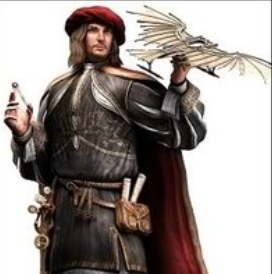
    Leonardo da Vinci never finished anything because he thought he couldn’t achieve perfection.  We all know writers, including ourselves, who can’t (or don’t) finish their work. The root cause is usually a da Vincian rage for perfection, which takes many forms.”

    Don Fry’s list of why we don’t finish our writing. Italics are Marlene’s comments.

    We don’t start. ‘Nuff said.

    Too much gathering.  Some writers keep gathering information but never start actually putting words on the screen. They want perfect information. Raising my hand here. Guilty!

    Faulty Organizing. Many writers never finish because they can’t organize their information into what they regard as a perfect structure.  This isn’t about organizing your desk nor files, rather what you want to write and how. Guilty. Again.

    Drafting, drafting and more drafting. Many writers never finish drafting because they try to write a perfect first sentence. Gulp. Is there a miniature Don Fry sitting on my desk watching me?

    Endless Revising. Many writers simply cannot let go of a piece until they believe it is perfect.

    Don, I hear ya and I admit to all of these. So, please excuse me. I’m on deadline to finish a short piece I’ve started, gathered, organized and drafted.  Time for that final edit and then.  . . tap the send key.

    To read more about The Da Vinci Disease by Don Fry, click here.

    Leonardo da Vinci


  • All Fools Day . . . Prompt #58

    The roots of All Fools Day date back to at least the 1500s as an occasion to perpetrate tomfoolery, possibly in reaction to spring’s mercurial weather. It’s observed on April 1 in many Western countries.

    In Italy, France, Belgium, and French-speaking areas of Switzerland and Canada, pranksters cry “April fish” as they tape paper fish to people’s backs.

    In 1957, the BBC pulled a prank, known as the Swiss Spaghetti Harvest prank, where they broadcast a fake film of Swiss farmers picking freshly-grown spaghetti. The BBC were later flooded with requests to purchase a spaghetti plant, forcing them to declare the film a prank on the news the next day.

    Source:  Wikipedia 

    Prompt:  Write about pranks you used to play on April Fool’s Day, a prank pulled on you, or make up a story about how April Fool’s Day started.

    Court Jester

  • Hippocampus Magazine wants your story about All Kinds of Weather

    Hippocampus Magazine enthusiastically accepts unsolicited submissions in the following categories:

    • memoir excerpt – a self-contained portion (chapter or selection) of a larger, book-length work
    • personal essay – a short narrative reflecting on a particular life experience or observation
    • flash creative nonfiction or a work of creative nonfiction in an experimental format

    Here is an article that discusses the difference between memoir and essay. And here is another.

    2014 Theme: Weather & Acts of Nature

    From storms and sprinkles to earthquakes and extreme heat, Mother Nature can pack a punch or paint a pretty picture. Weather can be wacky and wild. And weather can be calm.

    Weather often plays a character in our everyday—and not so everyday—lives. We’re seeking tales in which the weather or even a natural disaster played a significant or supporting role.

    To be clear, we’re not specifically looking for stories just about bad weather or destruction; instead, we seek any personal essay or memoir excerpt related to the weather in some way. Maybe you dated a meteorologist? Perhaps you were stuck at an airport for a day and made an unlikely friend… Maybe the sun came out at JUST the right time… Perhaps there’s a story behind your umbrella…

    Also of note: we’re not looking for essays/articles/opinion pieces solely about why climate change does or does not exist—Hippo is not the venue for that.

    We’re open to submissions for this issue now through April 30; submissions should adhere to our usual guidelines.

    We like quirky, we like edgy, we like witty, we like smart, we like to be moved, we like pieces that stick with us.

    Have fun! We look forward to your weather stories.

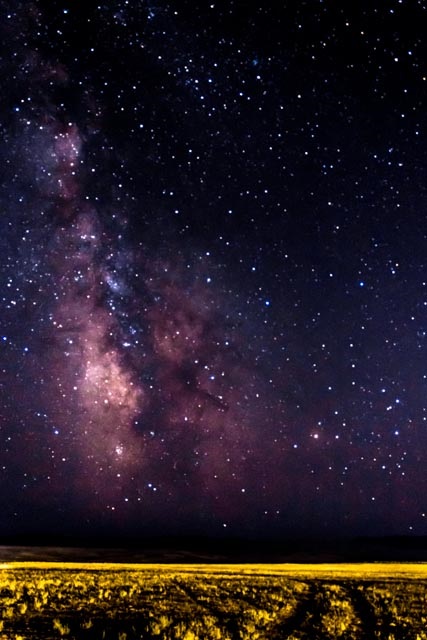
    Colby.Evening Sky

    Photo by Colby Drake. Colby Drake Design.  Check out Colby’s Facebook Page.

  • Guest Blogger Meredith Bond – create historical fantasy

    Guest Blogger Meredith Bond writes about creating beautiful history.

    I love history and reading about how people lived. And I love writing historical romance. But one doesn’t have anything to do with the other and rarely do I use very much of what I read in my novels. Historical novels—all, although romance is certainly the most guilty—takes history and makes it beautiful. That’s wonderful, except for one minor fact. History is not beautiful. Life before electricity and toilets was really not pretty or comfortable. And yet when was the last time you read a historical novel which actually made you aware of that?  Or mentioned it at all?

    There are, from time to time, mentions of some villains awful breath. But the scent of a hero or heroine is always something wonderful—flowers or leather. But is that accurate? Did people in the 18th century really smell that way. Highly unlikely. If they bathed, it wasn’t often.  In medieval England the monks of Westminster were required to bath four times a year. That’s it. And we’re not even certain they bathed that often. So, now how are people supposed to smell so nice? If they did so, it was due to the liberal use of perfume.  The next time you read that a hero smelled like “musk”, it was probably his own personal musk that the heroine is smelling because the guy hasn’t bathed for a while.

    Of course we all know that people in novels rarely use the toilet. Why? Because it was a disgusting experience. The wealthy might have a pot which would be cleaned out by some poor servant (sometimes by simply throwing the contents out the window – be careful how closely you walk next to a house). If there was an outhouse—well, you can imagine how lovely that smelled.

    And then there were the animals. Yes, horses which leave what wherever they’ve gone? And no, there was no one picking it up. There were also pigs, rats, goats and all manner of other animals living in cities, eating whatever waste lay about on the streets—and there was definitely enough of it to feed them well.

    So where is all of this lovely detail in historical novels? Nowhere. Are you surprised? No, I didn’t think so.

    And what of women? People who read romance novels love a feisty heroine. A woman who will stand up for herself. Who rides as well as the men. Or thinks nothing of engaging in some witty, sarcastic repartee with our hero. But did girls, especially unmarried young women, really behave so boldly? I don’t think so. Not if they wanted to get married. And if they didn’t get married they became nothing but a burden on their family. They had no other option.  Women were quiet. Submissive. Treated like children—who only spoke when spoken to. The brave young souls of the modern romance novel bears no resemblance to the actual women of time. It is a sad story, but true nonetheless.

    So enjoy your romance and other historical novels, but especially enjoy the fantasy that they create—that’s why it’s called “world building.”

    Meredith Bond is an award-winning author of a series of traditionally published Regency romances and indie-published paranormal romances. Known for her characters “who slip readily into one’s heart,” Meredith’s paranormal romances include Magic In The Storm, Storm on the Horizon, and the short story “In A Beginning.” Her traditional Regencies include The Merry Men Quartet of which An Exotic Heir and A Dandy In Disguise have recently been republished. Her new series of New Adult Medieval Fantasy Romances, will be coming out beginning March 18th, 2014 with Air: Merlin’s Chalice, followed by Water: Excalibur’s Return in April and Fire: Nimue’s Destiny in May. Meredith also teaches writing at her local community college. If you want a taste of her class in book form, Chapter One is available at your favorite e-retailer.

    Want to know more? Visit Meredith at her website, or chat with her on Facebook  or Twitter (@merrybond). If you’d like to be one of the first to know of Meredith’s new releases, join her no-spamming email list by clicking here.  

    Thanks so much!  Meredith.

    Meredith Bond book

  • Run your own race.

    In an interview in the February 2014 issue of The Writer magazine, interviewer Alicia Anstead asked Monica Wood, “One of the nuns who taught you as a child said explorers should have courage, goals, imagination and, finally, humility. Which of these is most important for a writer, and why?”

    Monica answered: “I have a sign in my studio:  Run your own race. Some other writer will always write lovelier books, reach more readers, make more money, win more awards. the writing trade – which is full, full, full of rejections and failure – is a lifelong lesson in humility, and we are wise to take that lesson into the other arenas of our life. Writing is engaging, gratifying and often profoundly discouraging and difficult. But not as discouraging and difficult as coal mining or warfare.”

    Monica Wood is the author of When We Were the Kennedys: A Memoir from Mexico, Maine, her story about growing up in the 1960s in a Catholic family in a mill town in northern New England.

    Wood_correctSmall

  • Watershed moment . . . Prompt #57

    This prompt is inspired by Ianthe Brautigan from her Writers Forum workshop.

    Draw a circle with radiating arms, ending in circles (see below).

    In the center circle, write a note about a watershed moment where nothing was the same after that: A pivotal moment.

    Write details on the radiating circles. Include as many circles as you want for details.

    Write into the questions  . . . how did this moment shape me? How did this affect the rest of my life?

    Use this prompt to spark a freewrite.

    When you are finished with freewriting on this prompt, if you keep a journal, use that for details to flesh out the story.

    water circles new