How do you handle rejection?

  • How do you handle rejection?

    First, don’t take rejection personally. When you submit your writing for inclusion in an anthology, magazine. . . to an editor, publisher, agent. . . and you receive a “no, thanks” letter, or worse, you never hear back . . . don’t take it personally.

    It may or may not be the quality of writing, but it’s definitely not a rejection of you personally.

    My Submission Philosophy

    You won’t receive rejection notices unless you submit your writing.

    And if you submit your writing . . . you will probably receive a rejection note, or two, or more.

    Welcome to The Club

    welcomeI wrote a story about pesky gophers around 2007. Shopped it around. Submitted to a little contest. Won second place. I was thrilled. But really, this was a miniscule contest. Probably two entries.

    So I shopped it some more. Got accepted. But the editor said since it was seasonal, I should submit the following spring (nine months away). I dutifully waited and re-submitted.

    “Alas,” she said (or maybe she didn’t. Maybe that’s the storyteller in me).

    “We can’t accept this since you don’t live in our geographical area.”

    Hmmm. . . She couldn’t tell me that with the original submission (and acceptance, I might add and will add).

    Submissions, semi-acceptances and rejections are quirky.

    Time went by. I sulked, got mad and stomped around a bit.

    A few years later, I was over my annoyance and once again submitted. This time my gopher story was accepted!

    “My Way With Gophers” will be published later this year in Redwood Writers 2014 Anthology.

    Moral of this story: If the writing is polished and perfected to your best ability — my gopher story was revised about 113 times and the title changed 67 times — go ahead and submit, because you never know. You might get lucky.

    And you might as well Just Write . . .  and Submit.  check mark.1

  • Which is more valuable, inspiration or discipline? Prompt #66

    Today’s prompt is inspired from Susan Bono’s July 15, 2005 Searchlights and Signal Flares, from Tiny Lights online, A Journal of Personal Narrative — an oldie and goodie I have saved all these years!

    To read what writers  Rebecca Lawton, Charlene Bunas, Jodi Hottel, Betty Winslow, Susan Winters and Susan Bono, have to say on this prompt, click here.

    tiny lights

    Prompt: Which is more valuable, inspiration or discipline?

  • Voices of Lincoln Poetry Contest

    Voices of Lincoln 10th Annual Poetry Contest has five categories:

    *Once Upon A Time

    *Ten Years From Now

    *It’s A Miracle

    *A Journey Worth Taking

    *People Are Funny

    You may submit a maximum of three poems, no more than one in each of three of the five contest categories.

    Everyone is encouraged to enter the contest. You do not have to live in Lincoln to be eligible.

    All poems must be received no later than Saturday, July 26, 2014.

    Mail entries (with the entry form) to:

    Voices of Lincoln Poetry Contest
    c/o Alan Lowe, Coordinator
    1235 Picket Fence Lane
    Lincoln, CA 95648

    If you need additional information or an entry form, please email or phone Alan Lowe at (916-408-1274). slolowe -at- icloud.com

    You can access Entry Form by clicking here.  Scroll down to entry form: highlight, copy, print just the entry form.

    Lincoln Poetry contest.1

    Good Luck!

  • Guest blogger Carol Cassara serves grammar on plates . . .

    . . . and offers prizes.

    This contest has ended. Thanks for everyone who participated.

    Excerpted from Carol’s January 16, 2014  Blog Post .

    Carol’s Grammar Plates

    I’m not a perfect grammarian but I do have most of the basics down. And so should anyone who calls him- or her–self a writer, or you lose credibility. For this complete blog post (where the plate photos are clearer), please go to Carol Cassara’s blog post, Grammar Served On A Plate.

    I’m not a perfect grammarian, but I do have most of the basics down. And so should anyone who calls him- or her–self a writer. – See more at: http://carolcassara.com/?s=grammar+on+a+plate#sthash.VHOqzU5K.dpuf
    I’m not a perfect grammarian, but I do have most of the basics down. And so should anyone who calls him- or her–self a writer. – See more at: http://carolcassara.com/?s=grammar+on+a+plate#sthash.VHOqzU5K.dpuf
    No one wants to use the word “me” any  more. I don’t know why that is – See more at: http://carolcassara.com/?s=grammar+on+a+plate#sthash.VHOqzU5K.dpuf
  • Sometimes writing badly leads to something better.

    Do you ever have writer’s block?

    Writer's Block

    Anna Quindlen was asked this question. She answers:

    Some days I fear writing dreadfully, but I do it anyway. I’ve discovered that sometimes writing badly can eventually lead to something better. Not writing at all leads to nothing. — April 20, 2014 Parade magazine.


    The Writer’s Block, 786 Ideas To Jump-Start Your Imagination by Jason Relulak.


  • Tell just one small story . . .Prompt #65

    If you could tell just one small story that would capture your mother’s character and keep her spirit alive into the future, what would it be? — Lynn Cook Henriksen, Writing The Mother Memoir

    Mother.child bw.1

    Variations on theme of The Mother Memoir: The Mother Figure

    Write the single story you could tell about the person who is your mother figure.

    Write one vignette about a woman in your life.


    Lynn Henriksen keeps spirits alive at Telltales Souls:

    “I’m always looking for good stories for TellTale Souls for Volume Two.” Click here for submission guidelines.

    Lynn will post your story on her blog. Email your story to Lynn Henriksen at:  lynn(at)telltalesouls.com.

    Prompt:  Tell just one small story about your mother or mother figure.

  • Live in the world of your imagination and take young readers with you.

    Want to write books for children or young adults?  Here are some ideas for you.

    Excerpted from “Child’s Play,” Yvonne Coppard and Linda Newberry, March 2014 issue of The Writer Magazine.

    An author must find his or her own voice and style and use them to express concerns that are passionately felt and imagined. Good writing for children has the same qualities as good writing for any age group: What stands out is authority, the confidence to be what it is. It tells the reader that the journey will be worthwhile. To write well, an author must have an ear for rhythm, control of pace and awareness of what drives a story and engages a reader.

    The author needs the knack of evoking universal experiences from the particular, inviting the reader to share the trials and triumphs of the viewpoint character. There are no right ways to do this, and no wrong ways, either. What it takes is the commitment to live in the world of your imagination and the skill and persuasiveness to take young readers with you.

    Click here for information about: Writing Children’s Fiction: A Writers’ and Artists’ Companion (Writers’ and Artists’ Companions) by Yvonne Coppard and Linda Newberry

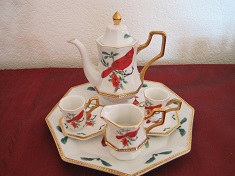
    child's tea setFor practice with this kind of writing: Write about a game you played as a child – Prompt #32, or An imaginary gift – Prompt #35 or an imaginary party – Prompt #64.

    Set your time for 12 minutes. Now, write. Just write.

  • Imagine you are invited. . . Prompt #64

    You're invited 2.2

    Imagine. . . . You receive an invitation to a party.

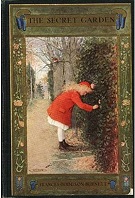
    The Secret Garden Book.1

    You are invited to dress as a character according to the book you are currently writing or reading.

    OR, you are invited to the type of party you’ve always wanted to be invited to . . .1950s cocktail? 1880’s garden party? Costume party? Bon voyage party? 


    Garden Party

    Options:

    ~Write about the invitation you received.

    ~Your thoughts, or your fictional character’s thoughts, as you or he/she anticipate the party. You're invited 1.1

    ~Write about a party you have attended.

    ~Write about a party you would like to give or attend.

    Invite.1

    Prompt: Imagine you are invited to a party . . .

    Invite.2

  • 3Elements Review seeks submissions using three specific elements . . .

    3Elements Review was founded to spark imagination, to provide a unique creative challenge, and to allow writers and artists a bit of fun with our three element prompts.

    We aim to distinguish ourselves from the typical literary journal through our unique approach to the creative process. Each issue begins with the posting of three elements and ends with a journal filled with the imaginative ways in which each writer and artist transformed those elements. We provide both emerging and established writers and artists a platform to share their unique voices and visions with the world.

    CURRENT THREE ELEMENTS: Carnival, Residue, Maudlin

    Submissions due by June 1, 2014, September 1, December 1 and March 1

    Click here for 3Elements Review submission guidelines.

    Brief Submission Guidelines for 3Elements Review:

    We appreciate good writing in any genre. We especially like edgy writing that offers insight into darkness. We prefer character-driven stories as opposed to plot-driven ones.  We relish a piece with a great deal of heart and more than a little bit of Truth (note the capital “T”).

    We want to read a story that makes us feel edified or philosophical or amused or creeped out or angry or melancholy or inspired or, best yet, all of these things together. We want to read a story we simply can’t put down.

     3Elements Review is a themed literary journal, hence the three elements, and All THREE elements  given for the submission period must be included in your story or poem for your work to be considered for publication in 3Elements Review;  NO EXCEPTIONS WHATSOEVER.

    You can craft any story or poem that you would like, but keep in mind, the three given elements for the submission period become part of your story or poem and it is up to you, the writer, to expand upon those elements and breathe life into your piece. Please keep in mind, your story or poem doesn’t have to be about the three elements or even revolve around them; your story or poem can be about whatever you choose it to be.

    eArtwork and photography: If you decide to submit any artwork and/or photography, we only require that you capture or depict the essence of one element, however, creating something that represents all three elements will really impress us. In addition, when you submit artwork or photography, please describe your process and tell us what medium you used. Also, please give a brief explanation as to how you feel your artwork or photography represents the element(s), as this will accompany your piece should we choose to publish it.


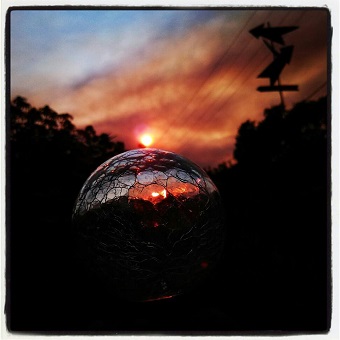
    “Smokey Sunset”       Photo by Laura Plunk Davis

  • Guest blogger Nina Amir brainstorms how to go from idea to book.

    The following is from Nina Amir’s Blog, Write Nonfiction Now. Nina posts writing prompts on Fridays.  I really enjoyed Nina’s Prompt #10 and thought you might like it, too.  These ideas can also work for fiction writing.

    Create Book Ideas to Support Your Goals: Nonfiction Writing Prompt #10 by Nina Amir.

    Nina writes:

    If you want to write and publish books, the first step involves developing ideas. You may be a nonfiction writer with just one book idea or with many. However, if you have nonfiction writing goals, your book ideas should support your goals.

    I have many book ideas. Despite the fact that some of them really excite me, I have put quite a few on hold. I have them queued up in a logical order, one following the other so they help move me toward my goals.

    Sometimes those goals could be simple, such as get a traditional publishing deal. That may not sound “simple,” but, for example, I put aside some projects of mine that were outside my area of expertise to pursue that goal. I used my expertise to accomplish it. With traditionally published books under my belt that have performed well—a track record—I can move into other categories more easily, should I want to pursue traditional publishing for my other ideas. I can also pursue self-publishing now more successfully.

    Your goals could be to:

    • Attract more clients
    • Make more money
    • Develop authority
    • Tell my story
    • Serve others
    • Teach
    • Build a business around a book
    • Get more freelance assignments
    • Become a professional speaker

    Whatever your goals, it’s time to develop book ideas that support them.

    Write down your top two or three nonfiction writing goals. For each goal, also write down one or two reasons why you want to achieve that goal. Here’s an example of what that might look like:

    what are your writing goals

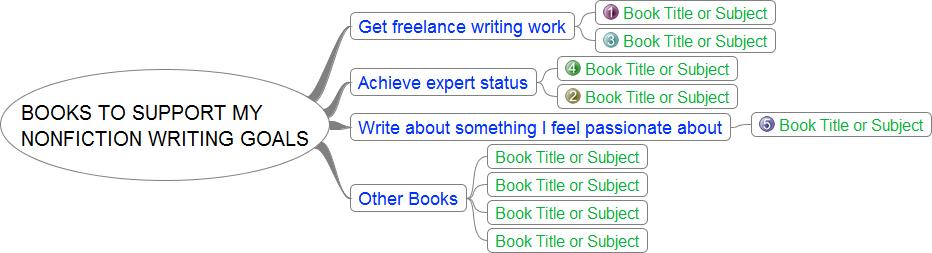
    Next, brainstorm tentative titles or subjects for books that would support those goals. Come up with at least one, preferably two for each goal. Prioritize them based on which will help you achieve your goal fastest. Here’s an example (without actual titles or subjects):Books for NF Writing GoalsIf you come up with other nonfiction book ideas you’d like to write during this process, write them down as well, but put them away for later. That’s what the “Other Books” category is for.  

    Nina’s newest book, The Author Training Manual is now available.  Be one of the first to own a copy of The Author Training Manual : Develop Marketable Ideas, Craft Books That Sell, Become the Author Publishers Want, and Self-Publish Effectively.

    Nina Amir Nina Amir, author of How to Blog a Book and The Author Training Manual, transforms writers into inspired, successful authors, authorpreneurs and blogpreneurs. Known as the Inspiration to Creation Coach, she moves her clients from ideas to finished books as well as to careers as authors by helping them combine their passion and purpose so they create products that positively and meaningfully impact the world. A sought-after author, book, blog-to-book, and results coach, some of Nina’s clients have sold 300,000+ copies of their books, landed deals with major publishing houses and created thriving businesses around their books. She writes four blogs, self-published 12 books and founded National Nonfiction Writing Month, aka the Write Nonfiction in November Challenge.