
Write about a kindness someone showed you.
Or write about a kind thing you did for someone.
Or a kindness you saw.
Write about a kindness someone showed you.
Or write about a kind thing you did for someone.
Or a kindness you saw.
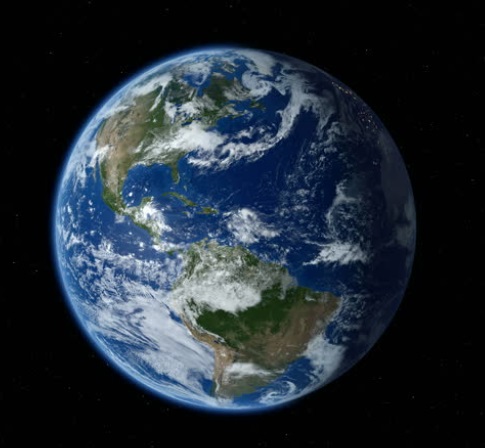
If you could give the world one message, what would it be?
Inspired from Rachel Macy Stafford’s guest blog post.

I recently started following Rachel Macy Stafford’s blog, “Hands Free Mama.”
If you are looking for wise words about life, I recommend “Hands Free Mama.”
An excerpt from Rachel’s February 29 blog post:
I can’t quite forget the publisher’s words: “We love the concept of the book, but the title needs work.”
The title that encompassed the message of hope contained inside the book was rejected. Rejected. It is a harsh word, but it is the truth.
Suddenly, it comes to me; I will take the most powerful word of my rejected three-word title and I will write it on every blank slate in front of me.
Through tears of determination, I see a pattern:
Write your fears on green notes.
Write your triumphs on pink slips.
Write your rejections on blank slates.
Put the notes in a jar.

The question I asked young people at the end of my classroom talk as I passed out blank index cards:
If you could give the world one message, what would it be?
I wasn’t expecting all the kids to participate, but they did.
It was as if they were just waiting for someone to ask.
“We are all just waiting for someone to notice—notice our pain… notice our fears… notice our hopes… notice our dreams . . .”
And when we see what is written, we see ourselves in a new, accepting, comforting light.
Thank God, we’re a mess, because that is what connects us and catapults us, so we can carry on.
Inspiration for Rachel’s book, Live Love Now:
The index cards I collected over the years were the inspiration for my forthcoming book LIVE LOVE NOW. I put them into categories based on the students’ fears, worries, needs, hopes, and dreams. Those became my chapters, and they contain universal stressors we are all experiencing living in our modern world . . . but there is hope. I felt that hope so strongly while sitting in a tiny recording booth creating the audio for this book. The producer spoke encouragingly into my headset indicating that ALL of me was welcome to show up to deliver this critical message. He said things like . . . “beautiful emotion, keep going” . . . “you’ve drawn me in, Rachel” . . . “your waters run deep” . . . “this is going to be an incredibly rewarding experience for the listener.”
I have never been so excited to share something I’ve created with you.
Note from Marlene: Please scroll down for Rachel’s Special Offer.
Rachel Macy Stafford, Author of Hands Free Mama Writes:
Hello. I’m Rachel. To know me is to know my personal list of what really matters . . .
*My daughters matter. My older daughter is 13. She is my brown-eyed girl with an enormous heart. I learned what matters in life by watching her walk right up to the suffering and extend her hand. “Because when you have the important things in life—like love, faith, and family—there is nothing you own that you can’t give away.”
* My younger daughter is 10. She is my Noticer. She remembers where I parked the car and often leads me by the hand to the right spot. She notices friends’ new hairstyles and gorgeous sunsets before anyone else. She looks for the child struggling to sharpen his pencil or the one who’s off in the corner alone. She hops right up to offer her assistance. That’s probably what I love most about her noticing gift—she doesn’t just notice things, she notices emotion. Her way of life inspired these words: “We are all just waiting for someone to notice—notice our pain, notice our scars, notice our fear, notice our joy, notice our triumphs, notice our courage. And the one who notices is a rare and beautiful gift.
*My husband matters. He provides me with the grace and love that I freely give others, but often neglect to give myself. His love constantly reminds me of the beauty inside me. I am certain that his love has added an extra ten years to my life.
*Writing matters. My second-grade teacher, Ms. Paluska, led me into the world of writing and it has been home to me ever since. Writing for others is my joy.
*Teaching matters. Before I was a mom, I was a teacher to special education students. I can still remember all their names and wish I could see how each one turned out. I love sharing information in creative and inspiring ways to those who want to receive it.
*Encouraging others matters, probably because so many people have encouraged me in my life. I remember the name of every person who encouraged me to publish my works so that as many people as possible could read my words.
*Recognizing angels matters. I strive to notice the angels that come into my life when I need them, and then later telling them about it. Every single day, I want to be somebody’s angel.
*Faith matters. I have faith that there is plan for my life. In this case, I believe that God chose me to have a revelation about how I want to spend my days here on this earth. And it is because of my faith that I understand why God chose me. I was chosen to tell this story because of what really matters to me. Being a mother, a wife, a writer, a teacher, and an encourager has prepared me to show others how to let go of their own daily distractions and grasp what really matters. Maybe through this blog, I can even become somebody’s angel.
Which brings me to my last and most recent item that really matters to me . . .
Rachel’s book LIVE LOVE NOW:
When you pre-order 2 books, it qualifies you for Rachel’s LIVE LOVE NOW 21-Day Self Care Audio Series.
If you have pre-ordered a print copy and decide you want the audio book or a signed copy, you can redeem all of your pre-order bonuses and start listening to her self-care audio series today.
Click here to pre-order from your choice of retailers & and/or redeem your gifts. LIVE LOVE NOW comes into the world in early April, 2020.
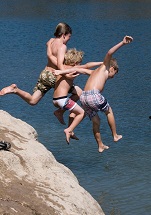
Write about something new you tried recently.
Did you love it?
Did you hate it?’
Spill the details!

Spillway magazine is an annual publication of poetry, reviews, and articles. Published each summer, Spillway presents emerging and established poets of regional, national, and international interest.

How to get to an epiphany in writing.
One way to discover an epiphany:
Start with: The problem began with wanting something.
I wanted . . .
I wanted it because (back story) . . .
To get it, I . . . (action)
However, something got in my way: (there may be several actions/reactions/sequences that got in the way) . . .
I had to try something different, so I . . .
At the time I was thinking that . . .
The turning point came when . . .
When that happened, I realized . . .
Resolution: After that I . . .
Another way to get to an epiphany:
Write about a pivotal event in your life. Something happened and you weren’t the same after. Narrow it down to the exact moment and location where it took place. It could be something wonderful or something painful. It could be funny, sad, heartbreaking or touching. Ideally, it’s a moment that changed your life. It changed how you live your life, how you view life.
If it comes
from your childhood. . . how has it formed you as an adult?
If it happened after you became an adult, how has it changed your life?
To get to the epiphany, drill down to the fine-tuning details of what happened that changed you. Be specific: Where, when, who was there, add any details you can remember.
Inspired by Adair Lara writing workshops.
You can also use this template to flesh out your fictional characters.
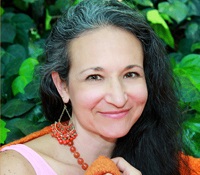
Guest Blogger Bella Mahaya Carter writes about:
A Cure for Writer’s Block: Write without “Writing”
Many of my students and clients tell me that they have a hard time finding the time to write. This is totally understandable. Our lives are busy. We have obligations and commitments we must fulfill, or face tangible consequences.
Writing is not like this. Nobody knows or cares if we don’t write.
But people who have the urge (calling) to write and don’t act on it often experience dissatisfaction, even angst. They feel like they have an itch they can’t scratch. Part of the problem—what keeps people from sitting down to write—is their own imagination. They’ve made up stories about what “writing” is supposed to look like. They assume they need to carve out huge chunks of time. They believe that they have to feel energized or inspired. They might envision their writing hurting people they love. They may worry they lack talent. They’re convinced they have to know what they want to say, despite the fact that writers often have no idea what’s on their minds until they’ve written.
Drop Your Limiting Stories and Write Where You Are
When you realize that these inner voices are keeping you from doing what you say you want to do—write—you get to show up exactly as you are. This means you accept yourself and your circumstances, and instead of feeling like you have to stretch into some impossible, imagined version of yourself as a writer, you take “writing” off its pedestal, cradle it in both hands, and invite it into your crowded, messy, busy life.
Ask yourself these questions: How can I make writing fit within the real world that is my life? How can I create just a little bit of space to write? Can I sit down and scribble in a journal for twenty or thirty minutes once or twice a week? How about fifteen minutes once a week? Start small.
Some people don’t think this qualifies as writing, but experienced writers know better. Small efforts taken over time become large. Minutes become hours, so have at it: dump thoughts out of your head and onto the page. Romp around. Have fun. Take your shoes off. Strip naked. No one’s watching and there aren’t any rules. Until you start to take this process seriously, at which point you might want to hit the pause button
Writing Is Not Heavy
Author Jack Canfield tells a story about his spiritual teacher pointing to a boulder in the woods and asking, “Is that heavy?” Jack replied that of course it was, to which his teacher said, “It’s only heavy if you pick it up.” Trick question? Maybe, but it serves as a lesson for writers: Don’t pick up and carry heavy thoughts that prevent you from writing.
If you show up for yourself in this way—even once a week—you’ll be writing without “writing,” and effortlessly developing a practice. I advise people to work by hand at this stage, which ignites the heart-hand connection. Intimacy flourishes when we bring pen to paper. Author Natalie Goldberg says, “Just because you can drive a car doesn’t mean you should stop walking.” Take one step at a time. Feel your way.
Type and Edit Your Work
Once you’ve developed a “writing without ‘writing’” practice, you may want to expand that by devoting a small amount of time each week to typing up what you’ve scribbled, editing as you go. When you feel like you’ve shot your creative load with any given piece, set it aside. When you allow time to pass and come back to your work, you see it with fresh eyes. Edit some more. You’ve no doubt heard the expression “writing is rewriting.”
Create Lists
Keep lists of (a) journal entries that feel relevant or alive in some way that you’d like to develop, (b) typed and edited pieces in process, and (c) places to send your work when it’s ready.
To recap, you’re basically just showing up a couple times a week to scribble and play in your journal, and also devoting one hour a week to typing, editing, and developing ideas that surfaced during your playtime scribble session. With these two practices in place you are “writing without writing.” But really, you’re writing! Congratulations! Keep going.
My dad used to say, “If you love your work, you’ll never work a day in your life.” I’d like to add: If you don’t think of what you do as “Writing” with a capital “W,” if you shift your thinking about what it means to write and be a writer, and allow yourself to have a good, long scribble, rant, or rave, free from ego demands or expectations, you will be living the “writing without ‘writing’ life”—and loving it!
Note from Marlene:
The Write Spot Blog as over 475 writing prompts to spark your writing and places to submit your writing. Good Luck!
Bella Mahaya Carter is an author, creative writing teacher, and empowerment coach, who helps writers (and others) experience greater freedom, joy, and peace of mind.
She believes in the power of writing to heal and transform lives, and views publishing as an opportunity to deepen self-awareness, nourish meaningful connections, and delight in peak experiences while being of service.
Bella has been teaching and coaching for over a decade. Bella coaches authors one-on-one who are ready to take a deep-dive into their writing, or need help with a book proposal, or are navigating publishing decisions, book launches, promotional activities, and more.
Her memoir, “Raw: My Journey From Anxiety to Joy” won a silver medal in the Mind, Body, Spirit category at the Benjamin Franklin Book Awards, sponsored by the Independent Book Publishers Association. Aspire Magazine selected Raw for its “Top Ten Inspirational Books” for June 2018, and Independent Publisher called it an “Indie groundbreaking book.”
Note from Marlene: I highly recommend this book.
Since the publication of her memoir, Bella has become an Anxiety-to-Joy coach. Readers reached out to her for help and she couldn’t turn them away.
“This work has chosen me and it’s powerful. I’ve gone from being a person paralyzed by an anxiety disorder—afraid to leave my house—to someone who teaches others how to holistically heal anxiety! I never planned this; life unfolds in mysterious ways, and I’m both honored and grateful to be of service in this way.”
Bella’s Blog explores intersections between the writing life, spirituality, and personal transformation and growth. She writes about how to stay sane and joyful as a writer, from inspiration to publication, and beyond. She is concerned with the whole-person—body, mind, and spirit. Her posts include information about self-care, nourishment, mental health (especially anxiety), and more. She is a healer.
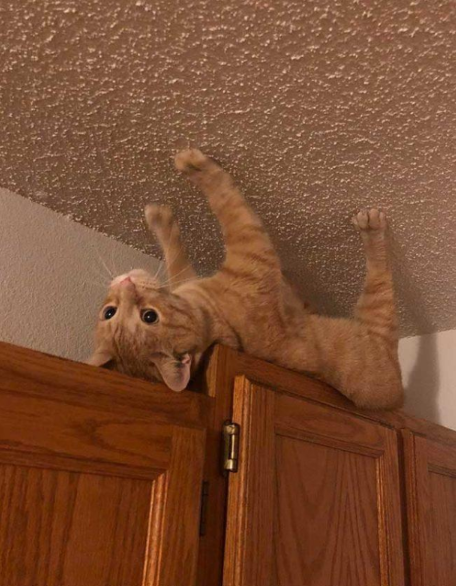
You can’t get away with it.
Or, can you?
Write about something you or someone else got away with . . . or didn’t get away with.

Use a published memoir as a textbook to write your memoir.
Read the memoir. Read it again to examine structure.
Notice where author used narration vs. dialogue to tell the story. Notice the balance between fast-paced action scenes and slower, contemplative scenes. Note when and how backstory is used.
Let’s use Angela’s Ashes by Frank McCourt as our textbook.
McCourt’s ability to write as if experiencing events as they unfold, pacing, and his strong writing voice made Angela’s Ashes a New York Times beloved best seller.
Angela’s Ashes takes the reader on an emotional journey. There is so much vulnerability in this book. McCourt reaches into our compassionate hearts as he tells his story, moving from childhood to adulthood.
He weaves details into a story, similar to the Glass Castle by Jeannette Walls.
McCourt taps into universal messages and themes.
Understanding your theme will help to write your memoir.
Possible themes:
Being different
Poverty
Religion
Coming of age
Alcohol/drug use
Death
Despair
Dignity
Disease
Ethnicity
Feeling helpless
Not fitting in
Technique
McCourt uses a variety of techniques to create intimacy in his themed books of children in poverty in Ireland. He changes his writing voice and tone to match his age progression.
He employs rhythm and repetition, keeping the thread of the theme/plot running throughout the book.
He “shows” situations so that readers understand what is going on. There is a lot that doesn’t get said. For example, when Frank’s sibling dies, and when a friend’s sister dies, there are no death scenes. Rather, there is action and dialogue seen through the lens of children. This is one method of avoiding too much tragedy: Keep it fast paced and use humor where you can. No woe is me, no pity-parties.
When writing about unsavory characters, use compassion and find redemption.
These ideas are based on a webinar by Linda Jo Myers and Brooke Warner, intertwined with my thoughts and observations.
Another example of going deep in writing and willing to be vulnerable about a difficult subject is “Meeting My Father,” which I wrote and published in The Write Spot: Memories. I have written in my journal about my father for over thirty years. After a series of fortunate experiences, I had the epiphany that he was more than a Third Street bum and more than just a sperm donor. I was able to give him the loving tribute I felt he deserved, even though I do not have one good memory of him.
More thoughts about writing memoir:
Write Memoir in Voice of Narrator
