Ekphrastic Writing . . . Prompt #477

  • Ekphrastic Writing . . . Prompt #477

    Today’s writing prompt is inspired by Jumpstart Writing Facilitator Lakin Khan.

    From Lakin:

    Participants in the Jumpstart Writing Workshops that I facilitate have been doing some ekphrastic writing, which is descriptive writing about or a response to visual art.

    We have been having fun looking at paintings and photos, imaging stories and practicing writing visual descriptions.

    Lakin’s response to a postcard of Claude Monet’s painting “Wheat Stacks at Dawn.”

    “Frost is the frosting on these giant cupcakes of hay waiting in the pale pearly peachlight of dawn for the Giant of Alsace to stomp down the hill for his morning meal. At least so far, he’s been happy with hay. What might happen if he decides to go all keto on us and demand ostrich-eggs over easy and a side of humans to start his day?”   ~ Lakin Khan


    Another example is Anne Sexton’s poem “Starry Night” one of many ekphrastic responses to the painting of the same name by Vincent Van Gogh.

    Perhaps you remember Don McLean’s song, “Starry Starry Night” — another example of an artist in one medium responding to an artist from another.

    I hope you find a chance to write ekphrastically, locating an image that sparks your imagination or elicits a response.

    Or take a chance with random postcards or images in a magazine or museum brochure.

    Or even better, treat yourself to a trip to an art museum and spend some time writing there.

    Originally posted on January 29, 2020 by Lakin Khan on her blog, Rhymes With Bacon.

    Lakin Khan facilitates Jumpsart Writing Workshops in Sonoma and Marin Counties.

  • Belinda Pollard: Personal Stories Enhance Your Writing

    Inspiration from Belinda Pollard on how to use memoir writing in any of your writing.

    Excerpt from “Putting Your Self Into Your Writing, Exercise 1,” by Belinda:

    Memoir is a popular genre these days, as people tell their personal stories and inspire others to overcome obstacles, cope with life, or laugh at someone’s funny antics.

    But personal stories go much further than memoir. They are great additions to many types of non-fiction, especially self-help. They are wonderful in travel narratives. How-to can also become more engaging and effective if you tell about your own ups and downs as you learned a particular skill.

    And your fiction writing can improve as you learn to tell your personal stories well.

    I’ve edited biographies and memoirs, and other types of books that use personal story. One of the elements that work really well is when the author finds a way to give readers the gift of experiencing the events in a rich and personal way.

    But how do they do this? And more importantly, how can YOU do it in your personal stories?

    Exercise 1: Time Travel

    This is one simple exercise to help you access the wonderful stories that live and breathe inside of you, and get them out of you and onto a page.

    1. Set aside 15 minutes when you won’t be interrupted. Keep the expectations reasonable and you’re more likely to do it! Plus, it can sometimes be quite draining, so keeping it short is wise.

    2. Settle in a safe and comfortable place, where you can be relaxed. It can be indoors or outdoors. You can be alone or there may be other people around, such as at a library, but it’s usually best if it’s quiet. Do whatever is comfortable and easy for you.

    3. Choose one story you would like to tell.  It might be related to the book you’re writing, or it could be a story you have chosen for this exercise. It might be from many years ago, or yesterday. If you have trouble choosing, just begin the exercise and get started, and a story will probably come into your mind. (If it doesn’t, don’t stress. Just try again another day.)

    4. For 5 minutes, close your eyes and imagine you are back in “that place” and “that time.”

    Let the “movie” of that event play in your mind.

    What happened? What can you see? Hear? Smell? Touch? Taste?

    How do you feel? What are the reactions in your body that occur as you experience these different emotions?

    How are other people interacting with you? Think about their voices and facial expressions, their dress and manner.

    How are places or buildings or vehicles or animals or weather contributing to what’s happening?

    5. Now, open your eyes and write for 10 minutes. Write fast. Don’t edit. Don’t question yourself.

    Don’t try to be neat if you’re writing by hand, or accurate if you’re typing.

    Ignore grammar, spelling and punctuation, just let the words flow!

    Write only for 10 minutes. Keeping the time limited makes it more likely you’ll do this exercise again!

    6. Later, take the piece you have written and examine it. The goal is to help you get in touch with the elements of writing that can help make a “scene” in your book come alive.

    Don’t be critical of your writing! It’s your story. Be glad you have that story inside you.

    Link to the entire article, “Putting your Self into your writing, Exercise 1,” by Belinda Pollard and her follow-up article, Exercise Two of Putting Your SELF into your writing.

    About Belinda Pollard:

    “I help people change the world, one word at a time.”

    • I’m a world traveller based in beautiful, sub-tropical Brisbane, Australia.
    • I began as a journalist, became a specialist book editor in the mid-90s, and a freelance publishing consultant in the early 2000s.
    • coach writers who are working out how to get their book together, and make it sing.
    • I’m also a speaker and love presenting practical workshops for writers, and inspirational speeches for readers.

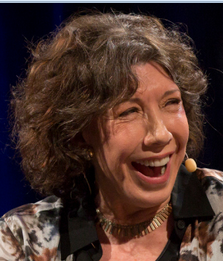
  • Laugh Every Time. Prompt #476

    Write about something that makes you laugh every time.

    Or write about someone who makes you laugh.

  • Writing Makes Chaos Bearable

    “Stories are how we make sense of our lives, how we attempt to impose some discernable order on the chaos of existence, and such attempts make the chaos bearable.” — Bret Anthony Johnston, “Narrative Calisthenics,” Poets & Writers, Nov/Dec 2008

  • Writing Exercises Are Like Foyers

    “. . . writing exercises . . . are the way architects think of foyers: They usher an individual from one world to another. I use them as a means of transitioning from the outside word of reality to the interior word of imagination and language. . .” — Bret Anthony Johnston, “Narrative Calisthenics,” Poets & Writers, Nov/Dec 2008

  • New Letters

    New Letters magazine works to discover and publish the finest new writing, wherever it exists. That mission implies encouragement of writers just starting or those who deserve wider readership. By placing the emphasis on excellence, we best promote the cause of the literary arts and affirm their transforming qualities. Editorial decisions arise from three core questions: Is the writing intense; does it advance literary art; does it offer hope?

    New Letters’ Literary Awards for Writers, established in 1986, offers a total of $8,250 in prizes annually. The Awards program discovers and rewards new writers and encourages more established writers to try new genres or new work in competition. In recent years, New Letters has won a National Magazine Award, the magazine industry’s highest honor, received multiple Pushcart Prizes, often in a given year, and places selections often in The Best American Poetry, Essays, and other prize anthologies.


    “New Letters will continue to seek the best new writing, whether from established writers or those ready and waiting to be discovered. In addition, it will support those writers, readers and listeners who want to experience the joy of writing that can both surprise and inspire us all.”

    Submission Guidelines.

  • Movie Magic . . . Prompt #474

    ~ “Men like my father cannot die. They are with me still, real in memory as they were in flesh, loving and beloved forever.” How Green Was My Valley. Write about someone who lives on in you or someone you will never forget.

    ~ “We’ll always have Paris.” Casablanca. Write about something you will always have or something you no longer have and wish you still had it.

    ~ “I was to think of these days many times. Of Jem, and Dill . . . and Atticus. He would be in Jem’s room all night, and he would be there when Jem waked up in the morning, To Kill A Mockingbird. Write about someone who is always there for you. Or someone who needs you.

    ~ In Butch Cassidy and the Sundance Kid, there’s a scene where Butch and Sundance run up a mountain to avoid the relentless posse, finding themselves at a dead end. Butch says the only way is to jump, a hundred feet or so to the fast-moving stream below. But Sundance won’t hear of it.

    Butch: “It’s the only way. Otherwise we’re dead.” They argue about it for a while until Sundance admits the real reason he doesn’t want to jump. “I can’t swim.”

    Butch: “You stupid fool, the fall’ll probably kill you.”

    Write about a time you had a close call or a chance you took.

    ~  Gene Wilder agreed to play Willy Wonka under one condition: that his character make a wildly grand entrance:

    “When I make my first entrance, I’d like to come out of the door carrying a cane and then walk toward the crowd with a limp. After the crowd sees Wonka, they whisper and then become deathly quiet. As I walk toward them, my cane sinks into one of the cobblestones I’m walking on and stands straight up, by itself. But I keep on walking, until I realize that I no longer have my cane. I start to fall forward, and just before I hit the ground, I do a beautiful forward somersault and bounce back up, to great applause.”

    His reason for wanting to include the dramatic entrance: “Because from that time on, no one will know if I’m lying or telling the truth.”

    Write about an agreement you made or a lie you told.

  • Listen To Your Heart

    Today’s guest blogger, Nancy Julien Kopp, has been published in Chicken Soup for the Soul books 22 times! Her story:

    A good many years ago, I submitted to a Chicken Soup for the Soul  book for the first time. The story was a simple one, a childhood memory, that I thought might work for the Fathers and Daughters book. Maybe.

    I hesitated to send it. Why? My pride told me it was impossible because rejection hurts a lot.

    Experience added that I hadn’t been writing very long, and the Chicken Soup editors received hundreds, maybe even a thousand or more, submissions for each book. My chances were pretty slim. 

    Reason stepped in and sneered at me as it said it was pointless to submit this story. What would it matter to the rest of the world? Then they laughed and I whimpered.

    All three had ganged up on me, and then a funny thing happened. My heart whispered softly in my ear. Your story is something others can relate to. Go ahead and give it a try. You have nothing to lose and everything to gain. I pushed pride, experience, and reason out the door. I liked what my heart told me.

    I sent the story. Many months later, I received a notice that the story had made it to the finals. My heart did a happy dance. I waited a few weeks longer before learning that the story had made it into the book. What a thrill to hold the published book in my hand a few months later.

    That story was “Love In A Box,” about a Valentine box my dad made for me when I was in the second grade. At age seven, I suddenly realized that my hardworking father truly loved me. That fact came as a startling discovery, one that left a life-long impression on me.

    Apparently, readers related to it and responded positively, so much so that the story has been published multiple times in English and some foreign languages.

    What if I hadn’t listened to my heart? What if I’d let those three bullies push me into a corner?

    Have you ever had a project that you wanted to submit somewhere but held back for one or more of the reasons above? What kept you from sending it? Were those three bullies-pride, experience and reason-invading your space, too?

    Don’t let them push you around. Remind yourself that you wrote a good story or poem or essay and that it deserves a chance.

    Get the submission ready, hit the Submit button and laugh at the three bullies.

    Listen to your heart. Your heart knows you better than those three twerps who try to place blocks in your way.

    Remember this:  If you don’t submit, you cannot be published.

    Nancy Julien Kopp has been published in several anthologies including The Write Spot: Possibilities, newspapers, magazines and ezines. Her writing includes award-winning fiction for children, creative nonfiction, poetry, travel and personal essays. She was named Prose Writer of the Year in 2013 by the Kansas Authors Club.

    Check out what Chicken Soup for the Soul is currently working on.

    Study the Guidelines.

    Submit!

  • The Movies. . . Prompt #473

    Today’s writing prompts are inspired from movies.

    ~ Thelma and Louise, National Lampoon’s Vacation, Little Miss Sunshine. Write about a road trip.

    ~ Dirty Dancing, Saturday Night Fever, Footloose. Write about how you learned to dance.

    ~ The Sting, two con men outcon a con. Write about a time you were tricked, or you tricked someone.

    ~Forrest Gump. Life is like a box of . . . [fill in the blank and continue writing].