
Write about your childhood dream.
Is your childhood dream still calling you?
Write about your childhood dream.
Is your childhood dream still calling you?
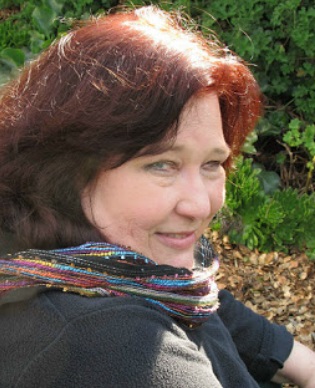
The following is an excerpt from Anne R. Allen’s December 22, 2019 blog post. You, too, can be an indie-author. It helps to be informed with willingness to do the work.
From Anne:
In a few days we’ll be leaving the twenty-teens to enter the 2020s. We’ll be saying goodbye to a decade of wild upheaval in the publishing industry.
It’s been quite a ride.
On January 5th, [we hosted] agent Laurie McLean from Fuse Literary Agency, for her annual “Crystal Ball” predictions for publishing in 2020.
But today I’m thinking about the decade that’s passing, and how it disrupted and radically changed the way authors approach publication.
A lot of us got to behave like teens—experimenting with radical publishing ideas and trying on lots of new writing venues for size.
Amazon’s Kindle had the right name. It fired up the writing community in a major way. Self-publishing became a viable, lucrative alternative to the soul-crushing process of breaking into traditional publishing.
But now things are changing again. Sales of Kindles and other ereaders are way down. A lot of indie authors have disappeared.
Is the Self-Publishing Revolution Over?
Experts agree the “Kindle gold rush” is history.
But self-publishing is still here.
However, it has gone through drastic changes since 2010.
In the early days, there weren’t many ebooks for Amazon to sell to their newly-minted Kindle owners. So they encouraged writers to publish their own work through their new “Kindle Direct Publishing” (KDP.)
But then Amazon started its own publishing imprints like Montlake, Thomas and Mercer, Lake Union, etc. They wanted to market their own publishing companies.
Then came Kindle Unlimited, the book service that allows unlimited reads per month for a flat fee.
Indie incomes went down a lot more.
A swarm of scammers, plagiarizers, and crooks learned to game the KU system and top the charts with stuffed, fake, and stolen books.
Real indies lost out.
Readers left Facebook’s privacy-invading machine. And new algorithms no longer let as many readers see our author pages.
Indie incomes went down a bit more.
E-books were the bread and butter of the self-publishing revolution, but as people started reading more on glaring tablets and phones, they rediscovered paper books.
Big tech, which had once seemed so friendly to indie authors, became a minefield.
But the Self-Publishing Revolution Didn’t Die
It’s true that indie sales are more modest than they were mid-decade, and you’re not hearing about any new “Kindle Millionaires.”
But a lot of indies are still thriving.
Many romance, mystery, and thriller writers who joined the self-publishing revolution are now making a good deal more than their trad-pubbed counterparts.
Others are happily plugging along, not making a big income, but enjoying writing as a second job or hobby.
Self-publishing is still an excellent way to publish. But it’s not the same as it was in 2010.
Indies now need to have the training and capital to turn out a top-notch product and advertise it. They also have to be willing to learn the ropes of online marketing and put in the time with social media to build a following. They need to allot the time to put out a blog or newsletter.
Self-publishing allows you to control your career. You’re not dealing with agents or editors who might ghost you, get fired, rope you into predatory contracts, or lose their marbles. (The majority of agents are honest and hardworking, but their incomes are falling with decreasing advances, and many simply can’t make ends meet without a second job.)
My Advice
Don’t choose self-publishing as the “easy” way to a writing career in the new decade. Choose it because you have an entrepreneurial spirit, enjoy social media and online marketing, and have the time to commit to running a business.
Should You Plan to Self-Publish in the Next Decade?
Only you know that. Do you write fast? Write in a popular genre? Have good marketing skills? Enjoy social media? Do you blog? Are you okay knowing you won’t be nominated for a prestigious book prize or get a review in The New Yorker?
A “yes” to most of those questions would make you an excellent candidate. The only other big thing you’ll need is luck.
So good luck to you. The 2020s may be the time your career soars!
Click here for Anne’s full blog post with almost 100 comments.
About Anne R. Allen
My books are mostly romantic-comedy/mysteries. Maybe a little more comic than romantic. Since two of my favorite writers are Dorothy Parker and Dorothy L. Sayers, I guess it makes sense that I ended up writing a mash-up of the two “Dorothy” styles. Ruth Harris calls it “Chick Lit Noir.”
I’ve been in the writing business long enough to have collected a pretty full set of mistakes. I blog in hopes of helping some of the new writers out there make better choices.
In a former life I was an actress, bookseller, and the former artistic director of the Patio Playhouse in Escondido, CA. I last appeared in A Comedy of Errors at the Pacific Conservatory of the Performing Arts. I grew up in New England (Waterville, ME and various college towns in CT) graduated from Bryn Mawr College, and spent some time doing the hippie vagabond thing in several continents. Even got married once. All excellent adventures.
I’m the author of 10 comic mysteries and a collection of short stories and poems. I’m also the co-author of a guidebook for writers, written with Amazon superstar Catherine Ryan Hyde, and I’ve written a new guidebook for author-bloggers: The Author Blog: Easy Blogging for Busy Authors.
All my book-length works are detailed on my book page.

From the Chicken Soup for the Soul website:
We have many Chicken Soup for the Soul books in development and we frequently add new titles. If you have a great story or poem you want to submit but it doesn’t fit with any of the topics listed below, please save it and check back to see if we have added a topic that’s a better match.
If you have a story or poem that you think fits two of the topics below, you may submit it to both. Then let them know in the Comments section that you’ve done so. Also, you may submit more than one piece for each book.
We are always looking for new talent. So whether you are a regular contributor or new to our family, please share your story or poem with us. If this is your first time, please visit the Story Guidelines page, which will answer many of your questions about subject matter, length, and style.
Topic and deadline:
Be You – January 31, 2020
The Magic of Cats – January 31, 2020
The Magic of Dogs – January 31, 20210
Listen to Your Dreams – February 28, 2020
Stories about Self-care and Me Time – April 30, 2020
Christmas Is in the Air – April 30, 2020
Age Is Just a Number – May 31, 2020
Note from Marlene: You know what to do. Write your story. Revise. Ask someone for feedback. Revise again. Polish to the best of your ability. Submit!

Who?
Where?
When?
Why?
Just write!

Guest Blogger Nathan Bransford reflects about this past decade with the constant of books by his side.
The following is excerpted from Nathan’s December 30, 2019 blog post.
So much can change over the course of a decade or two. Thank goodness the books we read and write will still be there waiting for us when we need them.
When the clock struck midnight to ring in January 1, 2010, I was a literary agent with Curtis Brown Ltd. in San Francisco, I was married, and the ink was barely dry on my first book deal for the Jacob Wonderbar series.
Little did I know that within a year and a half all that would change.
Amid all this change, amid all of this upheaval and turmoil, there’s only one thing in my life that hasn’t changed.
Books.
The first time I visualized my current life was during a vacation in 2010 in Hawaii. I looked around and felt like a bolt of lightning hit me.
I thought, “What if I just focused on helping authors with their manuscripts, wrote my own books, and worked remotely?”
It took me a whole decade to achieve that dream. What if I’d leaped when I first had the idea?
Regrets are pointless, lessons are valuable
As much as we might want to change the past, the truth is that the past makes us who we are. (Something I explored at length in Jacob Wonderbar and the Interstellar Time Warp).
I know I needed to go on my career odyssey to see what was out there, to learn new skills, to make new friendships, and grow as a person.
I’ve definitely made some huge mistakes along the way. When I look back, the worst ones happened when I didn’t follow my own instincts, whether because I had talked myself out of what I was feeling or because I lacked the nerve to act on my gut.
The comforting power of books
In a world where things constantly change and often disorient us, there’s something comforting about the way books are stuck in time, artifacts of a particular moment and place. They provide that soothing certainty that we can return to them and they’ll be there, unchanged, ready for us to revisit.
This especially applies to the books we write ourselves. It’s such a powerful and meaningful pursuit to write a book.
Note from Marlene: I hope Nathan’s story inspires you to pursue your writing project.
Click here to read the entire reflective post, including an endearing letter from Nathan to Roald Dahl.
Nathan Bransford is the author of How to Write a Novel and the Jacob Wonderbar series. Nathan is dedicated to helping authors chase their dreams.
Nathan’s blog has everything you need to know to write, edit, and publish a book. Can’t find what you need or want personalized help? Contact Nathan for help with your book.

Sometimes we drive a familiar route as if in a daze. At some point we become aware that we have been driving unaware and wonder, “How did I get here?”
Sometimes we’re at a job, either paid or volunteer, or we’re enmeshed in an activity, either fun or dramatic or both. Perhaps we’ve been consumed with this activity. Maybe we wake up one day and wonder, “How did I get here?”
Sometimes we look around and all of a sudden we’re 40, or 50, or 60 years old, or in my case, in my early seventies. Sometimes we wonder, “How did I get here?”
Becoming: A Guided Journal for Discovering Your Voice is inspired from Michelle Obama’s book, Becoming.
This journal helps “to alleviate the pressure of knowing what to write about.”
“Writing Becoming led [Michelle] Obama to see the importance of taking time for contemplation. When asked about her writing process, she explains, ‘I spent a lot of time just reflecting and thinking, which is something I just didn’t have much time to do for about a decade. It was nice to decompress a little bit and ask myself, ‘How did I get here? Where did my story take a turn? I uncovered a lot of smaller moments . . . [that] were really foundational to the woman I became.’” —Paul Anderson, December 2019 Costco Connection
Note from Marlene: If you need help in figuring out what to write about, or ideas about writing on difficult things without feeling re-traumatized, take a look at the prompts on The Write Spot Blog, especially “How to write without adding trauma.”
Today’s Prompt: How did I get here?

Wordrunner echapbooks wants emotionally complex and compelling writing. This could be from you.
Submissions for the Wordrunner echapbooks anthology series are open January 1-February 29, 2020.
Submit your best fiction, creative non-fiction or poetry to Wordrunner’s 10th Anniversary issue, to be published in April 2020.
There is no theme. “We want emotionally complex and compelling writing about whatever strikes your fancy, be it serious or humorous or both. Please look in the Archives at previous anthologies to get an idea of what we like to publish.”

Write about someone or something you have loved.

Anne R. Allen’s post about commenting on blogs elicited 100 comments!
I’ve seen a steep decline in the number of people commenting on blogs over the past few years. I’m not sure why that is. But commenting on blogs is still an easy, painless way to get your name into search engines and build an “author platform.”
I realize I’m partly preaching to the choir here. We have wonderful commenters on this blog. But I see a lot of great blogs devoid of comments these days.
And there are lots of people who seem to prefer to respond to the link to a blogpost on Facebook or Twitter rather than on the actual post.
Unfortunately, sometimes they haven’t read the post, but are responding to the header, which isn’t a good idea. That’s a good way to look like a doofus, especially if the blogger’s title is ironic or it’s a question that’s answered in the post.
But a thoughtful comment on a high-traffic blog is a smart way to get your name in the public eye. And it’s easy.
First of all, commenting on blogs that are already on Google’s radar will help get your name onto that valuable Google SERP (Search Engine Results Page.)
A comment on our blog can put your name in front of 20,000+ people in a week. It could take a long time to reach that many people with a brand new blog or a social media account. Most of my early mentions on Google came from commenting on other writers’ blogs. It’s also how I started networking in the writing community.
Also, discussions on high-profile blogs can lead to discussions on your own blog or social media. If you find yourself making a long comment—that’s your next post on your own blog or Facebook author page. Invite people over to discuss it further. Or support somebody’s argument on a blog and you’ve made a blog friend. That’s how I got my first followers.
But I’m not just talking about writing blogs like ours. A comment on any blog that interests you—and your potential readership—will work.
Plus interacting on blogs is a great way to make friends. In the end, that’s what a platform really is: how many people feel they “know” you well enough to want to buy one of your books.
In fact, my blog first took off because I commented a lot on Nathan Bransford’s blog, and that won me a guest blogging spot.
But I know writers new to the world of social media and blogging have lots of reasons for not commenting. I hear them a lot.
A lot of older writers find the whole concept of blogging weird and unfathomable. I remember being frustrated when I first started.
Sometimes I’d find comments, and sometimes I wouldn’t. Sometimes I’d land on one post with a thread of comments after it, but sometimes I’d get a whole string of posts with nothing but a thingy at the end saying “37 comments”.
Here’s the little trick “everybody knows” so they don’t bother to tell you—
Click on the “37 comments” (or whatever number) and that will open the post in a new page where all the comments appear at the end of the post. Some blog formats make you hunt around in the sidebar for the “comments” link, but it’s there. Keep looking.
Some blogs, like ours, will allow you to reply to a particular comment if you hit the “reply” button under that comment.
Or you can leave a general comment if you hit “Leave a Comment” at the bottom of the whole thread. (On some WordPress and Weebly blogs the comment button is at the top of the thread.)
Sure. That’s fine. Email marketing is the big thing these days. Sometimes a blogger or well-known author will have time to give you a personal answer. I try to answer all our readers’ emails, even though I sometimes confront so many emails in the morning that I want to go back to bed and cry.
But my e-mailed answer is no more personal than my answer in a comment thread, and nobody will see it but you and me.
Every week, people send me personal emails saying they liked a post from me or Ruth or one of our guests, and of course we appreciate it. We always like to hear that people are benefiting from our posts.
But many writers mention their own books and pitch them to me.
So let’s stop a minute and think about this: what’s better for you, the author?
1) Getting your book title in front of me, the world’s slowest reader, who has over 500 unread books in my TBR list, and probably doesn’t read your genre?
2) Getting your book title in front of the thousands of people who read our blog?
Are you seeing why it’s better to put your feedback (and name) into a comment?
Plus, if you have a question, you can be pretty sure other readers have it too. If I answer in the comments, rather than in a personal email, that’s helping all our readers, not just you.
Okay: this is a biggie. Tech can be daunting. Nobody likes to be rejected, especially by some stupid machine. If you don’t have a blog or website of your own, sometimes a blog won’t accept your comment.
Or if you have a blog on the Blogger platform, you may not be allowed to comment on other Blogger blogs. Blogger has been developing lots of glitches lately that they have no desire to fix. That has happened to Ruth. She has a Blogger book blog and that means she can’t comment on my Blogger book blog. (Go figure.) Blogger may also not let you respond to comments on your own blog. That happened to audiobook narrator C.S. Perryess, who had to move his Wordmonger blog to Weebly, since Blogger has no tech support.
A solution to all this is sign up for Gravatar. That’s a “Globally Recognized Avatar” and ID. It’s owned by Automattic, the parent company of WordPress, but you don’t need a WordPress blog to sign up. In fact, signing up will automatically give you a WordPress ID.
I understand. Writers are shy persons. I lurked for about a year before I started commenting on blogs. Do lurk for a while if you’re just starting in the blogosphere.
But eventually you’ll feel moved to say something.
Most bloggers will put some questions at the bottom of the post to invite comments. Good questions will invite you to share your own opinions or experiences with the topic.
Read the comments. You may want to respond to one of them. That’s a good place to start.
You don’t have to heap praise on the blogger. Bloggers like praise as much as anybody, but it’s best to say something that adds to the discussion and shows something about yourself and your work.
Don’t be confrontational or put the blogger down, either. (That’s a good way to get deleted.) But say something like, “Love these 3 tips for getting your cat to eat dry food, and I’d like to add #4…”
Or, “I understand what you’re saying about only blogging nonfiction …but I blog daily cat haikus, and I have 400 followers who love them.” You can even include a link to the blog. One link is usually acceptable in a blog comment.
You can even say something like, “I’m glad you say it’s okay to be a slow writer. It took me ten years to write Love is a Cat from Hell, but I finally launched it last week.”
Don’t put in a link to your retail buy page—you’ll be blocked for spam—but a mention of your book and a single link to your website is fine.
The most useful comments add something to your “authority.” So if you can say stuff like, “I was in law enforcement for twenty years and this is what really happens when somebody reports a missing cat…” Or “I’m a health practitioner who also writes cat haiku…”
Then that little fragment of text will come up in a search of your name. It will show your name and “I was in law enforcement for 20 years…” or “I’m a health practitioner…”
This is a huge help to agents, reviewers, and other people who are trying to find out if you’re a reliable person they want to work with.
You can also say something like, “I love what ScribblerSally said about Maine Coon cats in her comment.”
Then ScribblerSally might click on your name to find out about you and your cat. If you’ve joined Gravatar, that will take her to a profile with an address for your blog and an email address.
Then Sally may follow your blog or even buy your book.
A good blog comment can be anything from 10 to 300 words. If you feel the need to go longer, you probably have a blogpost of your own there. (Write it down and save it!)
Other than that, almost anything goes in a blog comment, with a few caveats:
1) Skip the spam.
Don’t talk up your book or blog in a comment unless it’s relevant to the conversation. That’s considered spamming:
“I respect your opinion on prologues, but I’ve got testimonials from readers who love prologues—the longer the better—over at my blog today” is great.
“This discussion of Marcel Proust reminds me of my book, Fangs for the Memories, a zombipocolyptic vampire erotic romance, $3.99 at Smashwords.” Not so much.
Ditto links to your website or buy pages if they don’t illustrate a relevant point. If you have more than one link in a post, spambots will dump you into spam.
2) Don’t drink and post.
Seriously. DON’T WRITE ANYTHING ON THE INTERNET WHEN YOU’RE DRUNK OR HIGH. Authors should not go online when impaired. Unless your persona is “rude, moronic lout” don’t drink and post. You could erase years of work building that platform with one idiotic comment. That’s a rule I follow myself. If I have wine with dinner, I don’t go on social media in the evening.
Be professional and polite. And do make sure your brain is in gear.
3) Read the whole post.
We get so many comments from people who have only read the headers, that I wonder if half the people online are reading-impaired. It only makes you look like a moron when you tell the blogger, “you should have said this, that and the other thing” …when they said exactly those things in the second paragraph.
4) Read other comments.
Be aware of what other people are saying so you don’t repeat what somebody else has said. Comments are meant for discussion, so remember you’re talking to everybody who’s reading and commenting, not just the host blogger.
5) No emotional blackmail.
Don’t say, “I just followed this blog, so now you have to follow my five blogs, like my Facebook page, follow me on Twitter and get me a double decaf latte while you pick up my dry cleaning.” If you demand any kind of quid pro quo for a comment you’ll look like a jerk to the whole community. As I’m saying here: the comment benefits YOU more than the blogger.
6) Don’t whine or throw shade.
Dissing Amazon, agents, the publishing business, or trash-talking a bestselling author will not work in your favor. Ditto complaining about how nobody buys your book.
If you want to unload about what a crazy, unfair, insane business this is, get that bottle of wine and invite over a couple of friends. Kvetch all you want. You’re not wrong. This business is a roller coaster, as Ruth told us last week.
Click here to read the comments on Anne R. Allen’s Blog . . . with Ruth Harris.
Note from Marlene: You may notice I don’t have a place for comments on my blog. I used to, but sadly received too much spam. It got filtered (comments didn’t get posted, but I had to go through and delete each one = too time consuming).
Anne’s book:
The Author Blog: Easy Blogging for Busy Authors: Named one of the “99 BEST BLOGGING BOOK OF ALL TIME”
And an Amazon #1 Bestseller
$9.99 in paperback at Amazon and Barnes and Noble
And the ebook is only $2.99.


Some of the writing prompts on The Write Spot Blog are just for fun, like these:
What Makes You Smile? Prompt #438
Paint A Word Picture. Prompt #450
Imagination Receiving a Greeting Card. Prompt #455
Others, like today’s, are contemplative.
Today’s Writing Prompt: What challenge do you want to overcome?
