Abstract poetry is a form of poetry that prioritizes the auditory and emotional impact of words over their literal meaning or conventional grammatical structure.
Prompt #855
Prompt 1 – The Warmup
Write for 2 minutes about something troubling or sad.
Write for 2 minutes about something using the opposite emotion: joyful, hopeful.
Write for 2 minutes on something from nature, something from the natural world.
Keep that writing nearby for Prompt 2.
Why write an abstract poem
“Science has shown that when we engage in play, we increase brain activity in the prefrontal cortex, where creative thinking happens.
“You are not striving for perfection. You’re striving for perfectly unpredictable.” — “Words Gone Wild,” by Dr. Finnian Burnett, Writers Digest, Nov/Dec 2025
Prompt 2
Write an abstract poem, using only the words you have written in Prompt 1. Write for 15-20 minutes. It doesn’t have to make sense. It shouldn’t make sense!
Intro to Prompt 3
Homophonic: Words that sound alike, spelled the same, different meaning
Rose (flower) and rose (past tense of rise).
Or, sound alike but different letters: carat, carrot, caret (blinking cursor)
Examples
Dylan Thomas, Under Milk Wood: “The shops in mourning” where mourning can be heard as mourning or morning.
Thomas Hood, Faithless Sally Brown, birth & berth and told & toll’d
Homophones of multiple words are known as oronyms.
Examples of oronyms:
ice cream and I scream
depend and deep end
this sky and this guy
some others and some mothers
night rain and night train
my newt and minute
Prompt 3 Mistranslation
This exercise is homophonic translation: Changing text in one language into another language, with no attempt to preserve the original meaning.
Translate one of the following poems any way you want. You can use the method of what it sounds like. Or what the shapes of the letters suggest to you. There is no wrong response.
Your translation does not have to make sense. Have fun with this!
1. Můj manžel a já jsme stáli společně v nové nákupní centrum která byla čistá a bílá a plná možností. Byli jsme chudí, takže jsme rádi projít obchody protože to bylo jako chůze přes naše sny. V jednom jsme obdivovali kávovary, modrá keramika mísy, opékače topinek velký jako televize.
2. my eggenoot en Ek het gestaan saam in die nuwe winkelplein wat was skoon en wit en vol van moontlikheid. ons was arm so ons gehou van om te loop deur die stoor sedert hierdie was soos stap deur ons drome. in een ons admireer koffie vervaardiger se, blou pottery bakke, toaster oonde as groot as televisies.
Credit to writing teacher Terry Ehret, who first introduced me to abstract poetry and homophonic mistranslation.
Contact Marlene if you want the languages and translations for these poems.
Symbolism refers to using a material thing to represent a nonmaterial thing, usually a tangible item that illuminates an intangible concept. Paraphrased from “Thematic Writing” by Jane K. Cleland, Writer’s Digest, Jan/Feb, 2024
The importance of Symbolism
Symbolism has the power to evoke an emotion or an idea without overtly saying it. When we pair a part of a poem, story, scene, character, or emotion with a repeated object, we begin to transfer the character’s wants, needs, and dreams onto that object.
The symbol serves as an echo of that idea or sentiment, without retelling the story.
Symbolism is the secret language of storytelling, adding depth and layers to what appears on the surface. It’s like finding a hidden treasure within a story, enriching the reader’s understanding and enhancing the reader’s appreciation of the narrative.
Examples of Symbolism
An object becomes a symbol when it reappears, and the symbol becomes stronger. For example, in The Hunger Games, Katniss receives a Mockingjay pin before entering the games. Initially, it serves as an example of family and home. Katniss then uses the Mockingjay in the Games to communicate with Rue, making them a symbol of hope and alliance. Later, the Mockingjay become a symbol of rebellion and contempt for the Capitol, representing the chance for change, for the people to regain their power.
The One Ring in the Lord of The Rings trilogy represents evil. The One Ring was forged with the intention of evil, destruction and darkness and symbolizes desire and greed.
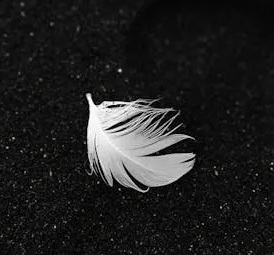
In the film, Forrest Gump, the feather symbolizes Forrest’s life journey.
In The Scarlet Letter the red letter A is meant to be a symbol of shame. It becomes a powerful symbol when its meaning shifts to stand for “Able.”
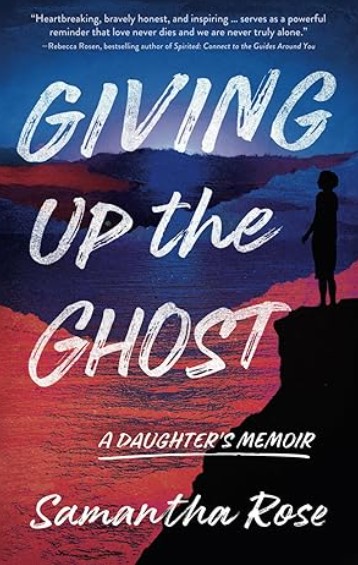
In Giving Up the Ghost, Samantha Rose refers to snow globes and flowers as symbols in her healing process. A rose, California poppy . . . symbols of new life.
A symbol could be a repetitive action, like a finger on the side of nose in the movie, The Sting.
What word or phrase do you and your circle of family/friends use when remembering something that happened? When you say this word or phrase, your people know what you are referring to.
It could start like this: Remember when . . . and then don’t tell the whole story . . . use a symbol that refers to what happened. The symbol could be a word or a phrase that represents what happened.
Gepetto, a woodcarver, prays that a puppet he carved could become a real boy. According to Phil Romo, a “real boy” is a metaphor for being an autonomous individual, not bound to ideologies or to existing institutions. “To think for yourself . . . Don’t be bound to the strings you are born into.”
The Blue Fairy grants life to Geppetto’s puppet. This is a metaphor for human birth, the ‘miracle of life.’
“Our brains like order,” explains Kristi Phillips, a Minnesota-based psychologist “having less stimuli around us helps promote relaxation.”
She points out the popularity of home-decluttering Reels and TikToks, as well as TV series such as Get Organized With the Home Edit and Hot Mess House.
“But while we enjoy the afterglow of a cleaned-out junk drawer, we still procrastinate when it comes to tackling more complex areas of clutter in our lives. When we’re trying to declutter our own spaces, we have an emotional attachment to those items,” she says.
“Whether there are memories linked to those objects or simply the guilt of getting rid of something you spent money on, the task of mentally weighing each item can be overwhelming, with a video, you see the fast-forward of how quick it is … so it gives us that hope and positivity of, Oh, I can do that too.” — “Why Watching Decluttering Videos Feels So Good” by Abby Alten Schwartz
Writing Prompt
Write about your cleaning out habits or your decluttering experience, could be your things or someone else’s things.