Write about one or more:
 ~ The most disappointing gift you have received and what it revealed about the giver.
~ The most unusual gift you have received, or given.
~ The most wonderful gift you have received, or given.
~Write about intangible gifts.

Write about one or more:
~ The most disappointing gift you have received and what it revealed about the giver.
~ The most unusual gift you have received, or given.
~ The most wonderful gift you have received, or given.
~Write about intangible gifts.
 Write about something that happened to you this week. It can be something big, or something small. Maybe something you saw or observed. Perhaps something or someone touched you in a meaningful way. Write, using great detail. Or write sparse. Just write!
Prompt: Write about something that happened to you this week.
Photo by Breana Marie
 Part 1: Write about a gift someone gave you that you didn’t like, didn’t know what to do with or had no use for.
Part 2: What does this gift say about the person who gave it to you?
Whenever there is a prompt like this, you can also write about the opposite.
Part 1A: Write about a gift you loved, a gift that was a surprise in a good way, a gift that worked really well.
Part 1B: What does this gift say about the person who gave it to you? 
Sometimes you don’t know how you will act when faced with a difficult or a life threatening situation . . . until you are in the throes of it. Write about a time you were in a challenging situation. Use sensory detail.
 OR: Write about one of your fears. . . from a fictional character’s point of view. . . write about “the worst thing that can happen” . . . then, have your hero or heroine conquer the problem. Ready? Set? Okay. . . think about one of your fears that just won’t go away. Bring your character to life with those fearful thoughts and emotions. Now write. Just write!
This is similar to Prompt #47. . . only this time, have your character kick butt. 
* “An epiphany is a sudden realization of a significant event. At that special moment, a life meaning becomes clear to you —an insight into your personality, a discovery of something you value or believe in, an acute sense of where you are in life.
Here’s an Epiphany Tale one elder told to her family:
 I must have been around seven or eight. It was summer, and we were visiting my aunt Clara up at Crystal Lake. I was alone, lying on my back by the banks of the lake, looking up at the sky, and I had my harmonica in my mouth. I was just breathing through it, in and out, not playing a melody, simply breathing. And suddenly, I was overcome with this wonderful feeling of connection to everything in the world. I’d say now it was a spiritual feeling. I listened to the sound my breathing made through that harmonica, and I thought, I am part of the noise of the world. I am part of everything . . . I’ve had that feeling again, from time to time, throughout my life — a certainty that I am part of the universe —but that was my first time. I think that knowledge is one reason I’ve never found the idea of dying very frightening.”
Your turn: Write about an epiphany you or your fictional character has had.
* Excerpt: From Family Tales, Family Wisdom — How to gather the stories of a lifetime and share them with your family, by Dr. Robert U. Akeret with Daniel Klein
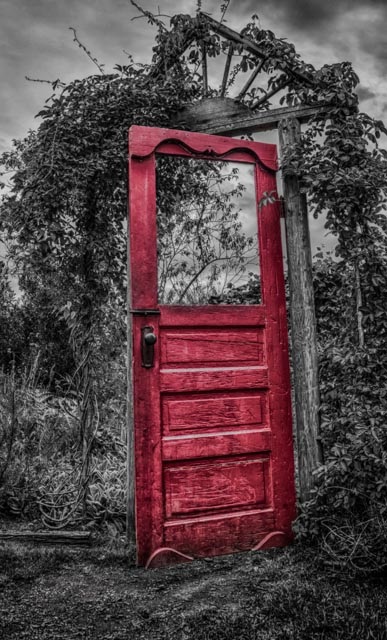

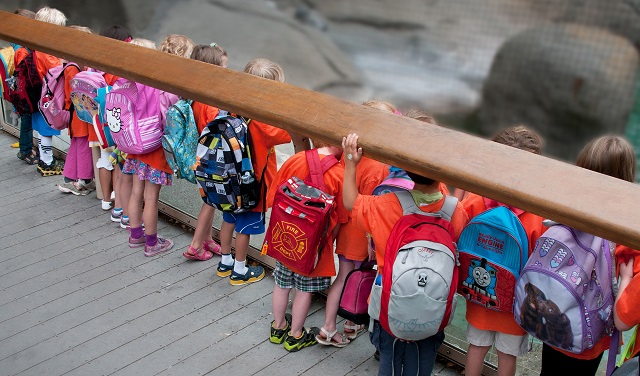
Photo credits:
Red door – Colby Drake
Children and backpacks – Kent Sorensen
Holiday table – Laura Plunk Davis
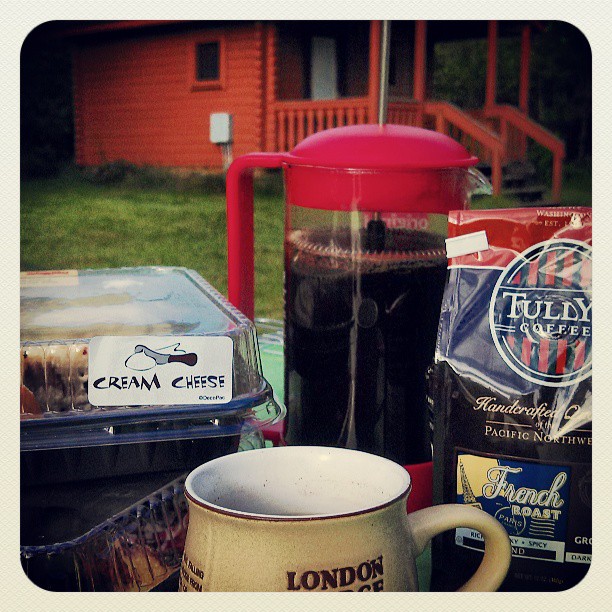
Coffee – Laura Plunk Davis
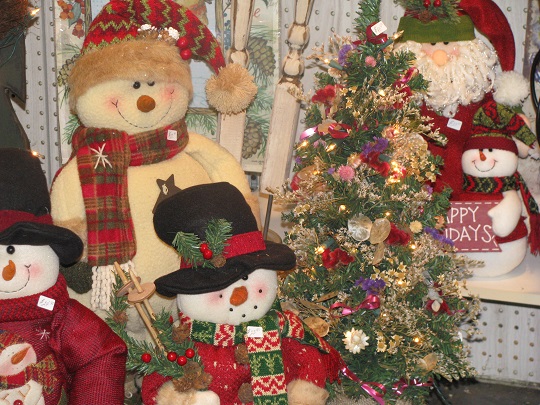
Holiday scene – Jane Person
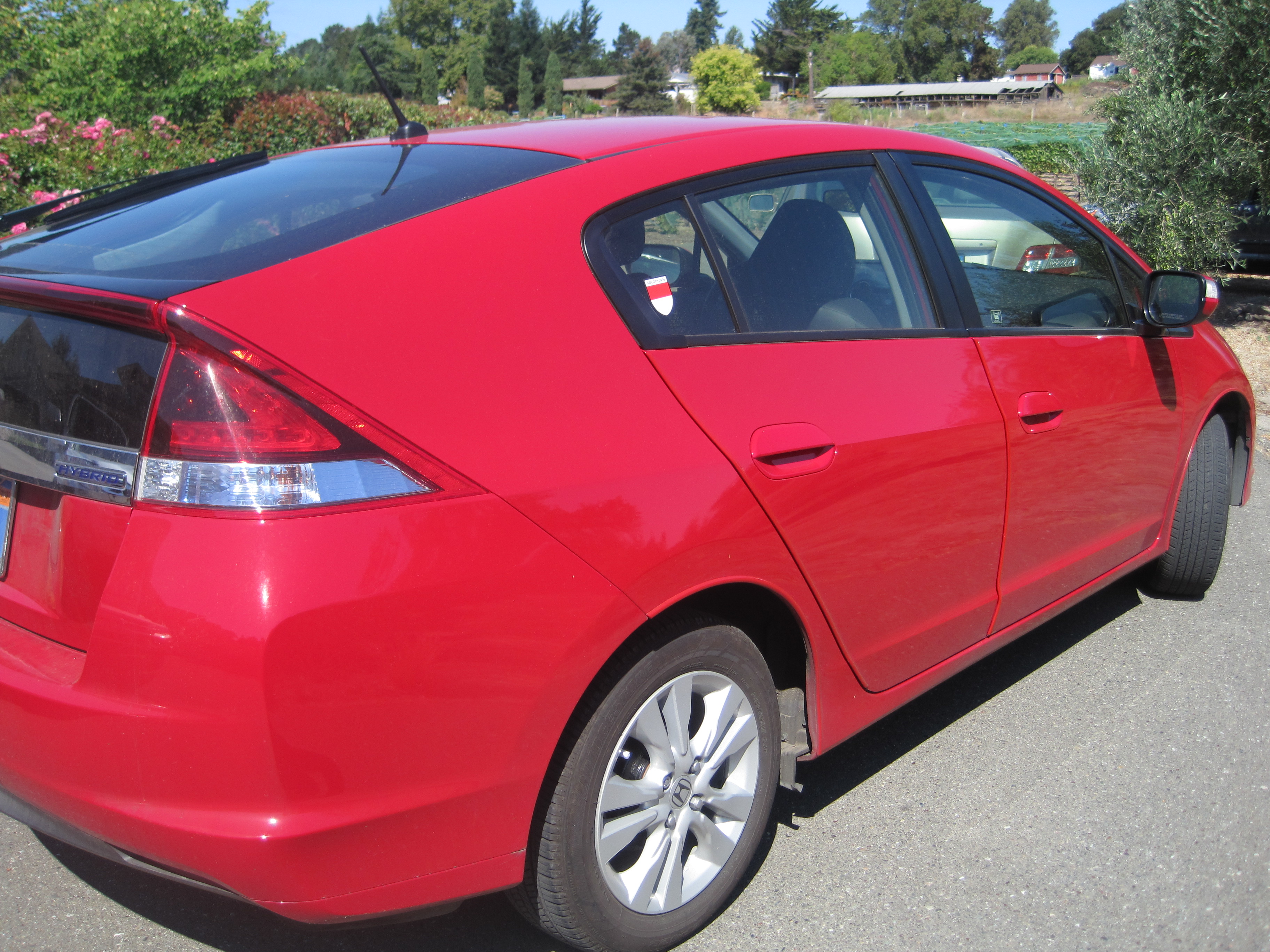
Red car – Marlene Cullen
 Today’s prompt: Pressure.
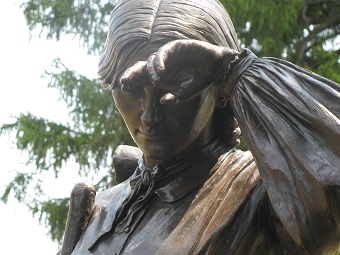 Shame. . .
For this prompt, you can write about “shame” as a topic in general.
Or: Write on something you are feeling shameful about. You can fictionalize your personal situation to write about a difficult subject.
Or: You can write about shame as character development . . . a character feature to be overcome.
Photo by Jane Person
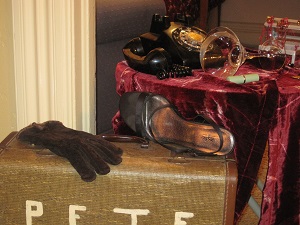 Write about a secret. Either a secret you hold, or write from a fictional point of view.
You can take your personal experience and write it as fiction.
If you want, change the gender, age, details of the main character.
If you could live one day without consequences, what would you (or your fictional character) do?