Category: Quotes

  • Meeting My Father

    “Whether you have a fractured relationship with your dad or family, or you have untold stories of your own, now is the time to bring them out of the darkness and let them shine and be a beacon to inspire and move others.

    You never know who you can possibly help until you share pieces of your own heart through writing or by showing up, fully present, with a heart full of love.” — Shawn Langwell

    “Father’s Day has ALWAYS been hard for me BUT I decided to write a short poem forgiving my father, finally, fully. Thank you to The Good Men Project for publishing the poem. It is called, simply, MY FATHER.” — Kevin Powell

    Note from Marlene: Thank you, Shawn and Kevin, for giving me the courage to post My Father story.

    “Meeting My Father,” by Marlene Cullen.

    When I was seven years old, I was embarrassed that I knew the meaning of the word sober.

    I heard “Is Bill sober?” more times than I care to count. That’s all my mother, grandparents, aunts, and uncles asked about my father.

    The only holiday I remember celebrating with him was a rainy Christmas Eve. My mother couldn’t talk him out of driving to her mother’s house for our annual party. I was petrified in the back seat as he wove in and out of traffic.

    The only time I missed having a father was an occasional Father’s Day, and that was more of an awkward feeling rather than a sense of missing out on something. 

    I never called him “Dad.”

    My father was a merchant seaman and would be gone months at a time. He brought home exotic toys from far away countries, intricately carved hope chests from Japan, clothes for me and my sisters, always too small.

    When he was home, it meant he wasn’t working. When he wasn’t working, he was at a neighborhood bar. My mother would drive from bar to bar looking for him. My younger sisters and I waited in the backseat of our 1950 Chevy while Mom coaxed him to come home. I tried to find ways to entertain my sisters while we baked in the stifling heat.   

    We moved in with my father’s parents when I was nine. My father lived with us off and on, mostly off. He drifted away as alcoholism took over his life.

    My parents divorced when I was twelve. And so, we began the torturous Sunday afternoon visitations. My mother would conveniently be gone when he arrived at our flat. He would be conveniently drunk. We took a taxi to a restaurant on Market St. My father slurred his words when he ordered. I cringed in embarrassment.

    When I was sixteen, I rode the bus down Mission Street to my new job. I looked out the window and saw my father slumped in a store entryway. That’s when I began to think of him as a Third Street Bum and good for nothing. As the bus lurched forward, I felt shame. My stomach tightened. My throat constricted. Tears blurred my vision. I stared straight ahead. There was nothing else for me to do.

    One year later, I was getting ready for school when the phone rang at 7 am. I answered quickly, not wanting the ringing to wake up my grandmother, who had returned late the night before from visiting my father in the hospital. I was angry at whoever was calling so early. The voice on the other end of the line identified himself as “Bill’s doctor,” and then, “Bill died this morning.” Just like that. I was shocked that he gave no consideration who he was giving this news to. I must have gone into my grandmother’s bedroom and told her there was a phone call for her. I don’t remember what I said to my mother. I finished getting ready for school, like it was any other day.

    My father died on March 22, 1966, at the age of thirty-seven, emaciated from cirrhosis of the liver.

    As a young mother, watching my husband with our daughter, I realized I was bitter and angry with being deprived of a father. I began to think of him as just the sperm donor.

    [Then, a miracle happened. I met a woman who knew my father as a teen-ager.]

    Georgia and I talked for two hours. She told me about their escapades, the pranks they played, and the normal teenage stuff they did. Georgia said my father would take the bus to meet her after work and escort her home, to keep her company and make sure she made it home safely. She said he was a gentle and quiet kid.

    After our conversation, I realized my father was once a happy-go-lucky kid. He went to dinner dances at the Claremont Hotel in Berkeley in the 1940s and he had many friends. He was more than a slumped figure in a doorway.

    Seeing my father through the lens of his teenage friend is one of the best gifts I have received. I felt I met my father as a real person the day I talked with Georgia.

    I will be forever thankful to Georgia for introducing my father to me as a caring young man and a valued friend.

    My father wasn’t just a Third Street bum and he was more than merely a sperm donor. William (Bill) Scott was a loving son, a loyal friend, and a Marine Corps veteran. He was a husband and a father, struggling to navigate the challenges of life.

    He is a part of me, imperfections as well as the good parts. He is a part of my granddaughter who shares his hazel-colored eyes.

    Bill Scott was Somebody. He was my father. And if he had the chance, he might have been a wonderful grandfather. I like to think so.

    Excerpt from “Meeting My Father,” in the anthology “The Write Spot: Memories,” available from your local bookseller and as both a print and ebook through Amazon.

    Note: That’s my father, William (Bill) Scott, on the cover of “The Write Spot: Memories.”

  • Write to exorcize . . .

    “Write to exorcize what’s haunting you. Write about whatever it is you can’t get out of your head—a person, a place, a fear, a fictional scene, a memory from your past, a fantasy for your future. Allow yourself to think obsessively and shamelessly about only that one thing for as long as it takes to get it down on paper.” —Puloma Ghosh, on The Isolation Journal, created by Suleika Joauad.

    The Isolation Journals is Suleika’s newsletter for “people seeking to transform life’s interruptions into creative grist. Both free and paid subscriptions are available.”

    #justwrite #iamawriter #iamwriting

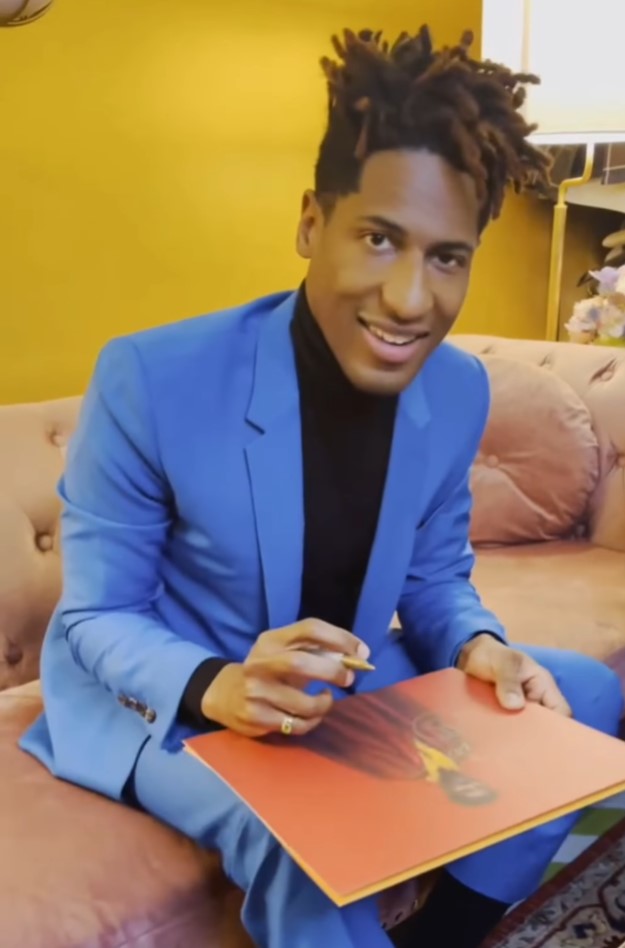
  • Jon Batiste, radar, and writing

    Jon Batiste

    “I believe this to my core, there is no best musician, best artist, best dancer, best actor,” he began. “The creative arts are subjective and they reach people at a point in their lives when they need it most. It’s like a song or an album is made and it’s almost like it has a radar to find the person when they need it the most.” — Jon Batiste, during his 2022 Grammy winner for best album acceptance speech

    I think writing can be included in the creative arts category.

    When we’re lucky, our writing radar picks up news and events when we need them to enhance our writing.

    And that includes writing communities like The Write Spot.

    Welcome! I’m so glad you are here.

    The Write Spot Resources Page:

    Writing Blogs and Websites

    Places to submit writing

    Community groups

    Writing magazines

    ~Marlene

    #justwrite #iamwriting #iamawriter

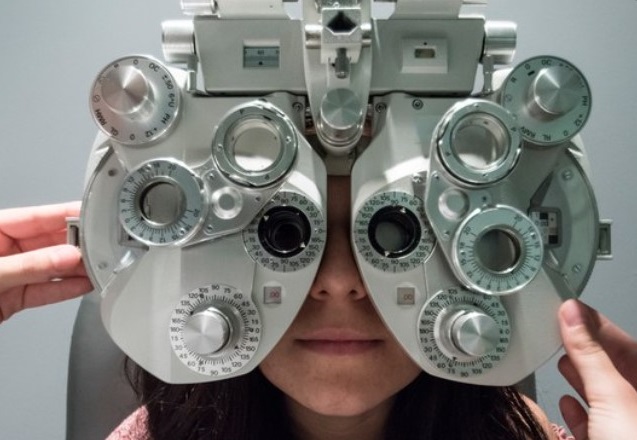
  • Revision and laser eye surgery

    “Revising is like being an optometrist—always asking, ‘Is it better like this? Or like this?’” —George Saunders, quote from “The Alchemy Required to Finish a Novel,” by Grant Faulkner, Writers Digest, Nov-Dec 2021

    “As you work through revisions, you see your story from all angles and you discover things you wouldn’t have ordinarily been able to see. A deep revision can give you the clear vision of laser eye surgery.” —Grant Faulkner

    #justwrite #amwriting #iamawriter #creative writing

  • The Veterans Writing Project

    “And there’s scientific work that backs up the healing benefits of writing” —Ericka McIntyre, “The Veterans Writing Project,” Writer’s Digest, Jan/Feb 2020

    The Veterans Writing Project provides free creative writing workshops for veterans, service members, and their family members.

    @amwriting @justwrite #veteranswritingproject

  • Passion is the engine . . .

    Photo by Thirdman on Pexels

    Robert Crais:

    Passion is the engine that has to fire the whole thing.  

    Successful writing is all about passion, to create a world that’s full and complete and engrosses the reader. First and foremost, the reader is you.

    If you’re writing about a world in which you need to research to learn about it, then feel passionate about it. If you’re not passionate about what you’re writing, you’re writing the wrong thing.

    You want heat, you want fire. That’s what we gather around and warm our hands with.

    Excerpted from “Fired Up,” by Jessica Strawser, Writer’s Digest, Nov/Dec 2016

    #amwriting #justwrite #creativewriting

  • I am a writer . . . I use story to reimagine worlds

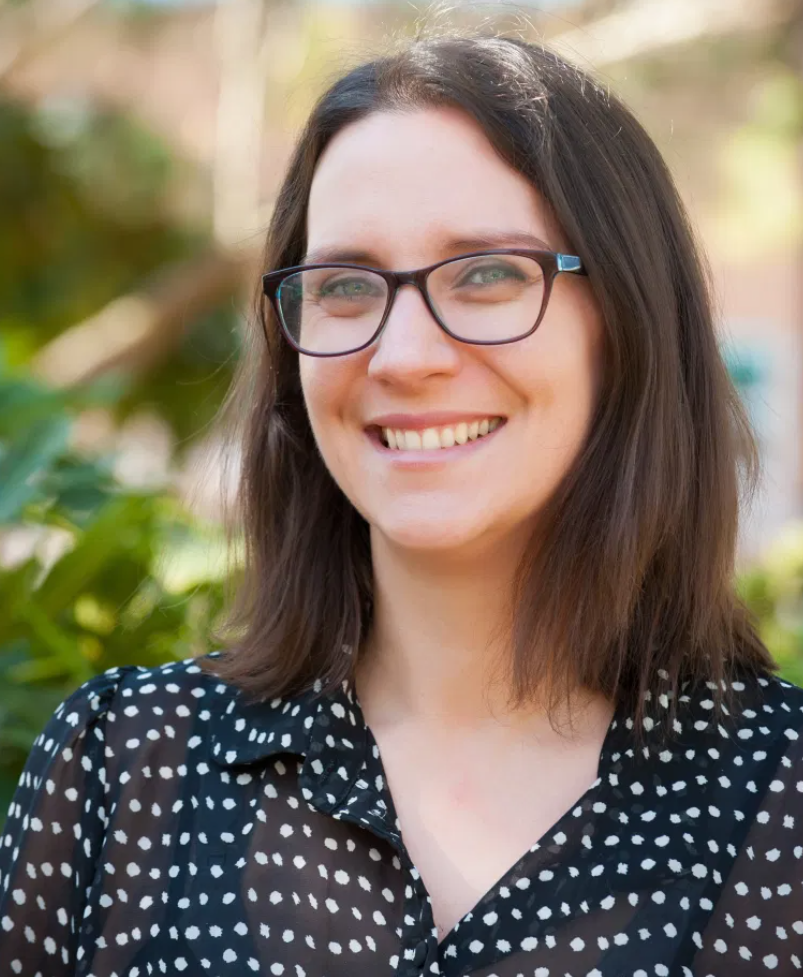
    “I am not a writer because I write a certain number of words every day. I am a writer because I use story to reimagine worlds. My value as a writer, citizen, and human is not rooted in my productivity, I tell myself on those brain foggy, exhausted days in which small humans climb on my limbs with no mercy.” —Ruth Osorio, excerpt from Ruth’s guest blog post in Brevity magazine.

    Ruth Osorio, PhD

    As of Fall 2018, I am living my undergraduate student dream as an Assistant Professor of English and Women’s Studies at Old Dominion University. My family lives in Norfolk, VA, where we spend our days chasing kids on the beach. I am also involved in local grassroots organizing tackling the school-to-prison pipeline and school suspensions in Norfolk Public Schools.

  • Every Riddle is a Bridge

    Dawna Markova, PhD:

    “I was a six-year-old wild child. My parents tried to tame me by warning me about all the terrible threatening things in the world that could hurt me. On the surface, I ignored or defied them, but late at night their fears took root in my mind and strangled my dreams.

    One Friday morning, I asked my precious grandmother, who had escaped from the Cossacks and didn’t seem to be afraid of anything how she had learned to be so brave. She lifted my fingertips to her wrinkly warm lips one by one, kissing them as she whispered, ‘I’ve told you that each print proves what a precious one-of-a-kind being you are, worthy of great care. Never again will there be another such as you. So pay attention to the warnings and protect the miracle of your life.’

    Pausing, she stretched out my arm so and pointed it straight ahead.

    ‘Move away from what you are afraid of if it threatens you, but also remember to move towards what you want to give to the world.’

    Before I could unleash a long string of questions, she placed my palm on the center of my chest and said, ‘Think of it as a riddle, my darling, because every riddle is a bridge to what you are here to make possible.’”

    Dawna Markova followed her precious grandmother’s footsteps to become a midwife, but rather than babies, she helps birth possibilities within and between people. 

    She has lived many incarnations in the past seven decades as an author, teacher, psychotherapist, researcher, executive advisor, and organizational fairy godmother.

    Dawna’s Poem on The Write Spot Blog: I Will Not Die an Unlived Life.

    One of the creators of the best-selling Random Acts of Kindness series, Dawna is the author of many other inspirational books, including: Living A Loved Life: Awakening Wisdom Through Stories of Inspiration, Challenge and Possibility; I Will Not Die an Unlived Life: Reclaiming Purpose and Passion; Reconcilable Differences: Connecting In a Disconnected World; Collaborative Intelligence: Thinking With People Who Think Differently; A Spot of Grace: Remarkable Stories of How You DO Make a Difference.

    Reprinted with Dawna’s permission.