It’s a Jungle

  • It’s a Jungle

    It’s a Jungle

    By Marlene Cullen

    It’s a jungle out there. I’d like to peg Bumbling Unreliable Gardener, aka Bug, on a hook and let him hang until cured.

    Except, I wonder, is he at fault for my jungle of a yard? Should I have been more forceful in not allowing him to install a plethora of plants in my pursuit of a peaceful place?   

    I discovered Bug on social media. He answered my gardening questions as if he was a landscaping guru. So, I hired him. Big mistake. Huge.

    He handed me an extensive questionnaire to compose my heart’s desire in a garden. Winding paths. Check. Whimsical. Check. Calm, serene. Check, check. I envisioned a landscape of pleasant plants flowing in meandering paths. No white plants.

    What I got was spiky plants here, there, everywhere. Festucas are so overgrown they barricade the path from the sidewalk to the storage shed. I need a machete to get to the innocent outbuilding. It stands sentinel, even though the fescue threatens to obliterate it.

    The sweet-sounding lamb’s ears look like aliens landed in my yard and vomited.

    Guara, taller than skyscrapers, threaten to overtake the clothesline with white flowers. White! Didn’t I say I did not want white flowers?

    Pause. Take a breath.

    I transplanted seven Guaras. They are majestic in their new location, waving their glorious flowers like a princess atop a float in a parade.

    I successfully transplanted three festucas. I was as excited as a rabbit in a field of carrot tops. But then, the green stalks turned yellow. When I pulled on them, they came right up, as easy as pinching a wad of cotton candy from its paper cone holder. I stared at the clump in my hand. It looked like something a scarecrow could use to stuff himself or herself with. The roots had disappeared from the universe like a black hole.   

    The irrigation system has misbehaved since Bug installed it. There were leaks in several places that spurted water like they were errant fire hydrants.

    One zone completely stopped squirting water, as if we hadn’t paid our water bill.

    The sad but not neglected yard is a gardener’s nightmare. To repair the leaky irrigation tubing my husband and I had to disturb the calm bark mulch, forming it into mounds, so we could access the misbehaving parts. We plugged them and prepared to move on to the next laborious step: Removing 27 plants that are overcrowding, overproducing, and just not wanted. Sorry, not sorry, plants.

    Step One. Sharpen the machete.

    Step Two. It’s hot in the jungle. Go inside. Get a cool drink. Check email. Check Facebook because, you never know, there might be something important there.

    Step Three. It’s the middle of the afternoon. Nap time.

    Step Four. Dinner Time.

    Step Five. Plan to tame the jungle another day.

    Epilogue: Twenty plants have been re-homed. The lamb’s ears became mulch to help other plants live long and prosper.

    Freewrite inspired by the writing prompt, Metaphors and Hyberbole on The Write Spot Blog.

    Marlene Cullen grew up in the Mission District of San Francisco where she visited the library weekly, carrying home as many books as she could carry. She has always been fascinated with words and language.

    Marlene Cullen is a writing workshop facilitator and founder of Writers Forum of Petaluma. Her Jumpstart Writing Workshops provide essential elements for successful writing.  She hosts The Write Spot Blog, where memorable writing is featured on the Sparks page.

  • Writing is magical

    Photo by Robin Hewett Jeffers

    Writing is magical. Take some blank pages, write or type on them, and as if by magic, a story appears. It may be an incomplete story and it may feel fragmented, but it’s the beginning of Your story.

    Writing can be healing, especially when you write what you really want to say, rather than listing what you did that day, journal style.  The most magical writing is when you get so involved in your writing that you lose track of time, you lose track of where you are and even, who you are!

    The process of writing can be therapeutic. With this deep writing, you may experience a release of emotions, clearing the air, and seeing old things in a new way. — “The Write Spot to Jumpstart Your Writing: Connections.”

    Personal Essay as Therapy

    Just Write!

    #amwriting #justwrite #iamawriter

  • Barbara’s Braid

    Memorable writing that sparks imagination. Lean in. Hear the writer’s voice on the page.

    Today’s Sparks is a pantoum.

    Barbara’s Braid

    By Karen Ely

    Weaving strands of amber honey

    Over, under, around and through

    Silky locks of shimmer sunlight

    Plaited patterns, three by two


    Over, under, around, and through

    Brush strokes cultivate the threads

    Plaited patterns three by two

    A tapestry of golds and reds


    Brush strokes cultivate the threads

    Silky locks of shimmer sunlight

    Plaited patterns, three by two

    Weaving strands of amber honey


    Karen Handyside Ely was born and raised in Petaluma, California. She delights in difficult crossword puzzles, the Santa Rosa Symphony, and traveling with her husband, James.

    Karen has been published in The Write Spot to Jumpstart Your Writing: Discoveries, The Write Spot: Reflections, The Write Spot: PossibilitiesThe Write Spot: Writing as a Path to Healing, and The Write Spot: Musings and Ravings From a Pandemic Year.  All available at Amazon and your local bookseller.

    Discoveries is on sale for $6.99 at Amazon for a limited time.

    Writers Forum hosts Saturday afternoon writing for the month of October 2021. Free on the Zoom platform.

  • One Wish Now, or Three In Ten?

    Memorable writing that sparks imagination. Lean in. Hear the writer’s voice on the page.

    One Wish Now, or Three In Ten?

    By Patricia Morris

    Patricia’s response to the writing prompt: Would you rather have one wish granted today, or three wishes granted ten years from now?

    Given that my dear friend of forty years died last week after a fast and furious 6-week illness, I will take my one wish today, please. No waiting for ten years for anything anymore. There are no ten years guaranteed, especially when, in ten years, I will be six months shy of 70 years old. That is a shocking thing to write, but that is my reality.

    Having only one wish, the pressure is on. To make it the “right” wish, the “best” wish, the “greatest good for the greatest number” wish. I could game it. I could make my one wish be to have one wish granted annually for the rest of my life. Leave it to the dormant lawyer brain to spring to life and offer up that one.

    I could wish to know when and how I will die. But no, I couldn’t do that and do away with the fundamental mystery of life. Then I would probably spend the rest of my days fixated on that moment and drain the life out of life.

    I might wish to end and reverse global warming. A wish to repair all the environmental damage that humankind has wrought and then, once repaired, for earth’s ecology to hold steady. I like this wish, but I can’t help wondering about unintended consequences. It violates the scientific fact that nothing holds steady. That even seemingly solid mountains are moving, that friends come and go, that I will come and go. That stars, made up of the same stuff as you and I, burst into life and flame into death. I wouldn’t wish for it to be any other way.

    Patricia Morris’s lawyer brain went dormant decades ago, and she tries to keep it that way when she writes for fun, as she does on Monday nights at Marlene Cullen’s and Susan Bono’s Jumpstart Writing Workshops. Her writing has appeared in Rand McNally’s Vacation America, the Ultimate Road Atlas and The Write Spot:  Possibilities and The Write Spot:  Musings and Ravings From a Pandemic Year, both edited by Marlene Cullen. The Write Spot books available at Amazon, Book Passage (Corte Madera), and Gallery Books (Mendocino).

    Patricia Morris will be a featured presenter at Writers Forum on July 29, 2021 at 6 pm.

  • Details Add Zing

    Guest Blogger Lisa Alpine shares tips to spice up your writing.

    I encourage you to infuse your writing with detailed imagery, passionate feeling, poetic depth and evocative sensual description. Here are some writing suggestions I use when teaching Spice Up Your Writing at workshops globally.

    These writing tips will show you how to weave poetic description into your prose; cultivate the five senses in describing a place or experience; and develop emotional imagery.

    1: Pick a scene from an event in your life that you know has a heart or seed of a story only you can write. Now blurt and spew! Messy is okay. You can clean it up later. Sometimes graceful, sometimes awkward, sometimes downright ugly. Tell the story. Understand what is really going on by exploring and uncovering the deeper currents of the river of life.

    2: Set the scene. Describe the weather, doors & windows, environment, horizon. God is in the details. What type of tree? What color the sea? Name everything.

    3: Sensual awakening using all six senses: smell, sight, taste, sound, touch, & intuition. Don’t ignore the 6th sense –even if it doesn’t make sense—it can lead into the heart of what is really going on.

    (See Note from Marlene for links to posts about using the sixth sense and intuition for writing inspiration.)

    How do you write about sensual interaction in a real way? It could describe the touch of a baby’s cheek against yours; or the physical sensation of your lover’s weight on you. It might be the reaction to the smell on a bus. By the way—smell is the hardest sense to describe accurately—yet the most evocative.

    4: Building tension. Like thunder in the distance, good suspense keeps us hanging on with tension and release, pain and epiphany. Not just emotional content, but placement and description of objects and sensations, even weather descriptions can lead into the deeper places by scene setting and nuance.

    A nerve is exposed and it hurts, it zings with sensation—it calls attention to it. Listen to these electrical zings. The story is there in the current lines that jolt you awake.

    5: Add emotional qualities. What is interesting about the word feeling is that it covers both the sensual and tactile experiences along with the gamut of emotions.

    6: Dig beyond generic descriptions so that your writing comes uniquely alive for readers and immerses them in the story.

    Give yourself an hour to work a scene with these suggestions and see if it opens up your writing and captures the essence of what flows underneath the obvious so that your story pops and zings, cries and sings.

    Lisa Alpine is a renowned dance teacher, travel writer, and author of Dance Life: Movin’ & Groovin’ Around the Globe, Wild Life: Travel Adventures of a Worldly Woman and Exotic Life: Travel Tales of an Adventurous Woman.

    Her award-winning, dynamically delicious stories grace the pages of many anthologies, including Travelers’ Tales Best Travel Writing.

    When not wrestling with words, exploring the ecstatic realms of dance, swimming with sea creatures, or waiting for a flight, Lisa divides her time between Mill Valley, California and the Big Island of Hawai’i, where Pele’s lava licks at the edges of her writing retreat.

    Note from Marlene:

    The Sixth Sense.

    Trust Your Intuition for Creative Writing

  • History Through The Lens of The Teller

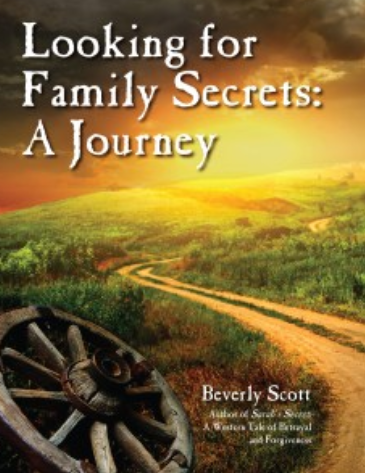
    Guest Blogger, Bev Scott, has an interesting perspective on bias of our history. She brings up provocative questions.

    The following is based on a session Bev attended at the Historical Novel Society Conference in June 2017 by James J. Cotter, titled “The Lone Ranger was Black: Reintegrating Minority Viewpoints into Historical Fiction.”

    “The title intrigued me,” wrote Bev. “Was the Lone Ranger modeled after Bass Reeves, the first black U.S. deputy marshal who worked thirty-two years in the Arkansas and Oklahoma territories in the late 1800’s?  He may have been.”

    History Is Biased

    The conference session addressed the issue of bias in our history. That bias impacts authors of historical fiction. Today we no longer view history as “the truth.” Rather, history is a story told through the lens of the teller. Did you love the Lone Ranger when you were growing up? I did. Audiences assumed he was a courageous (and white) lawman.  That’s how the story was told.

    Readers of historical fiction express their fondness for this genre because they like a particular historical period. Plus, they enjoy learning from fiction set in an historical context. Readers also expect accurate history in the stories they read. So, historical fiction writers have a responsibility to the historical record. But what record?

    Finding Alternative Viewpoints

    And so arises the key question for authors of historical fiction. How do we tell stories and develop characters with lives extremely different from our own given the bias of historical sources? How do we find alternative viewpoints? And, how can we do justice to the painful experiences of non-dominant characters in our stories?

    Consider the story of Custer’s Last Stand or the Battle of the Little Bighorn. The Lakota Sioux and Cheyenne people believed they were betrayed. The U.S. government ignored their treaty rights after gold was discovered on native lands. White Americans believed the Indians were wild, bloodthirsty and stubborn, refusing to move to the reservation. Many of us learned only the white American history version growing up.

    Bass Reeves and The Lone Ranger

    When we watched and admired the fictional Lone Ranger as children, we accepted how he was portrayed. Yet, he probably reflected the real-life story of Bass Reeves, a former slave. Reeves gained fame through his exploits and imposing stature of 6’2.” The first black lawman west of the Mississippi, he cut a striking figure on his large gray (almost white) horse. Reeves wore his trademark black hat and twin .45 Colt Peacemakers cross-draw style. Bullets never touched him, although he brought in 3000 criminals alive and 14 dead, whom he killed in self-defense. 

    Reeves earned the name “the Indomitable Marshall.” He left silver dollars behind as his calling card. Similar to the fictional Lone Ranger, Reeves developed friendships with Native Americans and learned their languages. He also used disguises to capture those he pursued. The racism in our culture probably prevented the Lone Ranger hero from being portrayed as a black lawman.

    “Who WAS that Masked Man?” Was it Bass Reeves?

    Multiple narratives combine to become a complete historical narrative. We often learn only one limited narrative part. For example, most stories about homesteaders portray them as white. They settle on the prairie, risk their lives and battle extreme conditions. Yet, in researching my historical novel, Sarah’s Secret, I discovered a little-known town in Kansas called NicodemusThis town drew freed slaves to homestead in the surrounding area after the Civil War.

    Offering an Opposing Voice

    As writers of historical fiction, we have an obligation to readers to offer an accurate portrayal of both our characters and the historical context. Our discussion in this conference session emphasized the importance of deep knowledge and experience of the culture in which our story is set. And further, writers must recognize the historical biases of the sources we are using. This is especially important if the writer is writing in a cultural context other than her own.

    Writing historical fiction gives an opportunity to balance the bias of history by including an opposing voice of the non-dominant group in the story. Since my protagonist, Sarah was traveling north by wagon through Kansas to return to Nebraska and her family, I chose to add such voice. Thus, Sarah and her children unexpectedly encounter a black family in the middle of Kansas living near Nicodemus.

    Sarah follows a narrow path with her seriously ill daughter to find help. She discovers a welcoming family descended from former slaves. Luckily, the family shares their modest home for several days while Sarah nurses her daughter back to health. Her sons have fun with the son of the family. The plot gives an opportunity to include an opposing voice to traditional bias. Sarah tells her concerned son stories about her own and her father’s rejection of slavery. She tells of their support for the Union in the Civil War and her family’s generosity toward “Negro” families when she was a child.

    Originally posted on Bev Scott’s blog on July 11, 2017, with photos that are not included in this post.
    Bev Scott will be one of the Writers Forum‘s presenters on February 18, 2021.

  • Understanding 4 C’s: Being a Successful Author

    Guest Blogger Joan Gelfand writes:

    I never set out to write a novel. I mean, really? I had cut my literary teeth on Simone de Beauvoir, Virginia Woolf, Willa Cather, Kurt Vonnegut, Gunter Grass and Wallace Stegner. I was satisfied being a poet, known to my local community.

    Writing a novel seemed terribly pretentious, a misguided idea. No. I did not start out to write a novel. I started out with a story that, after two years, and much encouragement from my writing instructor, grew into three hundred pages. I had written my first novel without planning to do so.

     It was with that first novel that I began to understand that becoming a successful writer wasn’t just about writing. It was several years after my first attempt to find a publisher for that first novel that I understood the business of writing.

    I learned that the letter I got back from an agent asking me to revise my manuscript was a serious request, not a rejection. And, I learned the hard way that without confidence, without commitment, and community,  I was never going to become a winning writer.

    While the 4 C’s approach encourages you to improve your craft, it also provides suggestions for the design of a productive work practice, recommends ways to cultivate a supportive network and gives clear and practical examples of how to build your confidence. What makes the 4 C’s approach unique is that the key is to develop all four skills at the same time.

    Does it sound like a lot of work? It is.

    Over the years, I’ve coached innumerable writers who start out insisting that they barely have time for the actual writing. Just getting to their desks, crafting a piece of writing, and finishing it is a tremendous challenge. And it is. But just finishing a piece of writing is not enough.

    After just a few sessions of working with me, these same writers find their priorities shifting as they begin to understand the importance of cultivating a network and building community. They realize that sending out their work one or even ten times is not enough. Soon, they find themselves more confident about every aspect of their work.

    The 4 c’s system: Imagine that your writing career is a stove with four burners: Craft. Commitment. Community. Confidence.

    Each burner has a pot on it that needs care and attention. Each pot is cooking up something tasty.

    Craft is bubbling while commitment is on a low simmer; you are out in the community, seen everywhere! That pot is on full boil. While you were out, confidence has scalded; that last manuscript rejection has you wondering if you’ve got what it takes. Who said you could write your way out of a boiling pot?

    As the Head Chef de Cuisine, your job is to fire up the burners, keep the grill hot, and tend to the ovens.

    Juggling is involved. Timing is essential. But this is your piece de resistance! You can do it.

    Joan Gelfand, MFA, Author, Coach is the author of the #1 Amazon Best Seller, You Can Be a Winning Writer (Mango Press).

    Joan’s three volumes of poetry and chapbook of short fiction have garnered over twenty awards and commendations. Joan’s novel, Fear to Shred, set in a Silicon Valley startup, will be published by Mastodon/C&R Press in March, 2020.

    Key publications include Los Angeles Review, PANK!, Rattle, Huffington Post, Poetry Flash, Prairie Schooner, Kalliope, Meridian Anthology of Contemporary Poetry, Chicken Soup for the Soul, and over 100 lit mags and journals.

  • I wasn’t the first . . . Prompt #288

    Today’s writing prompts are inspired by author Julia Park Tracey, Alameda’s Poet Laureate.

    victorian-housePart 1: Quotes from Veronika Layne Gets The Scoop by Julia Park Tracey.

    “I wasn’t the first reporter to arrive at the scene, but I wasn’t the last, either.”

    “A Victoria house — one of those multihued beauties with turrets, fish-scale shingles, gingerbread trim, iron railings, a weathervane, a trim of every description on widows’ walks and sun porches —a majestic painted queen from the late 1800s —burned like a marshmallow too close to the coals.”

    “You finally get a story, the story, and it changes before the ink is even on the page. And then it’s past, it’s history, and there’s not enough to cover for the following issue. On to the next assignment.”

    Note from Marlene: When you look at writing prompts, you can look at the entire quote, or take a section, or a word and write from there. For example, you could write about “I wasn’t the first to arrive at the party.”

    The second quote intrigued me because I love the description of “burned like a marshmallow too close to the coals.”  It seems to me that not many people would think of comparing a house fire to roasting marshmallows.

    Part 2: Lines from Home at the Edge of the World, Alameda Poet Laureate Julia Park Tracey,  Inaugural Poem

    There are houses down your shaded streets –
    beneath your oaks, your ginkos, your avenues of palm –
    Leaded in glass, shingled in fish-scale, spangled with gingerbread,
    Victorian ladies tarted up for Carnival,
    their history and lore curving like a staircase into view.

    Gentlemen strolled in spats, ladies swung their parasols,
    bay breezes curling with fog and the clank of halyards, snapping flags. Water, at every turn,
    glittering to shore, to ship, to ankles and toes.

    Note from Marlene: In your collection of writing, mark places of exquisite writing. You might be able to use these nuggets later . . . in a story or a poem.

    Julia Park Tracey is an award-winning author, journalist and blogger. Tracey was the founding editor, and later, publisher, of The Alameda Sun. Her work has appeared in Salon, Good Housekeeping, Scary Mommy and Thrillist. She is the Poet Laureate of Alameda, California, and holds a BA in journalism and MA in English. Her publications include three novels (Tongues of Angels and two Veronika Layne mysteries); two biographies, I’ve Got Some Lovin’ to Do: Diaries of a Roaring Twenties Teen and Reaching for the Moon: More Diaries of a Roaring Twenties Teen; and Amaryllis: Collected Poems.

    She reads and teaches poetry to all ages and grades, leads literary events citywide, and representing the city at literary events such as Litquake.

    Julia will be the Writers Forum Presenter on September 15, 2016.

    To read the entire inaugural poem click on Home at the Edge of the World.


  • Ingram Spark? Bookbaby? CreateSpace?

    Shirin BridgesGuest Blogger Shirin Bridges sheds light on Ingram Spark, BookBaby, and CreateSpace.

    The following is an excerpt from Shirin Bridges’ June 24, 2016 blog post on Goose Tracks.

    I was recently asked for the pros and cons of Ingram Spark vs. BookBaby. The answer, I quickly realized, is a complex one, greatly dependent on the particular publishing goals for the book. I also thought that in any decision tree, Amazon’s CreateSpace would have to rate a mention. So what follows is my attempt to delineate the decision tree I would adopt in choosing between these three services . . .

    [Note from Marlene: For the full post, please go to Shirin’s informative blog, Goose Tracks].

    1. How important are bookstores to your sales strategy?
      If NOT VERY, skip to 4.
      If VERY, keep reading.

    Self-published authors will find it almost impossible to get wide distribution in bookstores. Period. The reasons are legion but boil down to two words: workload and risk. Most self-published authors aren’t represented by distributors that bookstores are already doing business with, and there’s little incentive to slog through the paperwork to set up a new account or to take your books on consignment and handle you outside the system.

    . . .  bookstores might be a valid cornerstone of some self-publishers’ sales strategies. A good example would be if you have a book with a very specific market that can be reached through very specific bookstores. Take Katy Pye‘s Tracking the Flash: My Lighthouse Travel Log. Where would you sell that? Gift shops attached to lighthouses, or bookstores in the neighboring towns. If you’re a buyer in one of those stores . . .  You’d probably at least take a peek at something so specifically lighthouse-y.

    You may also decide for emotional reasons that getting into bookstores is important to you. It’s perfectly valid to feel that if you’re going to go to all this trouble to write, fund, and publish a book, you’re going to enjoy a book launch party and the pride of having your book on a shelf in your local bookstore(s). Depending on your relationship(s) with your local bookstore(s), this might be a real possibility and may even lead to a reasonable number of sales. Amanda Conran, for example, was guaranteed a launch party at Book Passage in Corte Madera, for the excellent reason that she works there. She sold around 120 copies of The Lost Celt on her big day. That’s about half the total sales of most self-published titles . . .

    . . . if you decide that bookstore sales are important to you, then drop CreateSpace right off the bat. Most independent bookstores will not knowingly take a CreateSpace book. They hate Amazon that much, and Amazon doesn’t help out by playing ball either: CreateSpace offers roughly half the discount (read profit margin) that bookstores are used to getting from other distributors and publishers.

    Ingram, on the other hand, already has a relationship with just about every bookstore in the USA and an established (and accepted) discount schedule. Within the industry, Lightning Source, Ingram’s original print-on-demand offering, was thought to provide much better production quality than CreateSpace—better color handling, more trim sizes, fewer typographic anomalies, etc. Spark has probably inherited some of this perception as a halo effect, even though its production process is different. (Lightning Source accepts printer-ready PDFs, forcing someone to pay attention to typography—or so one would hope; Spark, like CreateSpace, uses a “meat grinder”—an automatic formatting system that, in CreateSpace’s past, at least, was prone to errors.)

    The Amazon stigma, if you’re targeting bookstores, is a compelling argument for favoring Ingram Spark. But how do you choose between Spark and BookBaby?

    1. Do you want someone to produce your book for you?
      If you want help, keep reading.
      If you think you can do it yourself, skip to 3.

    As Ingram wholesales for other book producers, you can benefit from Ingram’s bookstore relationships without producing your book with Ingram. BookBaby is a popular option.

    When authors gush about their experiences with BookBaby, and quite a few of them do, it’s usually because BookBaby makes everything so easy. You pay them; they take care of it. Then, once your books are produced and in all the promised sales channels, they are out of the picture. No ongoing royalties, etc. It’s a straight “for fee” service.

    They are credited with an excellent support staff who actually answer the phone. They provide easy, one-shop access to professional book designers and editors. (BARNT BARNT, that’s my alarm system blaring: for a professional-quality book, you need both of these services!) If I wasn’t a publisher myself and didn’t have easy access to designers and editors, etc., I’d probably consider using BookBaby.

    1. Do you think you can produce a book yourself?
      On the other hand, some self-publishers don’t need BookBaby’s menu of services. Some are already working with editors. I’ve been retained by a few of them, and these clients are a determined bunch who want to be more than authors—they want control of the entire publication process. (I actually brought one an invitation to submit from a traditional publisher, and he turned it down because he wanted to retain all creative control.) They want to pick their own illustrators and/or designers and have control of the cover art. They relish the challenge of marketing. They are digitally adept enough to deal with the meat grinders without suffering dangerous spikes in blood pressure. If you have your stable of professionals in hand and don’t need much additional production help, Ingram Spark is the most direct route into the Ingram database. As Ingram is America’s largest book wholesaler, that’s the catalog most independent bookstores will use when placing an order.

    Be very clear that Ingram Spark, BookBaby, and nearly all similar services offer production, fulfillment, and easy ordering of your books, but although they use the word “distribution,” they are not full-service distributors. Industry distributors like Perseus and Independent Publishers Group have sales forces. In theory at least, their sales reps will go out there and plug your book. (In reality, their sales forces have thousands of books they can plug; they will plug what they think they can sell.)

    Ingram and BookBaby, et al., do not offer sales services. They do not sell to the trade. YOU have to do the work to get a bookstore to place an order. Although you will be in the Ingram database, that database during any given season includes thousands upon thousands of titles, so unless the bookstore is actively looking for it, your book will not be found.

    1. Are you primarily interested in online sales?
      . . .  If your intent is to go online-only, the choice comes down to Amazon vs. someone like BookBaby.

    BookBaby’s advantages were covered in #2 and they apply whether or not you’re interested in bookstores . . .  BookBaby will take care of production of the print-on-demand (POS) book and conversion of the e-book, and usher both into the appropriate retail channels, dominated by Amazon for POS, and Kindle for e-books. They’ll charge you a fee for their services, and then you will take all profits minus the cut to your retailers.

    Amazon is a little trickier in that not only do you have to handle print book production yourself, you have to handle ebook production also. Even if you are not intimidated by this, there will still be two separate Amazon companies with their own procedures that you’ll have to deal with: CreateSpace for the POS book; and Kindle for the e-book. If you would like your e-book available for every device, you will also have to convert your book into multiple e-book formats and distribute them separately to non-Kindle platforms like iBooks and Kobo.

    One plus of persevering and tackling CreateSpace and Kindle yourself is that you can take advantage of Kindle’s Select program. This gives you higher royalties and various marketing perks in exchange for a period of exclusivity—at a minimum, 90 days. Another advantage is that your POS books are directly in the Amazon system. You don’t have to ship books to them; they print them right off their own printers. But one of the most compelling reasons to consider the CreateSpace + Kindle bundle is profit. By not paying the likes of BookBaby, you can invest less in the production of your book. (Although, repeat repeat: I would really urge you to pay for a book designer for the cover, a professional editor, and ideally a separate copyeditor—so any apparent savings may be a false economy.) CreateSpace is also thought to generally offer lower per-book prices than Ingram Spark, although costs vary with page count and format. When you get into the publishing business, you will be bowled over by how thin the margins are, so any penny saved is a penny earned.

    OK, at this point I’m not sure if I’ve bored or depressed you into a stupor or confused you with all the branches of my decision tree, so I’m going to close with one last question:

    1. Do you really have to choose between them?
      Going back to the original question of whom I would choose, BookBaby or Ingram Spark, and having introduced Amazon as a third candidate myself, here is what I would try if I were a self-publisher with a commercial fiction novel. If, say, I had a romance, or a piece of sci-fi, or a mystery—all genres that do well digitally—and I were a first-time publisher with few professional contacts, I would:

    Go to BookBaby and have them help with design and editing, because, as I hope I’ve made abundantly clear, both are necessary to give your work its best shot, and unless you are from an affiliated field, you might not know what good design and editing is. BookBaby not only gives you access to those services, but their suppliers have been vetted, and from what I can see, BookBaby knows a thing or two about professionalism and design, so “better than nought” as they say in northern England (pronouncing the “nought” as “nowt”).

    Have them distribute your POS book, including to Amazon and Ingram. You will get the world’s largest online retailer, and the world’s largest bricks-and-mortar wholesaler as sales channels—recognizing that the responsibility for sales (pushing consumers to those channels) falls 100% on you.

    Order 100 (more if you’re really brave) print copies and sell them hard to friends and family. Take sample copies into all the independent bookstores within a 50-mile radius (my personal definition of “local”) and try to negotiate consignment deals. Do the math carefully here because you should expect to give away a commission of at least 40%. That may leave you with little profit.

    At the very least, negotiate a book launch party with the best independent bookstore within that radius. I work very, very hard at bringing my own crowd, knowing that I will get exactly three members of the public who happened to wander in.

    Have lots of photos taken signing books. This is your author’s moment, and most self-published authors will look back and realize they spent a few thousand dollars on it, so suck as much joy out of this marrow as you can.

    In the meantime, happy writing!

    Note from Marlene: Please go to Shirin Bridges’s blog, Goose Tracks, for the rest of her amazing and thorough report on this topic.
  • Force yourself . . . and don’t stop . . .

    Storm clouds“Force yourself to begin putting words on the page immediately, and don’t stop until the timer goes off, even if you have to write about the weather.” — Jan Ellison, inspired by Ellen Sussman

    I read this quote in the 12/4/15 Writer’s Digest guest blog post, “9 Practical Tricks for Writing Your First Novel,”  written by Jan Ellison.

    Since Ellen Sussman was scheduled to be a Writers Forum presenter and since I also believe this philosophy . . . my ears perked up. . . .  Daydreaming about how “ears perked up” would look and could it really happen? I think so, in a Fred Flintstone kind of way, when he’s . . .

    Oops, I’m taking the writing advice to put words on the page too literally. And the timer is ticking.

    Brian Klems, host of The Writer’s Dig Blog where this post appears, gives this introduction to the article:  “Whether you’re writing your first novel or are struggling with completing a second one (or more), sometimes you need some help focusing and figuring out how to reach your goal. Use these 9 tricks to help you go from first sentence all the way to completed novel.”

    I found “9 Practical Tricks for Writing Your First Novel” to be helpful. You might also find inspiration and  helpful ideas in this blog post by Jan Ellison.

    Jan Ellison is the bestselling author of the debut novel, A Small Indiscretion (Random House 2015) which was both an Oprah Editor’s Pick and a San Francisco Chronicle Book Club Pick. Jan’s essays and stories have appeared in The New York Times, The Wall Street Journal, Narrative Magazine and elsewhere, and she received an O. Henry Prize for her first short story to appear in print.

    Ellen Sussman is the New York Times bestselling author of four novels, A Wedding in Provence, The Paradise Guest House, French Lessons, and On a Night Like This. She is the editor of two critically acclaimed anthologies, Bad Girls: 26 Writers Misbehave and Dirty Words: A Literary Encyclopedia of Sex. She teaches through Stanford Continuing Studies and in private classes.

    Ellen Sussman will be the presenter at Writers Forum of Petaluma on Thursday, June 16, 2016 where she will talk about will talk about A Writer’s Life: Process and Craft.