Why I Write. Prompt #309

  • Why I Write. Prompt #309

    There’s a lot going on in the world. Upheaval, turmoil, chaos, unity, freedom, marches, democracy.

    Those are some of the words/concepts I’m thinking as I write this blog post.

    Today’s prompt is similar to my August 12, 2014 blog post, quoting screenwriter and author, Antwone Fisher, about why he writes.

    I write for a variety of reasons: For clarification, to share thoughts, for enlightenment, plus all the things I mentioned in the 8/12/14 post.

    Now, it’s your turn. Why do you write?

  • Lucky Peach might be your lucky magazine

    Do you like to create recipes? Do you have favorite recipes from way back? Do your stories involve food?

    “Lucky Peach uses food as a filter to tell stories about people, places, traditions, flavors, shared experiences and cultural identities.”

    Lucky Peach might be a good place for you to submit your story/vignette/art/photos and the occasional recpe.

    “For freelancers, the opportunity to break in doesn’t stop at each issue: Lucky Peach expanded its mission with an award-winning website, cookbooks and live events.”

    Their submissions page is very friendly and inviting: “If you’re interested in submitting your writing to Lucky Peach, we’re interested in reading it.”

    COMPLETE ARTICLES ONLY: Lucky Peach does not want pitches nor vague ideas.

    LENGTH is up to you.

    SIMULTANEOUS SUBMISSIONS are okay. Just let them know if your work is accepted elsewhere.

    COVER LETTER is not necessary.

    Art Photos:    “Art is important to us. Send us your best stuff.

  • Short essays can be a goldmine.

    Today’s guest blog post is excerpted from Anne R. Allen’s Blog… with Ruth Harris. Writing about writing. Mostly. 

    Book length memoir is a hard sell, but short essays can be a goldmine.

    Memoir is the most popular genre at any writers’ conference.

    Unfortunately, it’s the hardest to write well—and the least likely to be successful if you’re an unknown newbie writer.

    That’s because book-length memoir isn’t likely to become a bestseller unless people already know who you are.

    So how do you get people to know you? You could become a reality TV star, run for political office, or be related to somebody who marries into the British royal family of course, but not everybody has that option.

    You can also work to get yourself known through social media, which I recommend for all memoirists.

    Start a blog, podcast, or vlog on the subject or setting of your memoir and put some serious effort into promoting it through social media (also known as “building platform”).

    It also helps to publish short memoir pieces and personal essays in traditional venues. If you’ve been working on that memoir a while, you probably have the material mostly written in the form of a book length memoir.

    With a few tweaks, your excerpts can become publishable personal essays.

    And the good news is, those short pieces can pay very well. Look at the fantastic success of anthologies like the Chicken Soup series. And if you get into an anthology along with some well-known authors, you’ll establish a fanbase that would take years to garner with a solo book release.

    To read Anne’s entire blog post, including “Tips on Getting An Audience for Your Blog” and an essay by award-winning author and editor Paul Alan Fahey on how to expand a scene from your memoir (or directly from your life) into a flash memoir piece or personal essay, click on: Writing Memoir that Sells: Think Outside the Book!

  • Create a vignette. Prompt #308

    Many of us have vignettes, little stories of things that happened, that we could write about: Events or situations that enlightened, inspired, or changed us.  All are memorable and could be written. But why? Why should you write these stories?

    “All humans understand and use story on an intuitive level. It’s our most effective teaching tool. It’s how we understand our world, ourselves and each other. It’s how we make and deepen our connections. It’s how we draw meaning from experience.”  — Deb Norton, “Story Structure, Simplified,” WritersDigest, February 2017

    What if there was a recipe for this type of writing like there is for voodoo doughnuts?

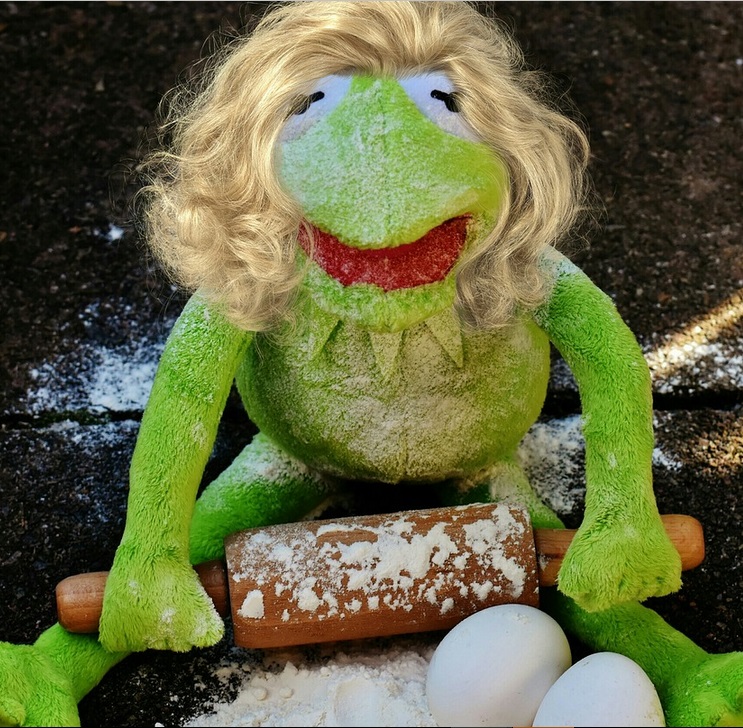
    “Learning when to throw the flour, proper handling of a rolling pin, the intricacies of an old fashion, the ‘flip,’ and countless other tricks of the trade were now in the hands, minds, and notebooks of  Cat Daddy and Tres.”  Voodoo Doughnut

    Recipe for Writing Vignettes

    Learning when to throw in anecdotes, proper handling of strong verbs, the intricacies of memory, the fear of exposure, and countless other tricks of the trade are in your hands and your creative mind. There are many resources to help shape your creation.

    Click Memoir for recipes . . .  how-to ideas . . . for writing anecdotes. Now, get to creating!

  • Memoirists are the bravest writers.

    Helen Sedwick, author of Coyote Winds, believes “Memoirists are the bravest of writers.”

    “In exploring the journeys of their lives, they [memoirists] delve into the private (and imperfect) lives of others. Can a memoirist write about surviving abuse without getting sued by her abuser? Can a soldier write about war crimes without risking a court-martial?

    Helen answers these questions in her guest blog post “A Memoir is not a Voodoo Doll.”

    We lead rich lives, most of us. Rich in experiences, in friendships, in family, and in our work. I think you can find riches to write about.  So, whatchya waitin’ for? Start writing. And don’t worry about a thing. Just write.

  • Figuring out the important thing

    “Writing essays is like therapy because you’re figuring out: What was the important thing in that incident? ”   —   Etgar Keret

    Keret, an “acclaimed Israeli writer . . . known for his unique and distinctive writing style” began writing essays after the birth of his son.

    “. . . because I’m sensitive about family issues. . . It never stops me from writing it, but it might stop me from publishing it.”  He wrote personal essays to “have a literary tombstone” for his father.  He is able to create work that is “moving and deeply affecting in only a few pages.”

    Excerpted from the February 2017 issue of The Writer magazine.

    Your turn: No pressure to write the next great American novel, just write what you know, what you experience. Write about your trip to the grocery store where you observed an act of kindness or had a weird encounter. Write about your ordinary-to-you holiday event . . . something you will find later and be glad you captured those exquisite moments that you had forgotten:  The funny story your grandfather told, your sweet aunt and her infectious laugh, the annoying presents you received from your equally annoying cousin/uncle/sister/friend. Write the good stuff, the bad stuff and the in-between stuff. Just write.

  • How we affect others. Prompt #307

    It’s after the holidays, when some of us spent time with family.

    It’s inauguration day.  Lots of energy. Lots of emotions.

    Today’s prompt, “How we affect others,” is something I’ve been thinking about for awhile.

    We don’t live in a bubble, immune to the thoughts and emotions of others.

    Today, I suggest writing about how we affect others.

    If that doesn’t work for you, how about:  Do we affect others?   What does that mean?

    I look forward to your response.

  • A Memoir is Not a Voodoo Doll

    helen-sedwickGuest Blogger, attorney Helen Sedwick, writes:

    Memoirists are the bravest of writers.

    In exploring the journeys of their lives, they delve into the private (and imperfect) lives of others. Can a memoirist write about surviving abuse without getting sued by her abuser? Can a soldier write about war crimes without risking a court-martial?

    Yes, but a cool head is key.

    Considering the thousands of memoirs published each year, there are relatively few lawsuits. Claims are difficult and expensive to prove. Most targets don’t want to call attention to a matter best forgotten.

    However, it’s important for memoir writers to be aware of the legal risks. You can’t avoid risk 100% of the time, but you can learn to take the ones that are important to your narrative arc and minimize those that are not.

    What is Safe Territory?

    You may write about a person in a positive or neutral light. For instance, you don’t need permission to thank someone by name in your acknowledgments or to mention non-controversial information, such as the name of your fifth-grade teacher.

    You may use historical names to establish context. If you are writing a memoir about the summer of 1969, you may mention Neil Armstrong and the moon landing and talk about your crush on Cat Stevens or Grace Slick.

    You may speak ill of the dead. Claims of defamation and privacy die with a person.

    When to Start Worrying?

    When you are publishing information about identifiable, living people and that information could be seriously embarrassing, damaging to their reputation, or subject them to public hatred and score, then you need to consider the risks of defamation and invasion of privacy. I am not talking about portraying your mother-in-law as bossy; I am talking about portraying your mother-in-law as a drug dealer.

    Here’s a quick summary of United States law. (The laws of other countries are more favorable to the targets.)

    Defamation

    To prove defamation, whether libel for written statements or slander for spoken ones, a plaintiff (target) must prove all of the following:

    False Statement of Fact:

    If a statement is true, then it is not defamatory no matter how offensive or embarrassing (although privacy issues must be considered, as I discuss below). Opinions are protected because they are not “facts.” If you post a restaurant review stating a meal was so bad you gagged, that is an opinion. But one restaurant critic was sued for saying a stringy steak tasted like horsemeat. The plaintiff claimed the reference to horsemeat was a statement of fact and not a colorfully stated opinion. Satire is not defamatory if the absurdity is so clear that a reasonable person would not think the statement is true.

    Of an Identifiable, Living Person, Group, or Company:

    A defamatory statement must contain sufficient information to lead a reasonable person (other than the target) to identify the target. Typically, the target must be a living person, but organizations have sued for defamation. Oprah Winfrey was sued by a group of Texas ranchers after saying she had sworn off hamburgers because of mad cow disease. (Oprah won the case.)

    That is Published:

    One person (other than the target) must read or hear the statement.

    Causes reputational harm:

    The statement must be more than offensive, insulting, or inflammatory. It must “tend to bring the subject into public hatred, ridicule, contempt, or negatively affect its business or occupation.” Statements involving crimes, loathsome diseases, professional incompetence, corruption, impotence, or promiscuity are automatically considered harmful.

    Made With Actual Malice or Negligence:

    If the target is a public figure, then the target must prove the statement was made with actual knowledge that it was false or with a reckless disregard for the truth. If the target is against a private individual, courts generally require some carelessness or fault by the writer.

    Invasion of Privacy Claims

    Even if you publish the truth, you may still be sued for unauthorized disclosure of private facts if you disclose private information that is embarrassing or unpleasant about an identifiable, living person and is offensive to ordinary sensibilities and not of overriding public interest.

    Private Information:

    The target must have a reasonable expectation of privacy. Any conduct in public is not protected, particularly today when everyone carries cameras in their pockets. Conversely, there may be issues your family doesn’t talk about, such as your uncle’s drinking problem, that are not private if your uncle has been convicted in public court of DUIs.

    That is Offensive:

    The disclosure must be more than embarrassing; it must be so offensive that it harms a person’s personal and professional reputation. Typically, these cases involve incest, rape, abuse, or a serious disease or impairment. Sex videos have triggered a number of suits.

    And Not of Public Interest:

    Even if the information is highly offensive, courts often decide there is no legal liability if the information is of public interest. Public interest does not mean high-brow or intellectual. Gossip, smut, and just about anything about celebrities is of public interest. Frequently, courts find stories of abuse and incest to be of public interest if they are disclosed by the victims. Judges and juries are not sympathetic when the perpetrator makes a privacy claim.

    And Unauthorized.

    You can avoid these issues by getting permission from people appearing in your memoir. An email will do. But avoid giving someone the right to approve your manuscript. It’s your story. If your sister remembers the past differently, she should write her own memoir.

    Other Privacy Limitations

    Ask yourself whether you are subject to other limitations.

    • Does your profession impose a duty of privacy? As an attorney, I cannot use confidential information about a client even if I mask the identity. Same for therapists, doctors, medical care givers, accountants, and other professionals.
    • Are you are a trustee/guardian for a third party or a minor? Then you have a duty not to cause harm to that person by disclosing private information.
    • Would your memoir disclose trade secrets or classified information?
    • Have you signed a confidentiality agreement? If you were a party to a dispute settled out of court (including a divorce settlement), your settlement agreement probably contains nondisclosure and non-disparagement clauses.

    If any of these apply to you, consult with an attorney about your options.

    How to Reduce Your Risks

    • Memories are subjective and evolve over time. Verify your memory with research and interviews. Retain records to support your statements.
    • Don’t say someone is criminal, sexually deviant, diseased, or professionally incompetent or use labels such as crook, pervert, or corrupt. Instead, stick to verifiable facts and your personal, emotional responses. Show, don’t tell. Let your readers come to their own conclusions.
    • Ask yourself how important the information is to your narrative arc. Judges and juries can be moralistic and will punish someone who discloses private information gratuitously or maliciously.
    • Rely on publicly-disclosed information, such as court documents and news reports wherever possible.
    • Consider changing names, physical characteristics, and settings so targets are not identifiable to the average reader. Using a pen name will also help.
    • Wait until your targets have passed away. (Okay, most of us don’t want to wait.)
    • Add disclaimers. I give some samples in Book Disclaimers Don’t Have to be Boring.
    • Get written consents and releases.
    • If accused of a defamatory statement, consider publishing a retraction.
    • Engage an attorney to review your manuscript.
    • Always reach for the truth when writing—it’s the best defense.

    And most importantly, keep a check on your motives. Publishing a memoir is not a chance to get even with somebody by skewering them like a voodoo doll. A memoir is about you, the writer. It’s an opportunity to explore your heart, your character, and your truth.

    To learn more about minimizing the legal risks of memoir writing, download my presentation at Fall 2016 Telesummit: The Heart and Soul of Memoir Audio Downloads.

    Helen Sedwick is an author and California attorney with thirty years of experience representing businesses and entrepreneurs. Publisher’s Weekly lists her Self-Publisher’s Legal Handbook as one of the top five resource books for independent authors.

    Helen’s blog coaches writers on everything from saving on taxes to avoiding scams.

    Disclaimer: Helen Sedwick is an attorney licensed to practice in California only. This information is general in nature and should not be used as a substitute for the advice of an attorney authorized to practice in your jurisdiction.


  • Envision your best year ever

    Suzanne MurrayGuest Blogger Suzanne Murray writes:

    Amid what seems like a world gone mad, can you relax, take a deep breath and consider the possibility that all that is happening around us, that seems so disturbing, is really an opportunity for so many to awaken to the divine spark within each of us? The place that holds the light and the creative solutions our world so very much needs.

    This, I suspect, is what Albert Einstein meant when he said that the problems we face won’t be solved by the same level of thinking that created them. We need instead to approach the monumental challenges we face in our lives and the world from the level of our heart, soul and spirit. We need to work with our creative imagination which is really our hotline to the divine. From here we can respond to situations from a place of love that we are rather than the grip of fear that events can trigger.

    The start of a new year fully invites us to consider new possibilities. Like the blank slate, the blank page, the blank canvas of our lives we can ask what do we want to create for ourselves and the world. We have the opportunity to let go of the idea that what has happened yesterday determines our today. We can break out of our habit patterns that feel safe, if not satisfying, and open to a sense of wonder at what we could choose to create. One way to get started is to practice being more present in each moment. Release regrets that keep us stuck in the past and let go of our worries that launch us into a future that doesn’t exist. The Now moment is really the place of creation where miracles can occur. It is also a place of real peace. To spend time in the present we have to let go of relying on our minds and the urge to try and figure everything out.

    When we focus on the moment we more readily find ourselves in the flow of the universe. As we relax and allow the answers and solutions will come in wondrous ways. A flash of inspiration, an unexpected gift or a chance meeting with someone who can help us. We learn to tap the deep intelligence of our heart that speaks to us in the form of intuition, that felt sense of what to do now, now and now. We follow it like a breadcrumb trail home to our true selves and the inspired life that helps heal our world.

    We may need to heal the repressed feelings and emotions that we hold in our bodies and energy fields that can cloud our clarity and keep us from easily accessing these deeper ways of knowing. Yet the development over the past twenty years of many different energy psychologies like EFT (Emotional Freedom Techniques), that I have had such wonderful success with, make this emotional housecleaning so much easier and graceful, allowing us to open to more of who we really are and step out of our comfort zone to create the new.

    Everywhere I go I meet people tapping into their creative impulses and their spiritual spark, in small and large ways, to help build a new world from this inspired place. This is the great possibility of 2017. What if as you live more from your heart and knowing and use your creative imagination this new year can be your best year ever?  What new life and world are you ready to create?

    Suzanne Murray is a gifted creativity and writing coach, soul-based life coach, writer, poet, EFT practitioner and intuitive healer committed to empowering others to find the freedom to ignite their creative fire, unleash their imagination and engage their creative expression in every area of their lives.

    As a Creativity Coach she helps others explore and support their creative self in whatever form it takes and to discover ways to live a more creative life. Offering The Heart of Writing Coaching and Classes since 1991, she brings to her work with writers a passion for words and an ability to inspire others to write and experience the writing process.. As an EFT Practitioner she enjoys working with these simple, powerful technique to help others shift out of limiting patterns and embrace a life they love.

    Committed to the power of Sacred Travel she leads small groups to Ireland, a place that offer a strong sense of the magnificent and mystical.

  • Despair and broken promises. Prompt #306

    broken-bowl-180-150x135You might know that I facilitate Jumpstart writing workshops. One day, a participant read her freewrite which contained the phrase, “Despair and broken promises.” I immediately thought that would make a great writing prompt.  What do you think?

    And that reminds me, during this season of many deaths, if you need to write a condolence note and are stymied about what to write, take a look at “The Condolence Note – What to Write.”  You might get some ideas.

    Today’s writing prompt:  Despair and broken promises.

    Post your writing on The Write Spot Blog and I’ll offer commentary  . . . always positive.