Favorite Recipe . . . Prompt #305

  • Favorite Recipe . . . Prompt #305

    grits-breakfastDo you have a favorite recipe?

    Write about that recipe . . . where did the recipe come from? What kind of occasion did you have it?

    Photo:  Fried eggs on top of sauteed kale on top of grits, sausage patty on the side. Yum!  My new favorite recipe inspired by a trip to Athens, Georgia, where every meal was delicious!

  • “I was very careful never to take an interesting job.” —Mary Oliver

    mary-oliverPoet Mary Oliver was born in 1935 in Maple Heights, Ohio. She had an unhappy childhood and spent most of her time outside, wandering around the woods, reading and writing poems.

    From the time she was young, she knew that writers didn’t make very much money, so she sat down and made a list of all the things in life she would never be able to have — a nice car, fancy clothes, and eating out at expensive restaurants. But Mary decided she wanted to be a poet anyway.

    Mary tried college, but dropped out. She made a pilgrimage to visit Edna St. Vincent Millay’s 800-acre estate in Austerlitz, New York. The poet had been dead for several years, but Millay’s sister Norma lived there. Mary and Norma hit it off, and Mary lived there for years, helping out on the estate, keeping Norma company, and working on her own writing.

    Mary said: “I was very careful never to take an interesting job. I took lots of jobs. But if you have an interesting job you get interested in it. I also began in those years to keep early hours. … If anybody has a job and starts at 9, there’s no reason why they can’t get up at 4:30 or 5 and write for a couple of hours, and give their employers their second-best effort of the day — which is what I did.”

    She published five books of poetry, and still almost no one had heard of her. She doesn’t remember ever having given a reading before 1984, which is the year that she was doing dishes one evening when the phone rang and it was someone calling to tell her that her most recent book, American Primitive (1983), had won the Pulitzer Prize. Suddenly, she was famous. She didn’t really like the fame — she didn’t give many interviews, didn’t want to be in the news.


  • Nostalgia and writing

    writers-dreamingWhen responding to a writing prompt, you are completely free to write the absolute truth, with no worries about what anyone will think.  You are also free to write fiction. You have the freedom to write whatever you want . . .  these writings are called freewrites.

    There are over 300 prompts on The Write Spot Blog. You can choose one at any time and just write.

    Sometimes our writing takes us to memories from our childhood, a very powerful place that is important and so intoxicating.

    From Writers Dreaming, by Naomi Epel,  chapter by James W. Hall:

    “One of the things that I’ve discovered through reading a lot of best-sellers, studying a lot of popular fiction for courses that I’ve given at the university, is that there are certain recurrent, mythic qualities in books that we could consider, from an elitist academic viewpoint, to be pulp or low-life, mass-market fiction. But obviously they have a certain kind of power or else three million people wouldn’t buy and be excited about them. One of the things I found out was that there were these recurrent patterns. One, for instance, that I feel has a kind of mythic quality, is what I came to call, in a particular class on bestsellers, “the golden place.” This is where the novel begins to picture a time and place, usually both of those, where the grass was greener, the flowers smelled better, the birds chirped more purely and everything was simply better. Usually associated with childhood and long ago. It’s a form of nostalgia, I suppose, but when you see it in a fictional form it has a tremendous power to call us to our best, ideal selves. We feel in ourselves that such golden places are possible to return to, to reacquire, to rediscover and I think that one of the hungers we bring to the reading experience is to go to other people’s golden places and live there, temporarily. A place that is coherent, that makes sense, where values are still valuable and ideals are possible to achieve.”

    Note from Marlene: Our freewrites are much like what Hall describes – when we go back in memory, we touch “the golden place” and “nostalgia” — a place where the reader/listener wants to live where you did and do what you did— and that speaks to the power of writing.

    Your writing has  “. . . in a fictional form. . . a tremendous power. . . “

    So, keep writing. Write for yourself with no judging nor critiquing. Just Write.

  • Outside magazine

    outsideThe mission of Outside magazine:

    To inspire active participation in the world outside through award-winning coverage of the people, sports, places, adventure, discoveries, healthy and fitness, gear and apparel, trends, and events that make up an active lifestyle.

    Contributor guidelines

    Outside is a monthly national magazine dedicated to covering the people, sports and activities, politics, art, literature, and hardware of the outdoors. Although our features are usually assigned to a regular stable of experienced and proven writers, we’re always interested in new authors and their ideas. In particular, we look for articles on outdoor events, regions, and activities; informative seasonal service pieces; sports and adventure travel pieces; profiles of engaging outdoor characters; and investigative stories on environmental issues.

    Queries should present a clear, original, and provocative thesis, not merely a topic or idea, and should reflect familiarity with the magazine’s content and tone. Features are generally 1,500 to 5,000 words in length. Dispatches articles (100 to 800 words) cover timely news, events, issues, and short profiles. Destinations pieces (300 to 1,000 words) include places, news, and advice for adventurous travelers. Review articles (200 to 1,500 words) examine and evaluate outdoor gear and equipment.

    Print Guidelines
    Please send queries (not manuscripts) and two or three relevant clips along with a self-addressed stamped envelope to: Editorial Department, Outside magazine, 400 Market St., Santa Fe, New Mexico, 87501. If interested in your story, we will respond within six to eight weeks.

    Photographers’ Guidelines
    We rely on regular contributors for many images, but we are always open to innovative work that creatively reflects the essence of the magazine.

    Features represent the best of outdoor writing and photography. Exposure is a gallery-style section devoted to showcasing exceptionally engaging photography and its creators. Parting Shot, the last image in the magazine, is a signature page that highlights a single image with a humorous twist.

    Please send Exposure and Parting Shot submissions as low-res JPGs or a link to a web gallery to photo@outsidemag.com

    Outside Online

    To do a better job of presenting our content and integrating yours, we’ve redesigned the site’s look and structure, and we think you’ll find Outside Online easier and more fun to use in its new form. That form is constantly evolving, so let us know what you’d like to see. We not only welcome your feedback, we rely on it. We hope you share our excitement about Outside Online and its endless possibilities. Please return often to participate and watch us continue to grow.


  • Something you have had forever. Prompt #304

    lil-brown-rocking-chairWrite about something you have had forever.

    Write about your oldest possession.

    You could also write about your earliest memory.

    I have had this rocking chair since I was two years old. I used to rock in it while watching I Love Lucy on our black and white television set. I lent it to my sister when her children were little. Then my three children enjoyed it. And now, my granddaughter reads her books while rocking.

    The books:  The Wonderful World of Oz and The Secret of the Old Clock . . those go way back. I spent hours captivated by Nancy Drew’s amazing sleuthing abilities and fascinated with the variety of characters in the Oz books. I was especially intrigued about how much time was spent for Dorothy and some of her companions to sleep or look for food. Time that could have been used to get them to their goals. Perhaps that’s where I learned patience and that books are a form of discovery and adventures into new worlds.

    Your turn:  Write about your oldest possession or an early memory.

    Just write!

  • If I have to . . . prompt #302

    thewritespotblog2016Today’s writing prompt:

    If I have to . . .


    Post your writing on The Write Spot BlogGuidelines.

  • Unique. Prompt #301

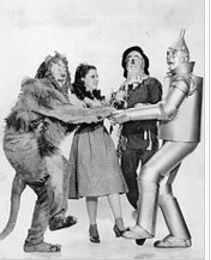
    Dorothy and friendsWhat makes your fictional characters unique?  What makes one person different from others?

    Write about someone from real life or write about a fictional character who embodies a unique quality.

    You can use the following list to describe a special characteristic or trait that sets a person apart from others.

    Charisma: charm or personal magnetism (from the Greek word meaning “favor”)
    Chutzpah: admirable or excessive self-confidence; this word and ginger are the only ones on this list that have both positive and negative connotations (from Hebrew by way of Yiddish; several other spellings are used, but this one is the most common)
    Élan: enthusiasm
    Esprit: vivacious wit (French, from the Latin term spiritus, “spirit”)
    Flair: style, or talent or tendency
    Ginger: spirit, or temper
    Gumption: initiative
    Gusto: enthusiasm (the Italian word for “taste,” from the Latin term gustus)
    Je ne sais quoi: a quality not easily described or expressed (a French phrase that means literally “I know not what”)
    Knack: intuitive capacity or knowledge (originally meant “trick”; perhaps from the onomatopoeic word akin to knock)
    Mettle: vigor, stamina (from an alternate spelling of metal)
    Moxie: energy, enthusiasm, courage (from the brand name of a soft drink; early on, such beverages were often touted, long before the advent of energy drinks, as providing pep)
    Panache: flamboyance; originally, a decorative plume of feathers on a helmet
    Pizzazz: glamour, vitality (unknown etymology)
    Spunk: courage, pluck
    Verve: vivacity, energy, enthusiasm

    Adapted from Daily Word, 2012

  • In troubled times . . . write.

    clarissa-pinkola-estesLetter To A Young Activist During Troubled Times by Clarissa Pinkola Estes

    One of the most calming and powerful actions you can do to intervene in a stormy world is to stand up and show your soul. Soul on deck shines like gold in dark times. The light of the soul throws sparks, can send up flares, builds signal fires, causes proper matters to catch fire. To display the lantern of soul in shadowy times like these – to be fierce and to show mercy toward others, both, are acts of immense bravery and greatest necessity. Struggling souls catch light from other souls who are fully lit and willing to show it. If you would help to calm the tumult, this is one of the strongest things you can do. There will always be times when you feel discouraged. I too have felt despair many times in my life, but I do not keep a chair for it; I will not entertain it. It is not allowed to eat from my plate. The reason is this: In my uttermost bones I know something, as do you. It is that there can be no despair when you remember why you came to Earth, who you serve, and who sent you here. The good words we say and the good deeds we do are not ours: They are the words and deeds of the One who brought us here. In that spirit, I hope you will write this on your wall:

    When a great ship is in harbor and moored, it is safe, there can be no doubt. But that is not what great ships are built for. This comes with much love and a prayer that you remember who you came from, and why you came to this beautiful, needful Earth.

    Note from Marlene:  In troubled times: Write. In happy times: Write. Write to celebrate, write to remember, write to recognize, write to be heard. Write to share.

    And listen . . . to others . . . to whatever noises there are. Be silent when listening. Notice. Observe. Just listen. And then . . . Just Write.


  • “Life will go on . . . ” Oren Lyons

    oren-lyons

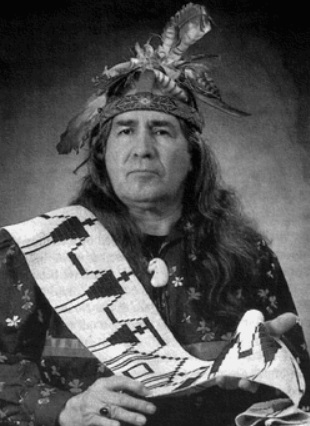
    “Life will go on as long as there is someone to sing, to dance, to tell stories and to listen.”  —Oren Lyons

    Share your story at: StoryShelter,  “a free service that lets you write down the personal stories of your life, save them and selectively share them. StoryShelter was founded in 2012 by Melisa Singh.”