Mystery Writing Magazines

  • Mystery Writing Magazines

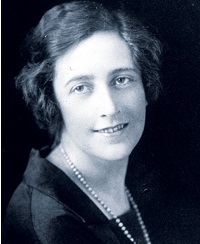
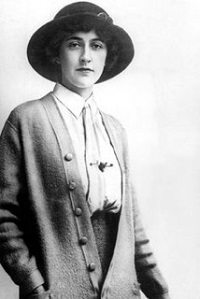
    Since The Write Spot Blog has been featuring Agatha Christie this past week, it seems right to post ideas where you can submit your mystery writing. At the end of this post, link to the writing style of Agatha Christie.

    Ellery Queen’s Mystery Magazine welcomes submissions from both new and established writers. They publish “every kind of mystery short story: the psychological suspense tale, the deductive puzzle, the private eye case—the gamut of crime and detection from the realistic (including the policeman’s lot and stories of police procedure) to the more imaginative (including ‘locked rooms’ and ‘impossible crimes’). We need hardboiled stories as well as ‘cozies,’ but we are not interested in explicit sex or violence. We do not want true detective or crime stories.” With the exception of a regular book-review column and a mystery crossword, EQMM publishes only fiction.

    EQMM is especially happy to review first stories by authors who have never before published fiction professionally. First-story submissions should be addressed to EQMM’s Department of First Stories.

    Partial list of Submission Guidelines:

    Three general criteria are employed in evaluating submissions:

    Strong writing, an original and exciting plot, and professional craftsmanship.

    Almost any story that involves crime or the threat of crime comes within purview. However, like all magazines, EQMM has a distinctive tone and style and you can only get a sense of whether your work will suit them by reading an issue. To receive a sample copy send a check or money order for $5.00 to Ellery Queen’s Mystery Magazine, Attn: Sandy Marlowe, 6 Prowitt St., Norwalk, CT 06855.

    EQMM uses stories of almost every length. 2,500-8,000 words is the preferred range. Shorter stories are also considered, including minute mysteries of as little as 250 words.

    EQMM uses an online submission system  that has been designed to streamline the submission process and improve communication with writers.

    For information about standard formatting, see William Shunn’s Guide to Proper Manuscript Format.

    Sleuth.WomanThere are a variety of places that want your mystery writing:

    Alfred Hitchock Mystery Magazine

    In Reference To Murder

    The Review Review (not a typo) – views on publishing

    For ideas on how to write mystery stories, take a look at Freelance Writing: The writing style of Agatha Christie.

  • Agatha’s Disappearance . . . Prompt #220

    Agatha Christie.4Today’s writing prompt is inspired by Agatha Christie’s mysterious disappearance.

    On a chilly December evening in 1926, 36-year-old Christie vanished from her English estate. While the famed author reportedly left a note that she had gone on vacation, the discovery of her car suggested otherwise. The vehicle was found at the edge of a quarry not far from her home, abandoned with its hood up and lights on. Inside sat Christie’s fur coat, her old driver’s license, and a bag of clothes.

    News of Christie’s disappearance spread quickly, and a massive manhunt commenced. Over a thousand officers and 15,000 volunteers combed the countryside while dredge teams scoured the surrounding lakes and streams. A fleet of biplanes searched from the skies – the first in England’s history for a missing person case.

    By the end of the week, Christie’s disappearance had become a national obsession.

    Who could have murdered the Queen of Crime? Many suspected Christie’s husband, Colonel Archie Christie, who had struck up an affair with a younger woman named Nancy Neele, and made no attempt to hide his affair from his wife. On the day of Christie’s disappearance, the couple reportedly quarreled after Archie announced he planned to spend the weekend with his mistress.

    Agatha was found on December 14th, at the Swan Hydropathic Hotel in Harrogate, England when a musician recognized her. Agatha signed in to the spa as Theresa Neele, strangely using the last name of her husband’s lover. Perhaps disproving the theory that her disappearance was due to amnesia.

    Biographer Andrew Norman suggests Agatha was in a fugue state or, more technically, a psychogenic trance, a rare condition brought on by trauma or depression.

    Christie rarely discussed the matter and the episode does not appear in her autobiography. In the days after her return, Agatha blamed her vanishing on a mysterious dream state, in which she took on an entirely new identity. “For 24 hours I wandered in a dream, and then found myself in Harrogate as a well-contented and perfectly happy woman who believed she had just come from South Africa.”

    Details excerpted from: The Line Up, (Matthew Thompson), History Extra (Andrew Norman) and Hercule Poirot Central.

    Writing Prompt: Write whatever inspires you from these details.

    OR

    Imagine what your fictional character could do. Perhaps show his/her normal activity, an every day scene. Then, the bizarre happens. It can be logical and make sense. Or, it can be totally unpredictable with no logical explanation for what happened.

    Just start writing and see what happens.

  • Agatha Christie’s notebook method of mystery writing

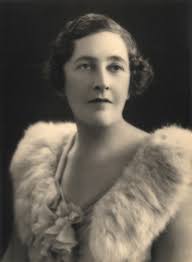
    Agatha Christie.3Agatha Christie was president of The Detection Club from 1957 to 1976. Formed in 1930, The  Club was a group of British mystery writers who helped one another with technical aspects of their writing and wrote a number of works together.

    Aha . . . an early writing club, or writing group, showing the value of writing with others.

    I was curious about the popularity of Agatha’s books, so headed to my computer chair to research, where answers were clicks away, unlike the “good old days” of thumbing through drawers of cards in the library.

    The following is excerpted from New Yorker Magazine.

    Here’s how the typical mystery novel starts:

    Eight or nine people are assembled in a small place: a snowbound train, a girls’ school, an English country house. Then—oh no! A body drops. Who did this? And why, and how? Among those gathered, or soon summoned, is a detective, who says that no one should leave, please. He or she begins questioning the people concerned, one by one. In the end, he collects all the interested parties and delivers the revelation: the murderer, the motive and the method. Anyone who has ever seen a Charlie Chan movie, or played Clue, or read a detective story of the past half century will recognize this scenario, created by Agatha Christie, the Queen of Crime.

    Two conventions for detective stories had been established when Agatha began writing them. First was the detective’s eccentricity. Sherlock Holmes, for example, when not chasing a criminal, lies on his couch, felled by boredom and cocaine, shooting bullets into the wall of his study. A second rule was the detective, when working, shows almost no emotion. What he or she does show—and what constitutes the main pleasure of the stories—inductive reasoning.

    Agatha generally followed these rules, but she elaborated on them, creating the scenario described above—the small place, the interrogations, the revelation—and used it, fairly consistently, in sixty-six detective novels published between 1920 and 1976.

    At the start, she was a clumsy writer. But she was able to offer her readers what they wanted, a whodunnit, also called a “puzzle mystery”—a story that is a contest between the author and the reader as to whether the reader can guess who the culprit is before the end of the book.

    Agatha favored a clean conking on the head or—her overwhelming preference—poison. That choice was possibly a product of her war work in the dispensary, with its many shelves of potentially lethal drugs. But poison probably appealed to her also because it did not involve assault. Agatha disliked violence. When, in her novels, someone starts to look dangerous, her detective does not pull a gun. He doesn’t have a gun. Bystanders may wrestle the malefactor to the ground. In one case, where there are no bystanders, the detective squirts soapy water into the murderer’s face. It works.

    The murder that sets the plot in motion is rarely shocking. For one thing, readers almost never see it happen. Furthermore, the victim is ordinarily someone with whom we do not sympathize. Often the victim is a rich, nasty old person who enjoys taunting his prospective heirs with the accusation that they wish him dead, so they can collect their inheritances.

    This rule—that Christie’s murders do not touch the heart—admits of one curious exception: the murder that the culprit commits, after the main murder, in order to get rid of someone who knows too much. Here the victim is often a nice or in any case blameless person, and readers witness the crime, or its prelude. In “A Murder Is Announced” (1950), Miss Murgatroyd, who knows that Letty Blacklock wasn’t in the dining room when the gun went off, is taking the washing off the line when she hears someone approaching. She turns, and smiles in welcome, obviously to a neighbor. It has started to rain. “Here’s your scarf,” the visitor says. “Shall I put it round your neck?”

    Christie created two famous detectives: Hercule Poirot and Jane Marple.

    Poirot’s most obvious characteristic is his dandyism. He dyes his hair, smokes thin, black Russian cigarettes, wears pointy patent-leather shoes ill-suited to walking the grounds of the country houses where he must often do his sleuthing. He deplores the English preference for fresh air, thin women, and tea. During interrogations, Poirot exaggerates his foreignness. The person being questioned then takes him less seriously, and in consequence tells him more.

    Miss Marple is the opposite of Poirot. She comes from a sleepy village, St. Mary Mead, and she seems a sweetly bewildered old lady. She has china-blue eyes and knits constantly. Nobody thinks anything of her. They should, because she is a steely-minded detective. When she is on a case, she makes it a rule to believe the worst of everyone. She reports with regret that experience has confirmed this point of view.

    In John Curran’s book, “Agatha Christie’s Secret Notebooks,” the notebooks are school exercise books in which Agatha worked out her plots. She made lists of possible victims, culprits, and M.O.s. Then she picked the combinations that pleased her.

    Marlene’s Musings:  There you have it. If you want to be a successful mystery writer, simply make a list of victims, culprits and methods. And then. . . just write!


  • Put that in your mustache . . . Prompt #219

    Agatha Christie


    As I searched for Agatha Christie quotes for Agatha Christie Week on The Write Spot Blog, I came across this one:  “Put that in your mustache and smoke it.” ― Agatha Christie, Hallowe’en Party

    I think it’s so funny. Let’s see how it works as a writing prompt.

    “Put that in your mustache and smoke it.”    Ready?  Write!

  • The why must never be obvious.

    Agatha Christie.2

    “Ah, but my dear sir, the why must never be obvious. That is the whole point.”

    Agatha Christie, Five Little Pigs


  • Take a step. Start the journey.

    Hey there. . . Hi!        If you are a first-time visitor, Welcome! I’m glad you are browsing The Write Spot Blog. Welcome to all readers and subscribers. I’m always happy to have readers and contributors participate in The Write Spot Blog.

    “We” is me — a one-woman show. It’s just me, Marlene, offering inspiration and writing prompts to spark your writing.

    Prompts are posted on Wednesdays and Fridays. Use these prompts however they best work for you. One suggestion is to set your timer for 15-20 minutes. Sometimes the best writing gets done with the pressure of a deadline. Write fast and furious.

    Do not expect “perfect” writing. No one will read your freewrite, unless you invite them to. Freewrites come from within you and burst out during this time of writing freely. Sometimes when we’re writing freely, our mind takes a 90 degree turn and pretty soon we’re off, writing about something completely unrelated to the writing prompt. That is absolutely fine. This is the best kind of writing. This type of mind wandering is perfect writing.

    The Write Spot Blog is a place where you can experiment with different types of writing: serious, personal, humorous, reflective, personal essay, fiction, non-fiction, poetry, playwriting, screen writing, letter writing.

    It’s a place where you can work on your writing and play with writing. You can be yourself (memoir/personal essay), you can be someone else (fiction), you can be a reporter (non-fiction/ essay).

    As you observe the world and its quirky inhabitants, explore your findings through writing. Work out your problems by writing. Write about your feelings. Write what you observe. Write about your day, your family, friends, your job, your wishes, your dreams, write about your frustrations. Make up stuff. Just write!

    How to use writing prompts.

    How to get into the mood to write.

    Natalie Goldberg talks about writing practice.

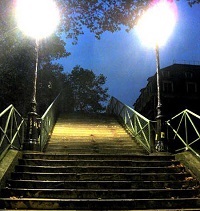
    Jim C. March Paris stairsTake a step. Start the journey. Explore by writing.

    Paris stairs by Jim C. March

    http://jamescmarch.com/JimPhotos/index.html


  • Behind the shutters. . . Prompt #218

    Shuttered window on concrete buildingYou can respond to this prompt, using your personal experience, or write from your fictional character’s point of view.

    Writing Prompt:  Behind the shutters.

    I would love to see your writing, using this prompt.

    Posting is kinda simple:  If you aren’t registered on The Write Spot Blog. . . go ahead and register. Wait for a password.  Then Log-on and post your writing.

    Photo Credit: Pro_Deluxe Photography by Jeff Cullen

  • It was a dark and stormy night . . . Prompt #217

    iron fence in front of cemeteryWrite about a time you were scared.

    Share your writing here, on The Write Spot Blog.

    First time posting: Register. Look for your password in your email. Then, log-in and post your writing.

    Photo Credit: Pro_Deluxe Photography by Jeff Cullen

  • Alaska Quarterly Review encourages new and emerging writers

    Alaska Quarterly ReviewAlaska Quarterly Review is a literary journal devoted to contemporary literary art, publishing fiction, short plays, poetry, photo essays, and literary non-fiction in traditional and experimental styles. The editors encourage new and emerging writers, while continuing to publish award winning and established writers.

    Guidelines

    FICTION: Short stories and novel excerpts (generally not exceeding 50 pages).

    POETRY: Poems (up to 20 pages).

    DRAMA: Short plays (generally not exceeding 50 pages).

    PROSE: Literary nonfiction (generally not exceeding 50 pages).

    PHOTO ESSAYS: Query before submitting.

    All manuscripts must be typed and accompanied by a self-addressed, stamped envelope (SASE).

    Unsolicited manuscripts are read between August 15 and May 15.
    AQR responds to e-mail queries, but cannot review electronic submissions.
    Identify simultaneous submissions in cover letter.

  • Portals, Dreams and Promises. . . Prompt #216

    Last night I dreamt about the University of Georgia Arch. My son gave me a selection of photos he took in 2015. He and his fiancée now live in Athens, Georgia, supplying him with a variety of photo opportunities. Thus, the arch.

    I dreamt about the arch as a portal—a path—to writing. How we can walk through the portal, like walking through an airport screening arch, and come out on the other side with ideas for writing. It felt like walking towards inspiration—being open to new ideas.

    In my dream I saw words over the portal, curving like a rainbow, “This is where dreams are made.” And “Promises are kept or broken.”

    Either way, I see these words, these concepts, as inspiration for writing. Okay, I see almost everything as inspiration for writing: song lyrics, opening sentences in books, first lines of poetry. I see interesting items and think “writing prompt.”

    Today’s Writing Prompt: Write about your dreams. Or, write about promises made. Or write about the idea of being changed after walking through a portal.

    UGA ArchThe University of Georgia Arch photo by Pro_Deluxe Photography by Jeff Cullen

    “Commissioned in 1856, the Arch was built sometime between then and 1858, but no one can say for sure the exact year it was constructed. It was part of the iron fence erected to secure the campus. Gates were part of the structure, closing off the passageway beneath the Arch at night. The gates disappeared sometime in 1885, likely the victim of a midnight prank.

    For most graduates, visiting the Arch after commencement is a rite of passage. Since the 1900s, tradition has held that students may not pass beneath the Arch until they have received a diploma from UGA. Legend has it that the tradition began when Daniel Huntley Redfearn (BL ’09, BS ’10) arrived as a freshman and vowed not to pass beneath the Arch until he had graduated. One of Redfearn’s professors heard the vow and repeated it to his class, and the story stuck.

    If only that Arch could talk.

    It could tell of political protests and silent vigils, memorials to deceased students, and long lines of happy new graduates waiting to pose for a family photo beside the three pillars of the Arch, which stand for wisdom, justice and moderation.

    For 150 years, the black iron arch—fired at the old Athens foundry—has served as the University of Georgia’s most visible symbol. Yet it is cloaked in intrigue, its past a mystery even to the most educated scholars.”