Superstition Review

  • Superstition Review

    Superstition Review  is the online literary magazine published by Arizona State University twice yearly (May and December), featuring art, fiction, interviews, nonfiction and poetry.

    Their mission is to promote contemporary art and literature by providing a free, easy-to-navigate, high quality online publication that features work by established and emerging artists and authors from all over the world.

    Superstition Review welcomes submissions of art, fiction, nonfiction, and poetry during their two reading periods in spring (January and February) and fall (September and October). Submission Guidelines.

    Superstition Review maintains a strong year-round community of editors, submitters, contributors, and readers through social networks:

    s[r} Blog
    s[r]Facebook
    s[r]Goodreads 
    s[r]Google+
    iTunes U
    LinkedIn
    Pinterest
    Tumblr
    Twitter
    YouTube

    The Write Spot Blog is part of the Festive Spirit Blog Hop, hosted by Francis H. Powell. To read posts by participating bloggers, click on Francis H. Powell’s Home Page. Scroll down, choose a name, click on one and you will magically be transported to creative blog posts.

    Festival of Spirits Blog Hop

  • What is on your bucket list? Prompt #212

    This seems to be the time of year to make lists. I am normally a list maker, but I get real serious about it starting mid-December. With all the “kids” coming home for the holidays, I mentally list where everyone will sleep. Then I gather blankets, quilts, comforters and pillows. Some unlucky family members have to sleep on the floor. Can’t be too bad, because they keep coming back.

    Then there are the other lists: shopping (gifts, groceries), meals (breakfasts, dinners. . .I’m not used to cooking for nine), party planning (food, drinks, moving furniture), holiday cards (cards received, cards sent) . . . okay, probably too much information. But yes, I am that serious about making lists.

    I’ve been thinking about bucket lists. You know . . . things you’ve always wanted to do and some day you will.

    Bucket.1I’m wondering, what’s on your bucket list?

    For fiction writers. . . what’s on your fictional characters’ bucket lists? You can use this as a way to get to know them better.

    If you want, you can make an opposite type of list: Things you no longer want to do. Things you never wanted to do. Things you will never do again.

    Helpful lists for strategizing your holidaze: “Rewrite Your Holiday Scene Prompt #210”.

  • Can you make ghosts come alive?

    Guest Blogger Francis H. Powell: Writing About Ghosts.

    What are your feelings about…Ghosts…do they exist? They are ridiculed, have been made mundane, absurd films like Ghostbusters have trivialized them. Kids aren’t blinkered and naïve. Cynics rule.

    Christmas seems the perfect time to unleash a Ghost story.

    Many writers set out to write thrilling stories to a cynical disbelieving audience. Perhaps the golden age of ghost story telling, the Victorian age, was a period when readers were far more susceptible to believing in ghosts. Modern day readers are far more pragmatic, scrutinizing what they are reading. Houses are lit up with bright neon light, streets are not dark and shadowy as they were in past times. I guess very few writers who write ghost stories have ever encountered a “real” ghost, so they are letting their imaginations run wild.

    For a Ghost story to work it has to sustain a high level of tension, from the opening sentence to the last. Short story format works really well on this account. The author faces a mountainous task of how to conclude the story. It’s not like a crime story…in which all the readers’ questions can be answered at the end, the reader of a ghost story has to be engaged by the plot but at the same time needs to feel uneasy and on edge. A successful ghost story should be overflowing with atmosphere, descriptions of sounds, colours, feelings should prevail.

    A good Ghost story should not be too far removed from reality, not too fantastical, this way the reader can believe in it, imagining themselves facing such an encounter with a phantom. A good ghost story should not be like a distant long, long ago fairy tale. The reader should be led to believe the story takes place in the recent past. Writers should shy away from the over-used “old lady” or “tiny infant” go for a ghost that is in some ways a mirror of yourself and representative of your fears. Indicate gruesome happenings but let your reader fill in the details.

    You can test your ghost story by telling it in a room filled with bright light, during the middle of the day, if you are scared under these circumstances, your story is a winner.

    Where should a writer look for ideas? Should they venture back to their childhood and tap into their childhood fears? Do we have to have led troubled lives to write a good ghost story? For M R James, considered an undoubted master of the genre, apparently this was not the case. A colleague of James’s once said, perjoratively, that his was a life untroubled – a smooth progression from Eton to Cambridge and then back to Eton. He never experienced real life; it was in every sense academic. So seemingly an academic, living in a rather insular world has the makings of a great ghost story writer and perhaps it is the ghost story genre that allowed him to challenge the rational world he inhabited, that lay behind his motivation.

    How should we write our ghost story? In the third person or the first person? One option might be…write it in the first person, but make it obvious the narrator is untrustworthy, flitting between reality and madness.

    Ghosts, like people, come in many forms and have different missions whilst amongst the living. Some return from the dead to wreak vengeance; others have good intentions, wanting to help a loved one. Some are the spirits of people who were murdered or committed suicide and so are not at peace and are still troubled beyond the grave.
    What we can say, definitively, is that ghost stories should always contain a lot of suspense, always trying to create anticipation and excitement. Atmosphere is vital in building tension in the
    story.

    Born in 1961, in Reading, England, Francis H. Powell attended Art Schools. In 1995, Powell moved to Austria, teaching English while pursuing his varied artistic interests of music and writing. He currently lives in Paris, writing both prose and poetry. He is the author of Flight of Destiny.

    This article is part of a Festive Spirit Blog Hop. To read posts by participating authors and bloggers, click on Francis H. Powell’s Home Page. Scroll down, choose a name, click on it and you will be transported to another dimension.  Enjoy!

    Festival of Spirits Blog Hop


  • Physical gestures reveal emotions . . . Prompt #211

    Physical gestures do more than enhance dialogue . . .

    Writing dialogue usually includes physical gestures— those things we do when we talk.

    You don’t have to be exceptionally creative to write realistic action while your characters are dialoguing. Just write whatever it is they are doing:  fingers drumming, shoulders twitching, cell phone glancing, eyes wandering, forehead scratching. So much nonverbal communication going on. Just don’t be boring about it . . . no fingers twirling hair, no lip biting. Like clichés, these are over-used physical gestures.

    Here’s what Steven James says in the January 2016 issue of the Writer’s Digest magazine, “If you find your character brushing his nose or repositioning his chair or crossing legs and so forth for no other reason than to provide a respite from the dialogue, recast the scene.

    Just as dialogue should reveal the intention of the characters so should the actions that they take while they’re speaking. When we read that a character folded his arms, we’ll naturally wonder why he’s doing that. What is it meant to convey about his attitude or emotional response to what’s happening? Don’t confuse your readers by inserting needless movement. Rather, include action only as long as it adds to the scene or enriches it. If the action doesn’t convey anything essential, drop it.”

    Actions and non-verbal communication:

    Fingers drumming, arms crossed: Bored, really doesn’t want to listen, disagrees with what is being said. Could be a superior attitude, could be a defensive mechanism.

    Twitching, sighing, avoiding eye contact, wandering eyes: Nervous, anxious, being secretive, feeling overwhelmed.

    Here’s your mission, if you decide to accept it: Observe actions at coffee shops, in stores, shopping malls, at parties, wherever people gather. Make a list of what people do while engaged in conversation. Pull out your list next time you are writing dialogue.

    Writing Prompt: Make a list of things people do while conversing.

    You are invited to join our Festive Spirit Blog Hop . . . just as carolers stroll while entertaining, Francis A. Powell has organized several bloggers to entertain and inform us. Hop on over to Powell’s home page. Scroll down, choose a name, click on it and you will be transported to another dimension.  Enjoy!

    Festival of Spirits Blog Hop


  • “I’ve only regretted stuff I’ve left in . . . ” —Jojo Moyes

    Jojo MoyesJojo Moyes discusses her writing process with Jessica Strawser in the January 2016 issue of the Writer’s Digest magazine.

    “Frequently I will write chapters that I end up having to ditch. And they might be beautifully crafted, they might contain things I’m really proud of, but you have to be ruthless. There comes a point when you know in your gut something just isn’t working, or isn’t as good as it should be. What I’ve found over the years is that I’ve never regretted anything I’ve ditched—I’ve only regretted stuff I’ve left in.”

    The January 2016 issue of Writer’s Digest magazine is loaded with fantastic information for writers. Buy it now, because if you wait. . . you know how it goes. . . you’ll forget, or it will be off the newsstands. Or. . . aha! Lightbulb moment. . . Subscribe! I have been a subscriber for years and find something good in every issue.

  • A Variety of Point of Views

    Point of View (POV)- is the term to describe who is telling the story . . . or. . . who is narrating the story.

    Point of view is the story told from the narrator’s viewpoint and what the narrator’s relation is to the story, or . . . the distance between the narrator and the story, as well as the trustworthiness of the narrator.

    Involved narrator – the narrator is involved in the action as it unfolds

    Detached narrator – narrator is an objective observer or witness to the action

    Reliable narrator – a narrator whose account and perceptions we can trust

    Unreliable narrator – a narrator whose own ignorance, mental or emotional state, age, prejudice, etc. may distort or limit his or her perceptions

    Free indirect style – a lesser know POV, a style of third-person narration, using some of the characteristics of third-person along with the essence of first-person direct speech. More about free indirect style.

    DESCRPITION OF POVS

    First person: Autobiographies and memoir

    POV can be any of the following in fiction and non-fiction:

    First person narrator: Narrator is a character in the story and narrates the story using the pronoun “I.”

    Second person narrator: Rarely used, the second person narrator uses an identified or unidentified ‘you’ throughout the story.

    Third person narrator: This narrator is a voice outside the story and tells the story using the pronouns “he, she, and they.” Sometimes the third person narrator is defined, sometimes the third person narrator is unknown. That is, the reader doesn’t know who the narrator is.

    The third person narrator can be omniscient or limited.

    The omniscient third person narrator is all-knowing, able to move in and out of the thoughts of all the characters and to comment on events before and after the scene has happened.

    The limited third person narrator is limited to knowledge about a single character, or one character at a time.

    How third person narrator operates:

    Narrative distance: Third person narrator can zoom in or zoom out to show narrative distance.

    ~Zoom in: Close, as if beside the character

    ~Zoom out: Objective and distant, observing in a general way, like a fly on the wall

    Really close: Inside the character’s consciousness and skin: can describe sensations, perceptions, inner workings, and responses of the character.

    Examples

    It was the winter of 1993. A solitary figure walked through the snowy streets of Manhattan. Narrator seems to be floating high above the roofline, gazing down on the snowy streets = omniscient.

    Edward Tollivar leaned into the wind. The cold sliced through his coat as he walked through the snow to Tracy Covey’s house on Jane Street. Camera moves closer. Narrator is striding alongside Edward and tells us where he is going.

    A sick heat spread through Edward’s chest, though the snow whipped in sharp slices across his face coat. His fingers touched the letters in his pocket. He didn’t want to show them to his cousin. Everything he’d hoped to hide was there. Narrator’s voice inhabits Edward’s body, experiencing the sick heat in his chest and fingering the letters in his pocket. The narrator knows Edward’s thoughts and fears as intimately as the first person narrative.

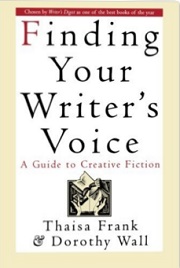
    Finding Your Writers VoiceSelections from Finding Your Writer’s Voice: A Guide to Creative Fiction, by Thaisa Frank and Dorothy Wall, inspired this post.

    Explore more about point of view in past posts:

    POV Is Like A Photographer’s Lens

    Scene One – Your Point of View. Prompt #108

    And then . . .  Just Write.

  • American Short Fiction Magazine

    “American Short Fiction publishes work by emerging and established voices: stories that dive into the wreck, that stretch the reader between recognition and surprise, that conjure a particular world with delicate expertise—stories that take a different way home.”

    “Our goal here at American Short Fiction is to respect . . . involvement by offering consistently intelligent, engrossing, and beautiful reading, in print and on this website, and we appreciate your company. “Stories! Stories, stories, stories!” cried the narrator on the final page of that first Spring ’91 issue, in a work by W. D. Wetherell. Stories, indeed.”

    American Short(er) Fiction Contest
    The prize recognizes extraordinary short fiction under 1,000 words. The first-place winner will receive a $1,000 prize and publication, and the second-place winner will receive $250 and publication. All entries will be considered for publication.
    Submission period ends: February 1, 2016.
    Guidelines for contest.

    Submission Guidelines for regular submissions.
    In addition to its triannual print magazine, American Short Fiction publishes stories (under 2000 words) online.

    Unsolicited submissions are accepted year-round. There are no set guidelines as to content or length. Anyone wishing to send a story to American Short Fiction should first become familiar with the work previously published by the magazine.

    Short fiction must be original and previously unpublished. ASF considers work that has appeared online (including on blogs and Facebook) to be previously published.

    All manuscripts must be typed and double-spaced, with the author’s name, address, phone number, and approximate word count at the top of the first page, and numbered throughout.

    Send only your best work. Submit only one story at a time. Pay the $3 submission fee before submitting your work.

    Joyce Carol Oates.200ASF will read and consider simultaneous submissions, on the condition that the author notify them immediately if the manuscript is accepted for publication elsewhere. Submitters must also withdraw the submission through the Submittable site.

    Payment is competitive and upon publication. American Short Fiction purchases first serial rights. All rights revert to the author upon publication.

    The Spring 1991 inaugural issue included an essay by Joyce Carol Oates.

  • Rewrite Your Holiday Scene . . . Prompt #210

    ‘Twas the night before the party and all through the house, everyone was hurrying with too much to do, even the mouse!

    Sound familiar? I was frustrated with too much scurrying before I learned strategies about how to manage holiday stress. As I gathered ideas, I felt calm and at peace. Let’s create an enjoyable holiday season.  It does involve list making. So get some paper and a pen. These lists will help you focus on making your holidays less stressful and more enjoyable.

    The six key steps to reduce holiday stress are inventory, decide, accept, choose favorites, enlist and manage.

    Take inventory. Make a list of all the extra activities you do during the holidays. Be sure to include baking, making crafts, decorating, cleaning, helping at church, attending parties, shopping, wrapping, making travel plans, driving around to see decorations and meeting guests at the airport.

    Next: Go through your inventory list and cross out the activities that have little value to you, or that you don’t enjoy.

    Decide what you value about the holidays. Make a list of what is important to you during the holidays. Take a look at what works for your family and what no longer has meaning.

    Decide which activities are realistic and cross off the ones that are difficult to achieve. Decide which  traditions are truly meaningful and which are merely habitual. Choose one activity you can skip this year. After the holidays, if it felt wrong, you can always reinstate that activity next year.

    Acceptance will help you create a celebration that meets your unique needs. As you evaluate your list, look at what you don’t like about your holiday celebration. Decide if it’s changeable, or if you need to accept it. Sometimes compromise is an acceptable solution.

    Choose favorites. Ask family members what they liked best about last year’s holiday season and what they would enjoy doing this year. Sometimes the simplest activities get the highest ratings. Try to pick one activity or food to please each person. Rather than making twenty different kinds of cookies, make only one or two favorites.

    I used to think I had to have homemade gifts for everyone and participate in glittery crafts. When I admitted I don’t like craft-making, I felt lighter and more energetic to do the things I enjoy.

    There is no one right way to celebrate. Take control of the celebration and shape it to conform to your wishes and values.

    Enlist help from family members and friends. Show them your to-do lists and ask for help. We invited several families to our house last year for a holiday celebration. I absolutely needed help. I made a complete list of everything that had to be done, using such categories as furniture (rearranging), drinks (arranging glasses and chilling bottles), tables (setting up extra tables), cars (making room for guests’ cars), food (preparation and serving), miscellaneous and laundry (yes, I even included this on the to-do list). When family members saw all that had to be done, they were very willing to help.

    Manage holiday stress by taking care of yourself. The obvious is to eat well, get enough rest, avoid sugar and alcohol. The not so obvious is to remember to release stress through gentle stretching, brisk walking, listening to soothing music, practicing yoga or whatever helps to de-stress and relax.

    Many of these ideas are from Unplug the Christmas Machine, by Jo Robinson and Jean Coppock Staeheli.

    The main components of a successful holiday season are to be aware and choose wisely.

    Make conscious choices about how you want to celebrate the holidays. Decide what is important and what no longer works.

    If we follow this plan, our new story could be, ‘Twas the night before the party and all through the house, everyone was sleeping peacefully, even the host and hostess.

    Writing Prompt: Write a magical, whimsical, unrealistic, impractical, not-gonna-happen holiday scene.

    Then: Write a practical holiday scene. . . using ideas from your lists: Take inventory, decide, accept, choose favorites, enlist and manage.

    With new ways of thinking and some planning, you will create a holiday you can enjoy.

    Holiday

  • Does failure weigh more than success?

    Guest Blogger Rachael Herron writes about successes and failures.

    It’s December! I know this for a fact (I just rechecked the calendar). No matter which hemisphere you’re in, regardless of season, this year is getting ready for her final bow. It’s completely impossible that 2015 is almost over because about seventeen minutes ago the year was just starting, full of potential and wonder and pale spring-green hope.

    I’m prone to doing what everyone else does at the end of a year: weighing the past year’s successes and failures against each other.

    But you know what? Failure weighs way more than success. When you put things on that imaginary scale, each small failure weighs as much as a wheelbarrow full of rocks while each huge success weighs almost nothing. Success makes you lighter—it makes you able to float for a minute or even an hour—while failure drags you so low your chin scrapes the pavement.

    That? Is not fair. I don’t know about you, but I can have a million successes each day (I woke up alive! I made the best cup of coffee known to mankind! I wrote a sentence I could be proud of and wouldn’t mind other people reading! I knitted a row without stabbing myself with the needle and bleeding to death!) but that one thing I screw up makes me feel like the amazing things don’t count. The scale isn’t affected by the airy happy things I place on the success side, and then it cracks in half with the weight of that awkwardly worded email I sent in which I accidentally hurt someone’s feelings.

    So hey. Let’s do things differently this year.

    Throw away the scale.

    Let’s NOT tally up our successes and failures. Failure will win because it’s big and loud and hulk-smashy. Success (with its fairy wings and gossamer breath) will get pummeled and then go hide in the bathroom to cry.

    Screw that.

    If you just have to make a year-end tally, write down what you’re proud of this year. Things like:
    •    At your day job, you didn’t smack a single person.
    •    Your blueberry muffins disappear from the kitchen within seconds.
    •    You made someone laugh until they cried.
    •    Your socks matched more days than they didn’t.
    •    You started that novel, and now you have more words written than you did last year.

    If your fingers get itchy to list the failures, DON’T. Break the pencil and marvel at your own strength. You already spent enough time on what didn’t go well—I know you did. From enormous impossible things like not saying the right thing before a loved one died to tiny silly things like only remembering to put eyeliner on one eye: You have spent enough time hurting.

    Forgive yourself like you would forgive the person you love most. Don’t spend time “learning” from it — you did that already without even having to try. Be kind to yourself. In three weeks let’s turn the calendar page without fanfare. Last January we thought we had a whole year to finally get things right, but come on. What a burden to place on a brand new year. What was really true was that we noticed where we were in time. We can do that any old day. Let’s do that today, December 10th. Or September 17th. Or February 3rd.

    Every day is a good day to notice where you are, right now.

    Celebrate your successes because they are daily and many and they are spectacular.

    Rachael HerronRACHAEL HERRON is the bestselling author of the novel Splinters of Light and Pack Up the Moon (both from Penguin), the five-book Cypress Hollow series, and the memoir, A Life in Stitches. She received her MFA in writing from Mills College, and when she’s not busy writing, she’s working her other full-time job as a 911 fire/medical dispatcher for a Bay Area fire department. She’s a New Zealand citizen as well as an American, and she is a proud member of the NaNoWriMo Writers Board. She can probably play along with you on the ukulele.

    Sign up for Rachael Herron’s Blog, so you don’t miss a single episode in the life of author Rachael Herron.

  • What hurts right now? Prompt #209

    BandaidYou! Yes, you. What hurts right now?

    Write about that.

    Or write about what is hurting your fictional character.

    Writing Prompt: What hurts right now?