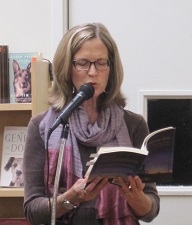
“Challenges always present themselves in any creative undertaking, but you’ll never get far if you let doubt rule you.”
Susan Bono author of What Have We Here: Essays about Keeping House and Finding Home.
“Challenges always present themselves in any creative undertaking, but you’ll never get far if you let doubt rule you.”
Susan Bono author of What Have We Here: Essays about Keeping House and Finding Home.
If you have written your memoir, or are in the process, and it’s not shaping into what you envisioned, you could transform it into a personal essay.
It might be easier, at some point, to concentrate on writing a personal essay, rather than a book-length manuscript.
There are many posts on The Write Spot Blog about how to write personal essays. (Please scroll down for the how-to posts).
You may be writing vignettes to satisfy your desire to write family stories. You can publish these with the help of many do-it-yourself publishing companies.
If you want your personal essays to be published for public consumption, there are many opportunities for submission: Big Brick Review, Chicken Soup for The Soul, The Christian Science Monitor, Fourth Genre: Explorations in Nonfiction and so many more places. Check the back pages of Writer’s Digest magazine.
You can submit your writing to be included in anthologies. Conduct an internet search to find anthologies that are currently accepting submissions. An online search for “submit to anthologies” yielded thousands of results. You can also find anthologies that are looking for submissions in the back pages of Writer’s Digest magazine.
And of course, you can check in at The Write Spot Blog anytime to find publications that accept personal essays, just click on “Places to Submit.”
 You can subscribe to The Write Spot Blog and not miss a single post. When you subscribe, posts will be delivered to your email inbox. Just fill out the information on the home page of The Write Spot Blog — Right side, scroll down.
 THE COLORADO REVIEW accepts short fiction, personal essay, poetry, and book reviews.
FICTION & NONFICTION
Colorado Review considers short fiction and personal essays with contemporary themes (no genre fiction or literary criticism).
POETRY
Poetry of any style is accepted. Please limit poetry submissions to no more than five poems at a time.
If you would like to submit a book review, please send query to respective editors.
SUBMISSION DATES AND FORMAT (Scroll down)
Nonfiction manuscripts are read year-round.
Fiction & poetry manuscripts are read from August 1 to April 30.
Simultaneous submissions are accepted; writers must notify CR immediately if the work is accepted elsewhere.
CR considers only previously unpublished work.
Colorado Review purchases First North American Serial Rights; all rights revert to the author upon publication in CR. We pay $10 per page ($30 minimum) for poetry and $200 for short stories and essays. Authors also receive two copies of the issue in which they are published and a one-year subscription to CR.
Colorado Review strongly encourages writers to be familiar with their magazine before submitting.
Examples of work published in Colorado Review are posted on their website (scroll down).
 Apples but not bananas
 Boots but not shoes
 Carrots but not potatoes
 Door but not window
 Eggs but not chickens
Look at the letters in the first words of each line above.
Sleepy but not tired
Sleep but not slumber
Greet and hello and goodbye but neither here nor there.
Solution to this riddle:
The first word has double consonants or double vowels. The rest of the words don’t matter.
Two more:
Matter but not material
Correct but not right
I’m becoming addicted. . .
Hope you have fun with this little brain teaser!
What lines can you come up with?
Writing Prompt: Choose a line or a photo and write.

Guest blogger Terry Elders writes about rejection, dejection, and perfection.
Luck was on my side. My first submission to an anthology, just eight years ago, got accepted by Chicken Soup for the Soul for “Celebrating Brothers and Sisters.” Since then my stories have appeared in well over a hundred books. But I estimate that I’ve averaged five rejections for every acceptance. That’s a success rate of only 20 percent. Perseverance is key.
I write for an audience. I’ve known talented writing students say that if they’re ever rejected, they become too discouraged to continue to submit. When I told this to a realtor friend, he laughed.
“That’s ridiculous. I get turned down every day. If I stopped showing houses, I’d never make a sale. You smile and move on to the next potential customer.”
I agree. I’ve adopted my late husband’s favorite motto, “Never, ever give up.”
I keep an orphanage in my stories file. Here’s where all my rejects dwell. Periodically I spot an opportunity that’s perfect for a story that’s languished in the orphanage for years. I apply a little literary rouge and send it out again.
At first I wrote stories that I thought would make people smile or nod or become inspired. As I grew older, my inner voices urged, “Go deeper.”
I started with “Dreaming as the Summers Die,” about the last time I saw my birth mom. “Not suited for our audience,” said a couple of traditional anthology publishers. When I read these messages, I could feel the distaste, the pulling back, and I envisioned how I’d spoiled some editor’s morning. Even a friend who read my story suggested I should concentrate on more cheerful topics, and that perhaps I’d better get over something that happened all those decades ago.
But I persevered and resubmitted. I wanted to see this story in print. It finally found a home in Dream of Things’ debut anthology collection, Saying Goodbye. An online magazine, The Fertile Source, also printed it, and Five Minutes More picked it up. And additionally the story appeared again in Joy, Interrupted, from Fat Daddy’s Farm. How encouraging to find that not every publisher shies away from more meditative pieces.
I continued with “A Ruffled Mind,” about what it was like to be six years old and scared witless by crossing the street or going to the playground. This story appeared in Anxiety Disorders: True Stories of Survival by Hidden Thoughts Press.
Once I began edging toward the dark side, I gained courage. Did I want anybody to know why I held on to a hopeless love for years and years? Did I want anybody to know how diminished I felt when my tiny little adoptive mom called me an elephant? What about those feelings of resentment during my late husband’s last weeks? Shouldn’t I be ashamed? Filled with guilt? Maybe not, I decided. Maybe others have shared those experiences. So I wrote those stories, too. And they were published.
“Needs” appeared in Jonna Ivin’s Loving for Crumbs, “Elephants Never Forget” in Virgie Tovar’s Seal Press publication, Hot and Heavy: Fierce Fat Girls on Life, Love and Fashion, and “Wheels and Deals” in Hidden Thoughts Press, It’s Weighing on Your Mind.
I don’t dwell on the dark side a hundred percent of the time, though. I still write inspirational stories and submit to Chicken Soup. I’ve had 25 stories accepted by that publisher. I’ve also had eight stories cut by Chicken Soup at the final moment. That doesn’t stop me from submitting to nearly each new possible title posted on its website.
Further, since the nonfiction anthology market has diminished in recent years, I am considering fiction. I know where to start for ideas. I’m betting there are a few orphans that can be spiffed up through imagination.
Maybe with perseverance, luck will nestle up to me once again. There’s still room in my bookcase for a few more anthologies with a story carrying my byline.
TERRI ELDERS, LCSW, began writing for publication in her early teens. Her nonfiction stories have appeared in over a hundred anthologies, including multiple editions of the Chicken Soup for the Soul and Not Your Mother’s Book series. She co-edited Not Your Mother’s Book…On Travel.
After a nearly three-decade odyssey, she recently returned to her native California. She’s happy to be back near her son, old friends, and her beloved Pacific Ocean. She blogs at A Touch of Tarragon.
Quick! What’s the first thing you think when you see the word “tradition?”
Write about that.
OR:
Write about a tradition from your childhood.
Write about a tradition you gave up.
Write about a tradition you enjoy.
Ready? Set your time and write for 15-20 minutes. Just write!

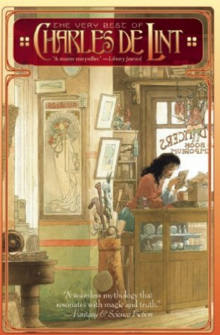
 What if you have written your memoir, or are in the process, and it just isn’t working? What to do?
You might decide to publish your work as fiction based on fact, rather than memoir. Adair Lara’s article might be helpful: “10 Ways to Tell if Your Story Should be a Memoir or a Novel” in the January 23, 2012 issue of Writer’s Digest magazine.
You can use prompts on The Write Spot Blog for inspiration, especially, “Make a list of pivotal events, Prompt #40” and “How to write fiction based on fact,” Prompt #41.”
If you don’t want to write about what happened exactly as it happened, you can use the emotions you felt during the event. Tap into those emotions to write strong scenes.
Sometimes it’s helpful to see examples of ideas you want to pursue. The following novels are based on fact.
Half-Broke Horses, by Jeannette Walls, is considered “A True-Life Novel”
Captive of Silence, by Alla Crone, is a “roman à clef.”
Diary of a Young Girl, Anne Frank
Into the Wild, Jon Krakauer
Memoirs of a Geisha, Arthur Golden
Eat, Pray, Love, Elizabeth Gilbert
I Know Why The Caged Bird Sings, Maya Angelou
We’ll explore the topic of where to publish personal essays in next week’s “Just Write.”
Meanwhile, keep writing. Decide later what you want to do with this precious writing.

AGNI Magazine accepts fiction, nonfiction, poetry, and interviews for their print and online literary magazines.
“We see literature and the arts as part of a broad, ongoing cultural conversation that every society needs to remain vibrant and alive. Our writers and artists hold a mirror up to nature, mankind, the world; they courageously reflect their age, for better or worse; and their work provokes perceptions and thoughts that help us understand and respond to our age. Literature for literature’s sake is not what AGNI is about.”
Submission period: Between September 1st and May 31st.
Payment: $10 per printed (or printed-out) page for all accepted prose, $20 per page for poetry, $150 maximum, along with a year’s subscription, and, for the print magazine, two contributor’s copies and four gift copies of the issue.
Be sure to read all details regarding submissions. It would be a shame to miss out on being published due to a technical error.
Good Luck!
You can use photos as writing prompts. Choose one of your photos, or a photo you remember and write about it.
First, look at the photo (if you can). Write all the details that you see. Write about what happened before and after the photo was taken. Write about your feelings connected with this photo.
Photos might remind you about activities, important occasions and details that you may have forgotten.
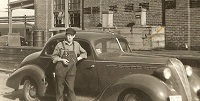
Did Great-grandpa always wear a hat? What was his first car? Where did he work?
Siblings. What did Grandma think as her son went off to war?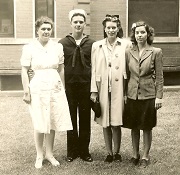
What did his sisters think? Did they send him off with special remembrances from home? Did they listen to every radio broadcast about the war? Did they watch events play out on television? Are there any letters from that era?
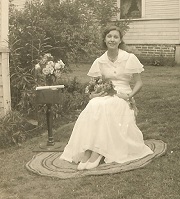
Grandma’s graduation day photo doesn’t look like today’s graduation photos. What were Grandma’s plans after graduation? Did they come true? What happened after she graduated? Who was the first one to graduate from high school in your family? The first one to graduate from college?
Brides! Wedding photos! Do these types of formal occasion photos live in your photo album?  Are they formal photos? Casual photos? Any videos? Tell the backstory of these wedding photos. Tell about the people in the background. How did the bride and groom meet?
There are over 200 prompts on The Write Spot Blog. Photos accompany every prompt. You can use any of these photos as jumping off points to inspire your writing.
If you see a missing photo, please let me know. Some of them have mysteriously disappeared.