A Business Model to Avoid

  • A Business Model to Avoid

    Guest Blogger Sandy Baker talks about first time publishing.

    The thrill of publishing one’s first book is joyful, a dream come true, right? Oh, the anticipation of getting my children’s picture book into print and out there in the marketplace! I attended lectures, workshops, and conferences to acquire the information I needed to become an indie publisher. I’d heard horror stories from authors who’d been scammed by vanity presses, paid too much for a web design, or didn’t know an ISBN from the BOE or a DBA, POD or LCCN. That would not be me.

    I bought a block of ten ISBN numbers. After all, if one costs $125, ten at $250 is more than a bargain. I set up my own Butterfly Books imprint and obtained a resale license from the state Franchise Tax Board. I was now a sole proprietor ready to do business and offer the world my first children’s gardening book, Mrs. Feeny and the Grubby Garden Gang. This of course was after I’d hired an illustrator and book designer whose charges will remain undisclosed.

    Late in the game, I discovered Butterfly Books already existed. Actually, that imprint became official the very same week mine did. What are the chances? (It takes a lot of sleuthing on the Internet.) That owner was a lawyer; therefore, I wisely decided to avoid an infringement or conflict of interest lawsuit by quickly choosing another imprint name: Black Garnet Press, of which there are no duplicates!

    My book was to be a typical children’s picture book: full color, 32 pages, 8” x 10”, and hardbound. I priced it at $15.95, in the mid-range of this genre. I found a company here in the U.S. that would print them, one, ten or 100 at a time. This is called Print On Demand (POD), and the company I chose after much research and advice was Lightning Source International (LSI), an arm of the huge Ingram distribution company.

    The company would take only 20% of the selling price. Wow, and I would get 80%. We’ll round up to $16 for the ease of it. So 20% of that price is $3.20, and my 80% is a whopping $12.80.

    However, the cost of printing the book was and still is $9—which of course comes right out of my 80%. So, $12.80 – 9 = $3.80, my “royalty” on the book. That’s actually not unlike the BIG publishing companies’ payouts. Not bad, so far.

    Say I consign the book, an agreement that is typically 50-50: the shop nets $8 on a $16 sale and so do I. That means I receive $8 for a book that costs $9 to print and forget the royalty. How’s that for a business model?

    I decided not to purchase 2000 books from a printing company in Korea or China—I know authors with 1800 of them still in their garage. It really is less expensive to print overseas, but who needs that many books?

    Granted, children’s full color, hardbound picture books are among the most expensive to produce. Turns out that LSI doesn’t offer dust jackets nor does it print the title and author on the spine. Arrrgh! Are there lessons to be learned here?
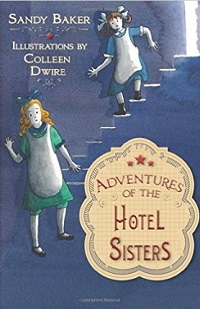
    Adventures of the Hotel SistersNote from Marlene: It seems Sandy did learn a thing or two about publishing. Since Mrs. Feeny and the Grubby Garden Gang was published, Sandy has produced and published eight books.

    SANDY BAKER’S passions are gardening, writing, reading, and traveling. Sandy recently published Adventures of the Hotel Sisters, fictionalized 1920s short stories about her maternal grandmother and her eight children. Sandy’s interest in this era harkens back to 9th grade when she wrote an extensive term paper on 1920s’ clothing, dances, Prohibition, gangsters, Stock Market Crash, and Women’s Suffrage. In between writing and reading, her major gardening project entails removing her front lawn and replacing it with mulch and 24 Provence lavender plants. Sandy is a Sonoma County Master Gardener and president of Redwood Writers, the largest branch of the California Writers Club.

  • Spoof a book . . . Prompt #215

    Writing Prompt: Choose a book, write a spoof and submit to Writer’s Digest Reject a Hit.

    “In each issue of Writer’s Digest magazine, we ask one reader to step into the role of the unconvinced, perhaps even curmudgeonly or fool-hearted editor. . .

    If you’d like to be the one doing the rebuffing, channel the most clueless of editors by humorously rejecting a hit in 300 words. . .

    Reject a Hit is humorous, but not mean-spirited. It is not the place to list all the reasons you hate a particular book. To help you understand the spirit of Reject a Hit, browse through the archives of published rejections.”

    Books that have been spoofed in the Writer’s Digest Magazine, Reject a Hit column (last page of the magazine):

    Note: Amy Marincik (March/April 2013) and Daniel Ari (July/Aug. 2014) are Sonoma County writers (home of The Write Spot Blog). Amy has participated in writing workshops facilitated by Marlene Cullen (host of The Write Spot Blog) and Daniel has been a Writers Forum presenter twice. We liked him so much, we asked him back.

    2013

    January           Charlie and the Chocolate Factory

    March/April    Great Expectations, spoofed by Amy Marincik

    May/June        Burning Down My Masters’ House: My Life at the NY Times

    July/August    The Exorcist

    October           The Lorax

    Nov/Dec          The Hobbit

    2014

    January           The Road

    February         The Old Man and The Sea

    March/April    Good Night Moon

    May/June        Tess of the D’Urbevilles

    July/Aug         Tulips & Chimmeys, spoofed by Daniel Ari

    September       The Shining

    October           Hitchhiker’s Guide To the Galaxy

    Nov/Dec          Runny Babbitt: A Billy Sook

    2015

    February         Our Mutual Friend

    Mar/April       Middlemarch

    May/June        A Series of Unfortunate Events: The Bad Beginning

    July/August    First Blood

    September       The Bonfire of the Vanities

    October           Inferno

    Nov/Dec          Winnie-the-Pooh

    2016

    January           The Scarlet letter

    Your Turn:  Come on now, you can do this.  Choose a book, write a humorous rejection and submit to Writers Digest Reject a Hit.

    Reject A Hit.Daniel Ari

  • A fresh start.

    The following excerpt is from Simple Abundance by Sarah Ban Breathnach.

    New Year’s Day. A fresh start. A new chapter in life waiting to be written. New questions to be asked, embraced, and loved. Answers to be discovered and then lived in this transformative year of delight and self-discovery.

    Today carve out a quiet interlude for yourself in which to dream, pen in hand. Only dreams give birth to change. What are your hopes for the future as you reflect on the years that have passed? Gradually, as you become curator of your own contentment, you will learn to embrace the gentle yearnings of your heart. But this year instead of resolutions, write down your most private aspirations. Those longings you have kept tucked away until the time seems right. Trust that now is the time. . .

    Rejoice.AngelTake a leap of faith and begin this wondrous new year by believing. Believe in yourself. And believe that there is a loving Source —a Sower of Dreams—just waiting to be asked to help you make your dreams come true.

  • How many povs can be in one scene?

    The question often pops up: How many points of view can be in one scene?

    The easy answer: One point of view per paragraph.

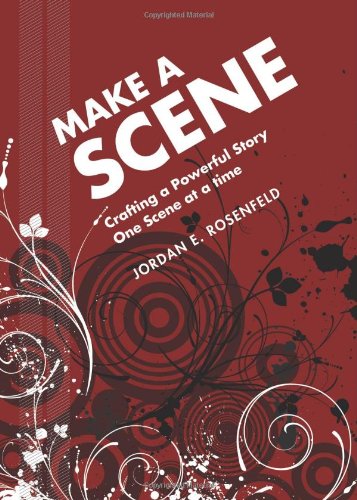
    The expanded answer: “If you have more than one character within a scene whose points of view are relevant, then you’ll need to use the omniscient pov.” Jordan E. Rosenfeld, Make A Scene.

    The omniscient narrator is all-knowing, able to move in and out of the thoughts of all the characters and to comment on events before and after the scene has happened.

    Jordan, an authority on writing,  expands upon the idea of changing pov within a scene: “. . . you must make omniscient clear right away from the first paragraph in the scene. If the readers believes that he has only been able to see inside character A’s head, and then you suddenly leap into character B’s head, the reader will feel confused and possibly irritated.”

    For a reminder about what a scene is, Jordan says, “A scene should largely take place in one location.”

    When you use omniscient pov and hop from one character’s head into another character’s head, you are able to describe the scene (action, thoughts, feelings) from different characters points of view. This can be tricky. Just make sure the reader knows which character is observing the scene.

    First: Just Write. Then, during the revising/editing stage, check that points of view are clear and consistent.

    Make A Scene.RosenfeldFor more details about scene, points of view and examples, check out Make a Scene: Crafting a Powerful Story One Scene at a Time, by Jordan E. Rosenfeld.

  • The Sun Magazine

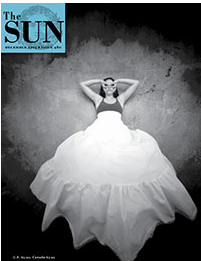
    The Sun magazineThe Sun is an independent, ad-free magazine that for more than forty years has used words and photographs to evoke the splendor and heartache of being human. Each monthly issue celebrates life, but not in a way that ignores its complexity. The personal essays, short stories, interviews, poetry, and photographs that appear in The Sun’s pages explore the challenges we face and the moments when we rise to meet them.”

    “We publish essays, interviews, fiction, and poetry. We tend to favor personal writing, but we’re also looking for provocative pieces on political and cultural issues. And we’re open to just about anything. Surprise us; we often don’t know what we’ll like until we read it.

    We pay from $300 to $2,000 for essays and interviews, $300 to $1,500 for fiction, and $100 to $200 for poetry. We also give contributors a complimentary one-year subscription to The Sun. We purchase one-time rights. All other rights revert to the author upon publication.”

    Submission Guidelines

  • Yes, Virginia . . . Prompt #214

    TheSunThe Sun

    New York, New York

    DEAR EDITOR: I am 8 years old. Some of my little friends say there is no Santa Claus. Papa says, ‘If you see it in THE SUN it’s so.’ Please tell me the truth; is there a Santa Claus?

    VIRGINIA O’HANLON.
    115 WEST NINETY-FIFTH STREET

    VIRGINIA, your little friends are wrong. They have been affected by the skepticism of a skeptical age. They do not believe except they see. They think that nothing can be which is not comprehensible by their little minds. All minds, Virginia, whether they be men’s or children’s, are little. In this great universe of ours man is a mere insect, an ant, in his intellect, as compared with the boundless world about him, as measured by the intelligence capable of grasping the whole of truth and knowledge.

    Yes, VIRGINIA, there is a Santa Claus. He exists as certainly as love and generosity and devotion exist, and you know that they abound and give to your life its highest beauty and joy. Alas! how dreary would be the world if there were no Santa Claus. It would be as dreary as if there were no VIRGINIAS. There would be no childlike faith then, no poetry, no romance to make tolerable this existence. We should have no enjoyment, except in sense and sight. The eternal light with which childhood fills the world would be extinguished.

    Not believe in Santa Claus! You might as well not believe in fairies! You might get your papa to hire men to watch in all the chimneys on Christmas Eve to catch Santa Claus, but even if they did not see Santa Claus coming down, what would that prove? Nobody sees Santa Claus, but that is no sign that there is no Santa Claus. The most real things in the world are those that neither children nor men can see. Did you ever see fairies dancing on the lawn? Of course not, but that’s no proof that they are not there. Nobody can conceive or imagine all the wonders there are unseen and unseeable in the world.

    You may tear apart the baby’s rattle and see what makes the noise inside, but there is a veil covering the unseen world which not the strongest man, nor even the united strength of all the strongest men that ever lived, could tear apart. Only faith, fancy, poetry, love, romance, can push aside that curtain and view and picture the supernal beauty and glory beyond. Is it all real? Ah, VIRGINIA, in all this world there is nothing else real and abiding.

    No Santa Claus! Thank God! he lives, and he lives forever. A thousand years from now, Virginia, nay, ten times ten thousand years from now, he will continue to make glad the heart of childhood.

    Dear Reader Here And Now,

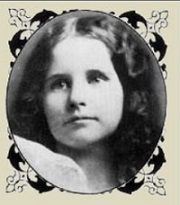
    Virginia O'Hanlon.2You probably know the story:   Eight-year-old Virginia O’Hanlon wrote a letter to the editor of New York’s Sun, and the quick response was printed as an unsigned editorial Sept. 21, 1897. The work of veteran newsman Francis Pharcellus Church has since become history’s most reprinted newspaper editorial, appearing in part or whole in dozens of languages in books, movies, and other editorials, and on posters and stamps. Newseum

    Writing Prompt: Write about something you believed in and later discovered it wasn’t true. Or, write whatever comes for you after reading this story.

  • Santa’s Secret Wish

    It’s the time of year when gifts are exchanged. Bell ringers thank strangers as they put coins in red kettles. Stores beckon shoppers promising warmth and great sales. Friends gather, sip good cheer. And if you’re lucky, you’ll receive a holiday card or two.

    It’s also the time of year for solicitations . . .  in the mail, on the internet, over the phone. . . “Our need is great. Won’t you give?”

    We can’t possibly share our money with everyone who asks. But we can share kindness, broad smiles and stories that invite us to pause, and reflect the meaning of the season.

    ‘Twas the night before Christmas here and there, someone is reading, reflecting and nodding.

                                                            Santa’s Secret Wish by Betty Werth

    Santa at fence.200On Christmas Eve, a young boy with light in his eyes
    Looked deep into Santa’s, to Santa’s surprise.
    And said as he nestled on Santa’s broad knee,
    “I want your secret. Please tell it to me.”

    He leaned up and whispered in Santa’s good ear.
    “How do you do it, year after year?
    I want to know how, as you travel about,
    Giving gifts here and there, you never run out.

    How is it, Dear Santa, that in your pack of toys
    You have plenty for all of the world’s girls and boys?
    Stays so full, never empties, as you make your way

    From rooftop to rooftop, to homes large and small,
    From nation to nation, reaching them all?”
    And Santa smiled kindly and said to the boy,
    “Don’t ask me hard questions. Don’t you want a toy?”

    But the child shook his head, and Santa could see
    That he needed the answer. “Now listen to me,”
    He told the small boy with the light in his eyes,
    “My secret will make you both sadder and wise.

    The truth is that my sack is magic. Inside
    It holds millions of toys for my Christmas Eve ride.
    But although I do visit each girl and each boy
    I don’t always leave them a gaily wrapped toy.

    Some homes are too hungry, some homes are too sad,
    Some homes are desperate, some homes are bad.
    Some homes are broken, and children there grieve.
    Those homes I do visit, but what should I leave?

    My sleigh is filled with the happiest stuff,
    But for homes where despair lives, toys aren’t enough.
    So I tiptoe in, kissing each girl and each boy,
    And I pray with them that they’ll be given the joy

    Of the spirit of Christmas, the spirit that lives
    In the heart of the dear child who gets not, but gives.
    If only God hears me and answers my prayer,
    When I visit them next year, what I will find there

    Are homes filled with peace, and with giving, and love
    And boys and girls gifted with light from above.
    It’s a very hard task, my smart little brother,
    To give toys to some, and to give prayers to others.

    But the prayers are the best gifts, the best gifts indeed,
    For God has a way of meeting each need.
    That’s part of the answer. The rest, my dear youth,
    Is that my sack is magic. And that is the truth.

    In my sack I carry on Christmas Eve day
    More love than a Santa could e`er give away.
    The sack never empties of love, or of joys
    `Cause inside it are prayers, faith and hope. Not just toys.

    The more that I give, the fuller it seems,
    Because giving is my way of fulfilling dreams.
    And do you know something? You’ve got a sack, too.
    It’s as magic as mine, and it’s inside of you.

    It never gets empty, it’s full from the start.
    It’s the center of lights, and of love. It’s your heart.
    And if on this Christmas you want to help me,
    Don’t be so concerned with the gifts `neath your tree.

    Open that sack called your heart, and then share
    Your joy and your friendship, your wealth and your care.”

    The light in the small boy’s eyes was glowing.
    “Thanks for the secret. I’ve got to be going.”
    “Wait, little boy,” said Saint Nick, “Please don’t go.
    Will you share? Will you help? Will you use what you know?”
    And just for a moment the small boy stood still,
    Touched his heart with his hand and whispered,

    “I will.”

  • Homonyms – Just for fun. Prompt #213

    Homonyms (also called homophones) are words that sound like one another but have different meanings. Some homonyms are spelled the same, like bark (the sound a dog makes) and bark (the outer layer of a tree trunk). Enchanted Learning

    Freewrites mean writing freely. You are free to write whatever you want.

    Use any or all of the following words in a freewrite:

    Flower – Flour                    Beach – Beech                    Bough – Bow

    Fur – Fir                              Morning – Mourning            Birth – Berth

    Red – Read                          Time – Thyme                    Eye – Aye

    New – Gnu                           You – Ewe                           You’ll – Yule

    If ewe are knew too freewwrites oar kneed eh refresher . . .

    If you are new to freewrites or need a refresher:

    Freewrites . . . What Do You Call Them?

    What is a freewrite and what is a writing prompt?

    Lose Control and Just Write

    Writing Is Like Excavating

    Festival of Spirits Blog Hop,mistletoeIf yule cast yer aye on the Festive Spirit Blog Hop ewe mite read sum thing gnu and interesting!


  • Missed my deadline

    Missing a deadline . . . Not a good thing, right? One might agonize about missing a deadline to the point of being incapacitated.

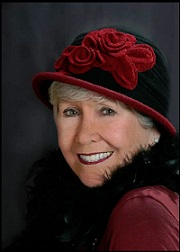
    Sandy Baker 180Not my author friend, Sandy Baker.

    Sandy recently sent an email with updates about all her books. She had high hopes of Adventures Of The Hotel Sisters being published in time for Christmas presents. When that didn’t happen, she simply said, “Missed my deadline! Hotel Sisters is going to be late–always good for a New Year’s, after-the-holidays late gift!”

    I love her easy-breezy attitude. It’s good to know what you can and what you can’t do . . . What you have control over and what you have no or little control over.

    And if you make a mistake, take ownership. You don’t have to be dramatic nor overly explanatory, just a simple statement of facts. I missed my deadline.

    And then get on with the show. Do what needs to be done.

    I think anyone who knows Sandy is lucky. She is warm, kind and a bighearted person, generously giving of her time and energy with answers to questions about writing and gardening. She is a master gardener and a versatile author.

    Sandy was interviewed by Mikala Kennan, videography by Gary Carnivale for the Writer Speak program.

    Discover Sandy’s thoughts in this video about writing, illustrators, gardening, victory gardens and more. Learn the difference between a series of books and a circle . . . Which one do you think Sandy’s gardening books are?

    MistletoeJust in time for the new year. . .  hop on board the Festive Spirit Blog Hop and discover authors and bloggers in a variety of genres.


  • Another POV choice: Free Indirect Speech

    POV = Point of view.

    Point of view is . . . simply. . .  from the point of view of whoever is telling the story.

    Writers get to choose who tells the story. It’s a very simple concept, made difficult by the many choice of who gets to tell the story: first person, second person, third person (limited, close, omniscient).

    Here’s another point of view choice: The Free Indirect Style.

    I’m posting about the free indirect style of point of view because I’m fascinated with learning new things and also because a friend, whom I admire and is an excellent writer said, “I have found that I use it [free indirect point of view] a lot in my writing, and always have, without even knowing that’s what it was.  It’s a very “natural” voice for me and, I think, one that’s easy to read.”

    Ready? Here we go:

    Free indirect speech is a style of third-person narration which uses some of the characteristics of third-person along with the essence of first-person direct speech.”  Wikipedia

    There are two kinds of indirect speech:  free and normal.

    “What distinguishes free indirect speech from normal indirect speech is the lack of an introductory expression such as ‘He said’ or ‘he thought’.

    Free indirect discourse can also be described as a ‘technique of presenting a character’s voice partly mediated by the voice of the author, or, in the words of the French narrative theorist Gerard Genette, ‘the narrator takes on the speech of the character, or, if one prefers, the character speaks through the voice of the narrator, and the two instances then are merged.’ Randall Stevenson, Modernist Fiction.” Wikipedia

    Examples  (Wikipedia):

    Quoted or direct speech:

    He laid down his bundle and thought of his misfortune. “And just what pleasure have I found, since I came into this world?” he asked.

    Normal indirect speech:

    He laid down his bundle and thought of his misfortune. He asked himself what pleasure he had found since he came into the world.

    Free indirect speech:

    He laid down his bundle and thought of his misfortune. And just what pleasure had he found, since he came into this world?  Wikipedia

    Is your head spinning? Mine is!

    Reading examples of the free indirect style of pov might help:

    Jane Austen was one of the first practitioners of free indirect speech with Emma.

    The Irish author James Joyce also used free indirect speech in works such as “The Dead” (see Dubliners), A Portrait of the Artist as a Young Man, and Ulysses.”   Wikipedia

    No matter what point of view you choose. . . just write!

    The Write Spot Blog is part of the Festive Spirit Blog Hop, hosted by Francis H. Powell. To read posts by participating bloggers, click on Francis H. Powell’s Home Page. Scroll down, choose a name, click on one and you will magically be transported to creative blog posts.

    Festival of Spirits Blog Hop