Guest Blogger Genevieve V. Georget

  • Guest Blogger Genevieve V. Georget

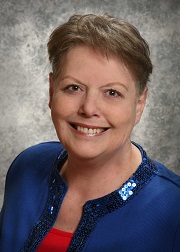
    Genevieve V. GeorgetGenevieve V. Georget graciously gave me permission to re-post her October 5, 2015 Facebook post. The response to her post was surreal: Over 250,000 likes and 143,000 shares.

    Genevieve’s post  is an excellent example of extraordinary writing that touches the heart.

    Guest Blogger Genevieve V. Georget:

    It was a Wednesday afternoon when I walked into Starbucks that day nearly six years ago. I stood at the bar, waiting for my drink, when the barista politely asked me what I was up to that day. As it turns out, I was en route to the airport at that moment…about to catch a flight to Italy with my husband. After a brief minute of chatting, the barista handed me my coffee and wished me a nice trip. “But then again”, she said “why wouldn’t you…your life is golden!”

    I’ll admit…the gold star was nice. But at the same time, the words knocked the wind out of me. She wasn’t being rude. She wasn’t being sarcastic. In fact, she was being totally genuine. And that’s the part that really took my breath away.

    Because here’s the thing…

    This lovely girl saw me for all of five minutes a day. Usually all dressed up on the way to my full-time job at one of the country’s most prestigious art galleries. Or with my camera in hand to photograph two people in love. Or, yes, on my way to Italy for ten days to celebrate my anniversary. This is what she saw. Therefore, this is what she knew.

    And truth be told, there is darkness in this kind of knowledge. Especially now, when so many of our connections happen only five minutes at a time…fully filtered and perfectly hash tagged. In our defense though, it’s not entirely our fault. That battle we’re fighting…those rough days we’re having…they don’t tend to translate very well when you have twenty people in line behind you for coffee or a hundred and forty characters to spell out your day.

    Honestly, what was I going to tell my barista?

    “Yes, we’re flying to Europe. I just miscarried our baby…we had a terrifying health scare…I’m suffering from post-traumatic stress disorder…and we’re feeling pretty far from God right now. So, yeah, going to Italy seemed as good a place as any to just run away from our life and justifiably eat gelato twelve times a day.”

    No. I wasn’t going to tell her this. Because shocking total strangers into oblivion is a bit harsh and cruel. Especially when she’s the girl in charge of making your coffee every day.

    But I did spend the entirety of that flight wondering; about our sense of authenticity…our collective vulnerability…our polished identity. And it made me feel like a total fraud. Because I’m not any of those things that this girl sees on the other side of her coffee bar.

    If I showed up one morning, wearing my most ragged and scarred self…it would be a very different girl staring back at her [and she would likely feel inclined to serve me alcohol instead of coffee!]…

    Because I was bullied a lot as a teenager.

    I’m afraid of thunderstorms.

    I spend an absurd amount of time worrying about what other people think of me.

    My biggest challenge in life is letting go of people. Even if they hurt me.

    I hide behind my humor for fear that people won’t accept me without it.

    I feel like I have failed as a daughter.

    I try to avoid big groups so that I won’t feel like the invisible one among it.

    I’m insanely self-conscious of my smile.

    I feel like I’m an easy person to walk away from in life…and it haunts me on a daily basis.

    I almost always operate under the assumption that I care more about everyone else than they do about me.

    I unfollow people on Instagram if their life seems too perfect because it makes me feel inadequate.

    I feel like a terrible mother pretty much all the time.

    I hate emptying the dishwasher.

    Every day, I’m afraid that my husband is going to wake up and finally realize how much crazy he married.

    I thank God for every day that he doesn’t!

    I don’t like to try new foods…so I travel with my own jar of peanut butter.

    I want to write a book so badly that it hurts. But I’m afraid of people telling me that my life was never worth telling.

    I struggle, every single day, with feeling like I’m enough. Skinny enough. Funny enough. Good enough.

    And I cry. A lot.

    I highly doubt I would get a gold star for any of this. But, now, six years later, I do know one thing for sure; that even with all of my frailty…all of my fears…and all my faults…none of those things make my life any less golden.

    Scars tell stories. Scars mean survival. Scars mean you showed up for the fight instead of running from it.

    And we’ve all got them…even the sweet girl serving my coffee. She’s fighting her own battle…defending her own front line…struggling in her own way.

    And maybe it’s not about collecting gold stars for the perceived reality we give the world on Facebook…but it’s about the purple hearts we get for living bravely among the real one.

    Because life requires guts…it requires bravery…and it requires vulnerability.

    So, buy your coffee…wear your scars proudly…and carry on, dear soldier…

    You’re not in this battle alone.

    GENEVIEVE V. GEORGET

    My name is Genevieve…but you can call me Gen…

    I am a wife. I am a mother. I am a daughter and I am a grand-daughter. I am a sister. I am a niece and I am an aunt. I am a friend. I am a child of God. I am addicted to Facebook. I am the year of the horse and Gaelic for white wave. I am a summer baby and the sign of Cancer. I am a reader and I am a storyteller. I am putting my life on paper. I am the victim of people’s hair fetishes. I am a lover of Gap commercials and strawberry season. I am a Starbucks junkie. I am a hockey fan. I am a lover and not a fighter. I am lost without peanut butter. I am the alter ego of a wolf and a politician in a past life. I am urban and I am in love. I am happiest at home and most comfortable in my flip-flops. I am a fabulous photograph on my driver’s license. I am an only child and the baby of the family. I am a work in progress and always in recovery from something. I am trying to let go and still reaching for your hand. I believe that naps and dancing in the kitchen can cure just about anything. I am often wondering what happens next. I am proof that time heals all wounds. I am a hopeless romantic and madly in love. I am a believer that everyone has a story and I am still unwritten. I am a frequent visitor of any bookstore and I am a woman of mystery. I am craving chocolate. I am searching for answers and I am enchanted by my friends. I am tripping on toy cars and I am constantly cleaning up cheerios. I am afraid of thunderstorms and losing the people that I love. I am raising my hands to the heavens and I am thanking my lucky stars. I am almost always found on one side of a camera and I often feel that music is the only thing left that makes sense in the world. I am living and I am learning. I am convinced, as the saying goes, not all who wander, are lost.

    Basically, I’m just a girl. Writing herself into wholeness.

    photo credit: | Richelle Hunter Photography

  • Something good that came from . . . Prompt #205

    Broken glassToday’s writing prompt: Something good that came from something bad.

    Set your timer for 15-20 minutes. Write. Don’t think. Just write.

    Okay, you might have to think a little before writing on this prompt. Once you choose a topic. . . then . . . write without thinking. No editing, no censoring. You can destroy your writing later, if you want.

    For now . . . just write.

  • Good writing comes from your willingness to be vulnerable . . .

    Heart with writing“Good writing comes from your willingness to be vulnerable, to peel back the layers of resistance, to offer up your heart, pulsing and defenseless, on a silver platter.” – Susan Bono, author of What Have We Here.


  • How to Write A Memoir— Part Two

    How To Write A Memoir, Part 1 lists a variety of methods for writing personal stories.

    Part 2 continues with revision and the business of writing.

    Take care of yourself

    Writing one’s life story can be difficult. While writing, take good care of yourself. Anytime you are feeling overwhelmed by this writing process, set your work aside. Take a break, get some fresh air, visit with a friend. Read helpful, supportive material such as Toxic Mom’s Toolkit.

    Organize

    When editing, save your “cuts” in separate files (either paper file folders or on computer files). You might be able to use these darlings in another personal essay.

    Use manila file folders to store print material: newspaper articles, photos, handwritten notes, letters, brochures, etc.

    Revising

    In the revising stage, delete what might cause embarrassment. Fine tune for accuracy.

    HydrangeaShape like a gardener pruning a hydrangea. Take a few snips here, cut a little there. Stand back, look over your work.

    Revise until you are satisfied. Or, you may reach a “good enough” stage and let it go. Most writers are never completely satisfied with their writing.

    While in the editing stage, read your manuscript as if you are an impartial observer. Look at how the cast of characters are portrayed. Check if their privacy has been respected. Read with empathy toward the characters who inhabit this story. Frances Lefkowitz believes “. . . empathy is so crucial to a good memoir—and to good relationships, and to family Thanksgivings in which everyone comes out alive.” —Frances Lefkowitz, “Are Your Parents Still Speaking to You?” December 20, 2013, The Write Spot Blog.

    Permission from cast of characters?

    Should you let your cast of characters read your manuscript?

    There is no correct answer. Some people say yes. Others say no. My suggestion is if you think something will be offensive, consider if these particular details need to be in the story. If not, omit them. If the details are crucial, leave them in, knowing it might offend someone who may cut off contact with you. If you want to continue contact with that person, ask him/her to read. If he/she is uncomfortable with some passages, you may be able to tweak to everyone’s satisfaction.

    This is your story and you have a right to write it, but do you have a right to publish it? Be mindful of defamation (libel for written material). Carefully consider the risks of writing your personal story for publication.

    “Writers face three big risks when using real people in their writing: defamation, invasion of privacy, and misappropriation of the right of publicity. Yet every fiction writer bases characters on real people. Memoirists and nonfiction writers identify people by name. How can writers use real people in their work without risking a lawsuit?”   —Helen Sedwick, “How to Use Real People in Your Writing Without Ending Up to Court,” September 13, 2014

    Beta Readers

    Part of your editing process might be to have others read your manuscript. These early readers (also called beta readers) might find scenes that don’t make sense or need clarification. Only ask people you trust and who will give you honest appraisals. Choose these readers very carefully. Give them specific things to look for (continuity, repetition, unclear areas, sections that could be condensed or expanded, etc).

    Why Write This Story?

    After you have written all that you want to write, while your manuscript is “resting,” take time for contemplation. Why are you writing this story? And why do you want to publish it (if you do)? If you are writing to share what you have learned on your journey and think it will be helpful to others, wonderful. If you are angry and want revenge, consider the consequences.

    Upon reflection, you may realize that some healing happened during the process of writing and you released the pain. Maybe you will find there is no longer a desire for revenge.

    “Honesty. Compassion. Forgiveness. Hold these words in your mind as you write about your family.” —Kerry Cohen, “How to Write About Family in a Memoir” by Kerry Cohen, author of The Truth in Memoir, [excerpted from “The Writer’s Dig,” column by Brian Klems , Writer’s Digest, January 22, 2015]

    Boys jumping into water. SorensenAfter typing “The End”

    Celebrate! You achieved your goal.

    But, what if your memoir isn’t quite working?

    You may decide to publish your work as fiction rather than memoir. The option of revising your memoir into fiction is explored in How To Turn Memoir Into Fiction.

     Celebration  Photo by Kent Sorensen
    Hydrangea photo by Marlene Cullen
  • How To Write A Memoir — Part One

    Your Life. You lived it. Surely you can write about it. Right?

    In How To Write A Memoir, Part 1, we’ll discuss methods and ideas about writing personal stories, with links to published memoirs.

    How To Write A Memoir, Part 2, we’ll cover organizing, revising and more.

    You can write in chronological order, or build your story around pivotal events. In the beginning, it doesn’t matter what structure you use. Write in a style that is comfortable for you. Try one way and if isn’t working for you, try something else.

    Memoirs written in chronological order (with back story woven in): To Have Not by Frances Lefkowitz  and Grief Denied by Pauline Laurent.

    Rachael Herron, A Life in Stitches, assembles her stories around her knitting experiences.

    For the first draft, it’s fine to jump around in time. Don’t worry too much about making sense in the early stage of writing. Get your stories written. Organize later.

    Paper or Computer?
    You can write using paper and pen/pencil or on a computer. Or both. For the most part, it doesn’t matter which method you use. The advantage of a computer is it’s (usually) faster. The advantage of paper and pen or pencil is the portability. Some people suggest there are benefits to handwriting for accessing creativity.

    Self-care

    If remembering and writing details about your life is difficult, it’s very important to have a strategy to avoid additional trauma. Create a self-care plan to protect yourself when writing about deeply painful topics.

    Writing Prompts

    You can use writing prompts to jumpstart your freewrites, to trigger memories and to make discoveries. Choose a prompt, write for 15 or 20 minutes. Take a break. Next time, choose another prompt. Good prompts to get started are:

    I remember . . .

    I don’t remember . . .

    In this photo, I . . .

    In this photo, you . . .

    family photosPhotos

    You can use photos to inspire your writing. First, look at the photo. Write all the details that you can see. Write about what happened before and after the photo was taken. Write about feelings you have connected with this photo.

    Photos might remind you about activities, important occasions and details that you may have forgotten. Did Grandpa always wear that hat? Did Grandma wear her apron with the little flower print every day, even on holidays? My Nana did.

    Other Memoirs

    Read memoirs to get an idea of how you want to proceed with your memoir. Some styles will appeal to you. Others aren’t right for you. You can read reviews on both Amazon and Goodreads to research different styles of memoirs.

    Susan Bono, What Have We Here, grouped her personal essays by theme.

    Rayne Wolfe, Toxic Mom Toolkit, braids three strands: her memoir, excerpts from others and toolkits.

    Janice Crow, I Give You My Word, created poems and watercolors to enhance exploring her journey.

    Story Telling

    When writing, think of yourself as a storyteller. In this story, you are the main character. Your family and friends are the supporting cast members. When you write, don’t think of any of these cast members. Write events (scenes) as you remember them, without worries (for now) about accuracy. With the first draft, put on your story-telling hat and write what happened.

    Research

    Interview family members, friends and acquaintances to learn details you may not know. You might realize a broader perspective from hearing other points of view.

    Research news, locally and world-wide, during the time period your story takes place. Tie in events with your story, if appropriate. Fact check details: slang, clothing styles, popular dances, technical gadgetry, geographical, etc.

    Take a few minutes

    After you have written all that you want to say, spend some time reflecting. What compelled you to write these stories?

    Perhaps your writing is a learning tool to understand what happened and to educate others as Piri Thomas does in Down These Mean Streets.

    Maybe your desire is to get these stories off your chest, to vent, to release emotions as well as help others similar to Ellevie by Marcelle Evie Guy.

    Maybe you want to record family stories, to document your family history.

    How To Write A Memoir – Part 2, we explore what to do after you have written your memoir, revision and the business of writing.

    woman writingFinal Comments
    This likely will be an emotional project. Take whatever time you need for breaks. Remember to exercise, go on walks, drink water and find joy, wherever you can.

    Just Write

    There are over 200 prompts on The Write Spot Blog. Use them for your memoir, for personal exploration and for fun!


  • Writer’s Digest Magazine Short-Short Story Contest

    typewriterHave you been noodling around with a short short story idea? Maybe you have written a short short and would like to see it published.

    Your opportunity is here and now.

    Writer’s Digest 16th Annual Writer’s Digest Short Short Story Competition is waiting for your entry.

    Deadline: December 14, 2015

    Word Count: 1,500 words or less

    You can do this! Strike while the iron is hot —but don’t use clichés in your writing, unless of course, your character talks in clichés. Hmmmm. . . there’s a story idea!

  • What Is a Writer?

    Sheri GravesGuest Blogger Sheri Graves writes about the obsession with writing.

    The moment of clarity occurred when I was in a doctor’s office seeking help for carpal tunnel syndrome. The condition wasn’t getting better and my ability to use my hands was diminishing with each passing day on the job as a newspaper reporter.

    The physician examined my hands and arms for perhaps the 30th time, looked at me and asked, “Have you considered doing something else for a living?”

    “No,” I said. “Have you?”

    He went on to explain that his profession was a “calling” and he had to spend many years in higher education and training to get where he was. His assumption he was important and I was not hit me as narcissistic. I wanted to punch him in the throat but couldn’t make a fist.

    “Being a writer isn’t just what I do,” I scolded. “It’s what I am. I could no more stop writing than I could pull a jackrabbit out of my ear. If you feel the same way about being a doctor, you do understand my predicament. I can’t simply switch careers.”

    In 1990, he did surgery on both of my hands. It took about three years of therapy and drugs and special exercises and no small amount of determination, but I finally regained the use of my hands to be able to continue with the love of my life: Writing.

    Although I retired from The Press Democrat in 2004 after more than 40 years on the job, I still write every day. I couldn’t stop if someone held a gun to my head.

    I’ve been writing ever since I can remember. I started with poetry because that’s what my mother was writing. In school, whenever a teacher assigned students to write a 500-word essay, I groaned along with the other kids. But, they thought a 500-word essay too much to expect, whereas I couldn’t think of anything I could write in only 500 words.

    Every writer has his or her own way of doing things. Some have a distinctive method. Others are casual about it. For me, writing happens all the time, every day, every minute.

    I have tried dictating to an assistant, to a tape recorder and even to a computer program designed to type the spoken word. For me, that process is too slow, infuriating and unsatisfactory. My writing process is much more organic. I feel the words within me.

    When I sit before a keyboard, words form in my brain, flow through my body and down my arms, finally shooting out the ends of my fingertips like lightning. The words come faster than I can type, and the words keep coming and coming. I can’t stop them. They come to me while I sleep. They come to me while I’m driving a car. They come to me all day and night, and if I don’t make time to let them escape, I get cranky.

    I write articles. I write memoir. I write books. I write. I write.

    I write novels. I create people in my mind and they all run amok in my head. I can’t control them, but I’ve learned to rein them in, to give them some direction, to flesh them out into living characters facing their own dire situations fraught with peril.

    It’s hard to be present in my life. My attention is elsewhere, off in a fantasy world of my own making. To get these fictitious folks to stop talking to me, I read books and get myself involved with a whole new set of characters. Then, when I sleep, the new people from the book I’m reading mingle with the old ones already running roughshod in my mind. The resulting dreams can be disturbing, at best.

    I’d like to believe other writers don’t go through this bizarre process, but I think some of them do. I’d love to have a mind for business, promotion and making money. Instead, my mental circus pushes all sense of practicality out of the way.

    “Aren’t you afraid of going crazy?” a friend once asked.

    “No,” I said. “I’m afraid of going sane.”

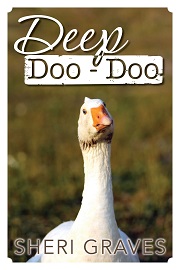
    Deep Doo-DooSheri Graves, author of Deep Doo-Doo, won The 2015 National Indie Excellence Award for Crime Fiction. Sheri has been writing for publications more than five decades. Her 40+ years with The (Santa Rosa, California) Press Democrat included 29+ as a reporter and 14 as a copy editor. As a reporter, Sheri won numerous awards for journalism and writing excellence, including first place prizes from the Press Club of San Francisco, the California and National Newspaper Publishers Associations, and California Medical Association. Sheri is also an editor and memoir writing instructor.


  • What challenged you as a . . . Prompt #203

    Today’s writing prompt:  What challenged you as a fifteen-year-old?

    Marlene.Tonga RoomWhen the prompt is a number or an age, you can adjust to whatever calls to you.  For example, with this prompt you can write about what was challenging when you were thirteen, or fourteen, or sixteen.  The exact age doesn’t matter. I chose fifteen because that is a pivotal year for some people.

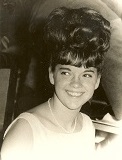
    Marlene, Tonga Room, Fairmont Hotel, San Francisco, Junior Prom, 1965.

  • Writing is an exploration.

    E. L. Doctorow                         Quote by E. L. Doctorow

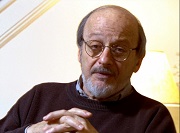
    “Writing is an exploration. You start from nothing and learn as you go.”