What is a good life? . . . Prompt #199

  • What is a good life? . . . Prompt #199

    What makes up a good life?

    What are the ingredients for a good life? If you could combine essential ingredients to produce a good life, what would those ingredients be? Is there a secret ingredient?

    If there was a recipe for a good life, would people embrace it? Would they conform or rebel or ???

    If you were going to stitch qualities for a good life into a quilt, what bits and pieces would you need? What would the final piece look like?

    Is this even a fair or answerable question? Are there too many variables to consider?

    Charlie BrownIf you could create, cajole, conjure, form, shape a good life, would you? What would it look like. . . that good life many people strive for.

    Today’s writing prompt: What do you think a good life is all about?


  • Let’s discuss and write!

    Hello and welcome. Do you have a writing question or a topic you would like to see discussed on The Write Spot Blog? Perhaps I can research and discover answers. Also, you are welcome to contribute as a guest blogger. ~600 words something inspirational or informational for writers. Have you read a book that you love and want to tell others about? Send an email to me. Let’s talk.   ~Marlene

  • Analog: Science Fiction and Fact

    “When the weather outside is frightful, the perfect thing to do is curl up inside with some science fiction and let it transport you to warm alien lands.” — Analog: Science Fiction and Fact

    Analog: Science Fiction and Fact (ASF) is “considered the magazine where science fiction grew up.” When editor John W. Campbell took over in 1938, he brought to Astounding [original name] an unprecedented insistence on placing equal emphasis on both words of ‘science fiction.’ No longer satisfied with gadgetry and action per se, Campbell demanded that his writers try to think out how science and technology might really develop in the future, and, most importantly, how those changes would affect the lives of human beings.”

    Campbell chose the name “Analog” in part because he thought of each story as an “analog simulation” of a possible future, and in part because of the close analogy he saw between the imagined science in the stories he was publishing and the real science being done in laboratories around the world.”

    Submit: “Analog will consider material submitted by any writer, and consider it solely on the basis of merit. We are definitely eager to find and develop new, capable writers.

    We have no hard-and-fast editorial guidelines, because science fiction is such a broad field that I don’t want to inhibit a new writer’s thinking by imposing Thou Shalt Nots. Besides, a really good story can make an editor swallow his preconceived taboos.

    Basically, we publish science fiction stories. That is, stories in which some aspect of future science or technology is so integral to the plot that, if that aspect were removed, the story would collapse. Try to picture Mary Shelley’s Frankenstein without the science and you’ll see what I mean. No story!

    The science can be physical, sociological, psychological. The technology can be anything from electronic engineering to biogenetic engineering. But the stories must be strong and realistic, with believable people (who needn’t be human) doing believable things–no matter how fantastic the background might be.”

    Fact articles: Should be about 4,000 words and deal with subjects of not only current but future interest, i.e., with topics at the present frontiers of research whose likely future developments have implications of wide interest. Illustrations should be provided by the author in camera-ready form.

      e^(pi i) = -1    *

    *This equation was used in an episode of The Simpsons, when Homer gets sucked into the third dimension.

  • Spooktacular or . . . ??? Prompt #199

    Halloween blog hop

    Smallest ghostJoin the festivities. Click on Halloween Blog Hop. Scroll down, click on a blogger’s name and you will be transported into a new dimension.

    WRITING PROMPT:

    Spooktacular or Spectacular or Meh . . . What was Halloween like for you as a child? Did you go trick-or-treating? Costumes: Homemade or store bought? Bag to hold goodies: Pillowcase, plastic bag, plastic pumpkin, or ???

    Halloween GhostYou can also write from your fictional character’s point of view.

    Writing Prompt: Describe your childhood Halloween.

    OR: Describe a perfect All Hallow’s Eve.


  • The perfect evil character by Francis H. Powell

    In this guest blog post, Powell discusses the perfect evil character.

    Readers love an evil character, literature is strewn with them. I would say an interesting evil character is often multi-faceted, never straight forward, they themselves are often in a way, victims.

    Who can forget the Stephen King character Jack Torrance, who has slipped into insanity, a danger to his wife and child as well as other people who cross his path. He is interesting in that he himself has been victim, having watched his father, who he adored, abuse his mother. There is this baggage, along with the fact that the hotel where he and his family reside over a bleak winter is slowly taking control of him.

    Evil characters are full of character flaws, Jack Torrance, for example, has a major problem with alcohol. There are a whole range of character flaws a writer can imagine.

    Many evil characters are cruel and carry out unspeakable acts, which leave readers disbelieving they can be so gruesome. The manner in which an evil character enacts their murders, also leaves a strong impression on the reader.

    Some evil characters are deranged. Take the character Patrick Batemen. This man, on the one hand, a clean living yuppie, but on the other hand, a murderer, or contrary to this, perhaps the murders are just an insane delusion. This schizophrenic character is used as a ploy to make the reader question what is reality and what is going on in the darkness of Batemen’s mind. Batemen has no strong personality to speak of, it is his imagination that has a richness, be it one of toxic evil.

    Evil characters often have strong fixations and are on their own bizarre missions. Grenouille from the book Perfume: The Story of a Murderer, has an incredible gift of smell. This gift leads him to do unspeakable crimes, in the pursuit of a creation of a master angelic perfume. He sets about robbing beautiful virgins of their smell. Grenouille also could be described as hedonistic.

    Similarly, Hannibal Lecter from Red Dragon, by Thomas Harris tests the limits of how far a man can go with no moral compass. He is a sophisticated character, not only in his tastes, (he loves opera) but also with sophisticated culinary skills (he sautés human brains). Hannibal is a highly intelligent man, who can outsmart those in pursuit of him. He is precise with how he goes about his killings. He is certainly audacious, as are many evil characters.

    Not all evil characters are performing evil physical acts to their victims, there are also those who are more psychological. The evil nurse in One Flew Over The Cuckoo’s Nest works in Oregon State Hospital, a mental institution, where she exerts total power over the patients, limiting their freedom and taking away their freedom and privileges at will. Played brilliantly by Louise Fletcher, in the film version, at times you would like to throttle her, which is what the main character, Randle McMurphy, tries to do. One of the main victims of her evil regime is the character of stuttering suicidal Billy Bibbit, who is so terrified by her, that any hope he might get outside the institution is quashed.

    Writers have to immerse all these cocktails of character flaws into their characters, to come up with interesting and memorable deviants. A mindless slasher killing for no obvious reason is not going to engage readers, whereas a murderer with a lot of previous baggage and an air of sophistication will. Writers need to delve deep to create deviants.

    Francis H. PowellBorn in 1961, in Reading, England, Francis H. Powell attended Art Schools. In 1995, Powell moved to Austria, teaching English while pursuing his varied artistic interests of music and writing. He currently lives in Paris, writing both prose and poetry. He is the author of Flight of Destiny.


  • Scary movie . . . Prompt #198

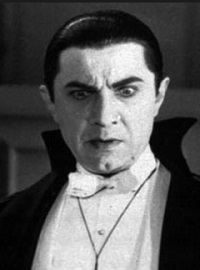
    Count DraculaToday’s Write Spot Blog prompt:  Write about a movie that scared the bejeebers out of you. If you are writing fiction, what movie frightened your fictional character?

    There are lots of writing prompts on The Write Spot Blog, 198 to be exact.  Choose one and  just write!

  • Fourth Genre: Explorations in Nonfiction

    The editors of Fourth Genre: Explorations in Nonfiction invite you to “submit writing that is lyrical, self-interrogative, meditative, and reflective, as well as expository, analytical, exploratory, or whimsical. They encourage submissions across the full spectrum of the genre. The journal encourages a writer-to-reader conversation, one that explores the markers and boundaries of literary/creative nonfiction.”

    Personal essay subjects can be about nature, environmental, travel, memoir, and more.

    General submission dates: August 15 – November 30.

    Fourth Genre Steinberg Essay Prize submission dates:: January 1-March 31

    Click here for guidelines.

    Fourth Genre


  • An apology. . . Prompt #197

    Who do you want — or need — to apologize to?

    Or maybe it’s a “thing” you need — or want — to apologize about.

    Write an apology note, something you never need to send nor give to anyone.

    Write it for yourself, to cleanse your palate, to lift the burden from your shoulders, to start from a new beginning.

    I'm sorry red heartPrompt: Write a note of apology.


  • Guest Blogger Pat Tyler: About writing, a writer, and freewrite workshops

    Guest Blogger Pat Tyler: About writing, a writer, and freewriting workshops

    For me, writing is like a shot in the arm. When I write alone, my mind becomes infused with new ideas. When I write with others, I’m included in a circle of writers who inspire me, enlighten me, challenge me, beckon me to take up the gauntlet, put on the gloves, step away from the ropes, dance my strategic dance of words, and punch my critic until he stays down at the count of ten, knocked out by my knuckle-punch of powerful, gutsy words.

    In recent years I became interested in publishing, but I soon learned that it’s not publishing that makes a writer – it’s writing that makes a writer.

    It may sound over-simplified, but I know this for sure: it’s the physical act of placing pen to paper and refusing to remove it until blood seeps from my pores and I’ve said something – hopefully something important. That’s what makes a writer.

    I’ve learned that if some particular subject is important to me, it can be, and probably will be, important to somebody else – perhaps lots of somebodies.

    But physically writing is only part of the writerly equation. Other factors include reading my words aloud, and listening to the words my fellow writers have written. We write to be heard.

    When I first attended Marlene Cullen’s Jumpstart writing workshop in Petaluma, CA, I had hoped to carve some publishing notches into my writer’s gun barrel. I wanted to review and edit pieces that had sprouted cobwebs at the back of my musty, dusty filing cabinet. But that didn’t happen. What did happen was far different from what I’d expected.

    Jumpstart wasn’t a spit-and-polish workshop. There were other times and places to spit- and-polish my words. This was a bim-bam-thank-you-mam workshop; the kind I love most.

    In Jumpstart, our simple outpourings of heartfelt thoughts, glimpsed moments from the past, glimmers of future dreams, sprinkles of laughter and tears, and tidbits of joy and sorrow were freely shared, but with one caveat; they were not to be shared outside the classroom. [Note from Marlene: It’s fine for writers to share their own work; but not discuss the writing of the other participants outside of the workshop group.]

    After participating in Jumpstart, I created a similar freewriting class called Quick Start, in Rohnert Park, CA, closer to my home in Cotati. Different venue. Different participants. But the same enthusiasm and appreciation for sharing each other’s words in a safe environment.

    I have enjoyed the experience of seeing my polished prose appear in several publications during my lengthy writing life. However, the writing I still enjoy most is the rough, raw, beginning of a new writing-in-progress. Like a newborn infant, each new writing must be cleaned up, severed from its umbilical cord, and nurtured toward maturity where it can finally stand on its own, ready to compete in the writing world.

    But until my work is ready, I’ll just take another deep breath and keep writing my words. When I’m finished I’d like to read them to you. Then I’d like to hear what you’ve written. I’m hoping our words will increase and multiply, much like the family of writers who wrote them.
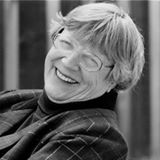
    Pat TylerAt 81, Pat Tyler continues to be warm, vertical, reading, writing, publishing short works, self-publishing long works, painting, crafting, and most of all – retired! (on the only quiet corner in Cotati, CA)

    Pat received her Master of Arts degree from Sonoma State University.  Pat’s writing has been published in Good Housekeeping Magazine, Fate Magazine, and numerous anthologies. She is an award winner of four Writers Digest Competitions. Pat Tyler is the author of The Impossible Promise and her memoir, 2014 Moments Remembered. Pat’s next novel, Forgive Us Our Trespasses, will be available in 2016.


  • Something borrowed or loaned. Prompt #196

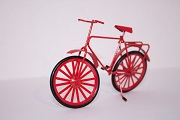
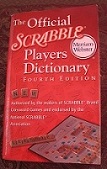
    Write about something you have borrowed or loaned.

                        bicycle wooden mallet                        Scrabble Dictionary

    Photos of bicycle and mallet by Jeff Cullen. (Click on Jeff Cullen to see his Fotolio photos)