There was something awesome in . . .

  • There was something awesome in . . .

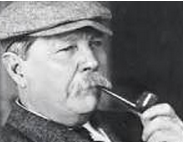
    Doyle.1There was something awesome in the thought of the solitary mortal standing by the open window and summoning in from the gloom outside the spirits of the nether world. — Sir Arthur Conan Doyle

    Note from Marlene: Perhaps it was this ability of Doyle’s that enabled him to write with sensory detail, especially the sixth sense.

  • The Sixth Sense

    We have previously talked about the five senses: sight, hearing, smell, touch and taste.

    Today, we’ll talk about the sixth sense.

    The sixth sense can be described as telepathy, intuition, perception, imagination. . . those traits that use the mind to create and understand. Some people believe the sixth sense is the ability to problem solve; using our minds to read and interpret signals, to pick up or sense energy.

    NBA Hall of Famer Kareem Abdul-Jabbar started reading Sir Arthur Conan Doyle’s Sherlock Holmes series during his 1969 rookie road trips. He was “fascinated by Holmes’ remarkable ability to see a world teeming with subtle but revealing clues where others saw only the mundane.” September 27, 2015 Parade

    Kareem realized that Holmes used his power of observation to pick up clues missed by others. Kareem did the same with basketball. He observed players’ moves and habits and used that information to better his game.

    Both Sir Arthur Conan Doyle’s Holmes’ character and Kareem Abdul-Jabbar problem solved by picking up signals, interpreting them, and with intuition, solved the mystery, won the game.

    So how can you incorporate the sixth sense in your writing? Use your imagination and skills to create a world and characters who use their sixth sense. Remember the movie, The Sixth Sense? If you haven’t seen it, I highly suggest watching it as a tool for developing characters.

    Use Holmes and his sixth sense as an example for fleshing out your fictional characters or to inspire writing about real people.

    Authors and books whose characters use powers of deduction to solve mysteries :

    Steve Hockensmith, Holmes on the Range series.

    Kareem Abdul-Jabbar and Anna Waterhouse, Mycroft Holmes

    More ways you can use the sixth sense in your writing. Your characters can embody these traits. From Yahoo Answers:

    Clairvoyance 
    The art of ‘seeing’ with senses beyond the five we normally use. Clairvoyance is often called the ‘sixth sense’ or E.S.P. Clairvoyance is like a second level of thought, one step higher than the normal level of thinking that we all do. Clairvoyants see beyond what we normally see.

    Clairaudience 
    The ability to hear beyond the normal range of hearing like messages in thought forms from an spirit who exists in another realm. Many of us become aware of this skill when we are in danger and that ‘little inner voice’ sends a warning.

    Clairsentience 
    Clairsentience is the ability to feel things that something’s there but it isn’t seen. A lot of people have this ability but do not know that they possess it A tickling sensation on the hand or face during meditation. A pressure on the top of the head when talking or connecting with a Spirit. Hairs on the back of the neck standing on end when a spirit is near. A floral smell… A movement as a flick of white, purple, or blue light. Seeing shadows in the periphery of your field of vision

    Empathy 
    Empathy is the ability to feel emotional, mental, physical and spiritual energy level and can be read as images or feelings, an empathetic person can find they are able to sense things with a person that others cannot sense.

    Sixth SenseClick here for more Yahoo Answers about the sixth sense.

  • Wordrunner eChapbooks

    Wordrunner eChapbooks has published 25 online chapbooks — 10 fiction, 5 memoir and 5 poetry collections, each featuring one author, and 5 themed anthologies by multiple authors. Wordrunner is pleased and proud to be showcasing these diverse and talented writers.

    Theme for next submission is “Devices” (technology’s impact on our lives and relationships):  Fiction, memoir and poetry.

    There is no fee to submit and authors are paid.

    Submissions will open from November 15 through January 15, 2016.

    Guidelines will be posted after November 15, 2015. Note from Marlene:  Start writing now, so you have time to revise, edit and submit.

    Jo-Anne Rosen is the publisher/editor of Wordrunner. Jo-Anne’s fiction has appeared in many publications.  Two of her stories were performed at the New Short Fiction Series in Hollywood, California, on October 12, 2014.

    Jo-Anne is a book and web designer and a small press publisher. Jo-Anne established Wordrunner Publishing Services in the 80s, a print chapbook service in the 90s, and Wordrunner eChapbooks in 2008.

    Jo-Anne will read from her short story collection, What they Don’t Know, on Monday, October 12, 2015, 6:00-8:00 p.m at Gaia’s Garden in Santa Rosa, CA, along with Susan Bono, Wind Hughes and Mara Lynn Johnstone.  For reservations: email Jeane Slone: info@jeaneslone.com

    About Chapbooks

    A few hundred years ago, chapbooks were pamphlets of popular tales or ballads, hawked in the streets for pennies. 21st century echapbooks are the contemporary equivalent with the potential for reaching many more readers than do limited print editions.

    Donations

    If you share enthusiasm for the stories, poems and memoirs on this site, as well as the conviction that authors should be paid for their work, please consider supporting Wordrunner with a donation.

    Why should you donate? Wordrunner does not charge a fee for submissions nor subscriptions, nor are there any advertisements on this site. Simply excellent and engaging reading.

    “If you share our enthusiasm for the stories, poems and memoirs we’re publishing, as well as our conviction that authors should be paid for their work, we hope you will consider supporting us with a donation.”

    Another way to support Wordrunner is by purchasing the Kindle or Smashwords version of the echapbooks. Links to these may be found on the e-Store page.

    Rosen.What They Don't KnowNote from Marlene: Jo-Anne Rosen is a tireless supporter of writers, writing classes/workshops, writing events. . . all things writerly. She collects, formats and produces Sonoma County Literary Update. If it’s about writing and it’s in Sonoma County, Jo-Anne has it listed here.

  • Prompts to spark your writing

    Prompt: Use one or more of the quotes below as a spark to ignite your writing.

    Quotes from Woman’s World a novel, by Graham Rawle.

    I was as nervous as an eighteen-month-old baby meeting Marlon Brando for the first time.

    I realized what I’d done as soon as I stepped out on to the street and felt the cold air fingering my throat.

    His hairline is so crisp and even that one would be forgiven for thinking that a long-playing record had melted on his head.

    Her featherweight, special all-day dress in gossamer linen, all over embroidered and belted with a small, slit sleeve, hugged her figure like a long-lost cousin.

    The kiss was a poem, and the poem was bordered with dainty crayon flowers in pastel shades and headed by a blue angel, complete with hovering wings and bare celestial feet.

    Rawle.Womans World

  • Show me the glint of light on broken glass . . .

    “Don’t tell me the moon is shining; show me the glint of light on broken glass.”
    —Anton Chekhov

  • Vary sentence structure

    Have you heard about varying length of sentences?

    Here’s what Mary Gordon says about that:

    “One of the things that I try to do is to have a paragraph that begins and ends with a sentence of approximately the same length and verbal structure. . . . in the middle, the sentences tend to be longer and more complex.

    It allows for a kind of velocity to happen . . . A shorter sentence you actually have to read more slowly . . . If you are a writer, you have more power than the greatest tyrant in the world because of punctuation. You get to tell people how to breathe . . . a sentence that has very little punctuation, you actually have to read more slowly because you’re not stopping to breathe. So it’s a slowing down and then a kind of build up – a crescendo and then a decrescendo . . . ”

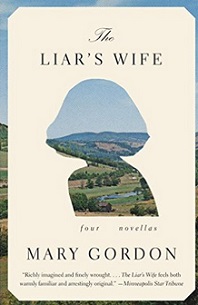
    Excerpt from The Liar’s Wife by Mary Gordon:

    “The late sun sparkles on the river. She has not given up the habit of trying to find the right words for the color of the sky. Pearl grey, she thinks, and then changes from pearl to oyster, the inside of an oyster shell. And all at once, there is something like a rip in the matte greyness, and light pours through, as if someone had slit a great cloth bag of sugar, and the sugar had spilt out. Only one tree is singled out by the light, and that one called a maple sugar. It amuses her to say to herself, ‘the sugar light falls on the sugar maple,’ and then she wonders if she thought of sugar because of rationing. She believes that she spends an inordinate amount of time thinking about the food she can’t have. She has been told the sacrifice is honorable, and she believes it, and is glad to do it. Only sometimes she yearns, ashamed, for the taste of sugar.

    Mlle Weil says: ‘the tree looks like a torch thrown down by an angel.’

    Once more, in relation to Mlle Weil, Genevieve finds herself abashed and she feels she must accuse herself. She is thinking of angels and I of sugar.”

    From an interview by Alicia Anstead, The Writer, September 2015

     Gordon.Liar's WifeNote from Marlene: I love how Genevieve struggles to find the right word for the color of sky. I ponder the perfect description for stars in the dark sky. I’ve heard “diamonds spilled from a velvet pouch.” I love that. Wish I had thought of it.

    However you parse your words. . . Just write!


  • Joyland – Regional Literary Magazine

    Joyland is a literary magazine that selects stories by region. Each regional editor works with authors with some connection to their area. Living in the respective city or region for any amount of time is qualification enough for submission. If you’re unsure, send to the region nearest you.

    Joyland publishes short fiction, novel excerpts, and literary non-fiction between 1200 and 10,000 words ( slightly under or over is fine).

    Joyland Submission Guidelines

    Rejection Guidelines

    Published work by RegionsJoyland

  • First car . . . Prompt #190

    Write about your first car, someone else’s first car, or your fictional character’s first car.

    You can use this as a way to get to know your fictional character better. You probably won’t use this information in your fiction, but you might!

    Pedal carWrite about a first car. See where it takes you.

  • Is pre-writing for you?

    Guest Blogger Becca Lawton writes about pre-writing.

    Excerpt from Becca Lawton’s 8/31/15 blog post, about her time in Canada on a Fullbright Scholarship to research her book:

    Writing a novel is such a huge undertaking that I’m amazed anyone writes more than one . . . I’m completing a submittable draft of my second novel . . . Now that I’m dragging my sorry carcass to the finish line, it’s fun to look back at this post written September 29, 2014, soon after the start of the project, when I was just starting to pour all my hope and energy and learning into it:

    I just completed sixty pages of prewriting for a second novel . . . They’re filled with answers to questions like, “Who are the main characters in your book?” and “What are their wants in every scene?” and “Is the setting recognizable yet unique?” I’ve modified the questions from a checklist developed by Janet Neipris, from her book To Be a Playwright, a resource I find essential. Typing up to ten pages each morning before breakfast, I completed the questionnaire in a week. At home it would have taken me a month. Although the impatient part of me wanted to zip through all the questions with an “I don’t know” or “Who cares?” I focused on each one with as much focus as I could muster. Grudgingly I’ve come to admit that if I pour myself into a pre-write of this kind, the book’s first draft flows much easier. Prewriting saves time, guesswork, and rewriting sweat. A week saves months or years of labor later. I know. I’ve written books both ways.

    Becca Lawton. . . buoyed by the knowledge that I can start the first draft of my second novel tomorrow morning. That knowledge feels like a precious gift after more than a year of dreaming, applying, and then preparing to come to Canada on a Fullbright Scholarship to research a book. Every day I’m grateful for the support.

    Photo by Melinda Kelley
     
  • What are you angry about? Prompt #189

    Prompt #1: What are you angry about? Mad about? Annoyed about?

    ArgueComplain! Go ahead and vent. Spit it out.

    You can answer from your experience, or from your fictional character’s point of view.


    Prompt #2: Regarding Prompt #1, is there anything you can do about it?

    Hope & MiraclesIf yes, write possible solutions, compromises, ideas, brainstorm.

    If not, let it go. Write about how you can release it, breathe it away, banish it, whisk it away.

    How can you let go of your fears, worries, annoyances? How can you just let go?