“I was terrified about writing stories about where I came from because I was embarrassed. Truly great writers are not afraid to bare their souls. Sometimes you may feel like: ‘I shouldn’t have put that in there, I don’t want people to think it’s about me or look at me differently.’ Toss those thoughts aside. That’s a mental block. Don’t think about it. Just do it. As long as you write from a place of purity, and it comes from your heart, you can’t go wrong.”—K’wan Foye, interview with Alicia Anstead, October 215 issue of The Writer.
-
Sensory Detail – Taste
When writing simmers with sensory detail, readers digest the story and perhaps, are satiated with emotionally charged memories.
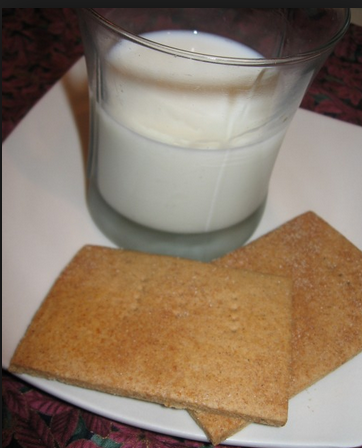
Do you remember dipping graham crackers in milk and eating it quickly before it broke off and became a soggy mess? You might use something like this in a scene where the hero/heroine has just been dumped by a boyfriend/girlfriend.
Perhaps your character can’t make decisions. Employ a scene where he taste tests while walking a buffet line; a bite here, a nibble there, unable to settle on a nourishing decision.
Employ sensory detail to involve readers in the story’s emotional ingredients.
Match emotions with taste receptors:
Bitter: She recoiled and didn’t know whether it was from her bitter coffee or his abrupt, “We’re done.”
Salty: “The oysters were so fresh they tasted like my tears. I closed my eyes to feel the sensation of the sea.” — Laura Fraser, “Food for the Heart,” Eating Well Magazine Jan/Feb 2007
Sweet: She lifted the chocolate to her mouth, gazing at the young man across the room. She held him captive and slowly savored the chocolate.
Sour: “Lemon with your squid?” She pinched her nose, “No, thank you.”
Umami: Their classroom integrated a variety of cultures, much as umami unites disparate flavors.
Match emotions with taste:
Ebullient, getting away with murder:
” . . . the fat Georgia man told Big George that it was the best barbecue he had ever eaten, and asked him what his secret was.
Big George smiled and said, ‘Thank you, suh, I’d hafto say the secret’s in the sauce.’” —Fried Green Tomatoes at the Whistle Stop Cafe, Fannie Flagg
Emotionally charged:
“She reached for a cherry tomato and popped it into her mouth. The juices exploded on her tongue. Carly wanted her attention? I’d give her anything she wants.” — A Wedding in Provence, Ellen Sussman
Hopeful, positive, upbeat:
“Taste this . . . I swallowed. She had fed me a fluffy cloud, no more than pure texture, but as it evaporated it left a trail of flavor in its wake . . . That’s an amazing combination. The saffron’s brilliant—it gives it such a sunny flavor.” —Delicious! Ruth Reichl
Comparing food with nature:
“Moving constantly, she caressed the chocolate like a lover, folding it over and over on a slab of white marble, working it to get the texture right. She stopped to feed me a chocolate sprinkled with salt, which had the fierce flavor of the ocean . . . One chocolate tasted like rain, another of the desert.”—Delicious! Ruth Reichl
“That’s the spring cheese. . . When I put the cheese in my mouth it was richer, and if I let it linger on my tongue I could taste the lush fields of late summer, just as the light begins to die.” —Delicious! Ruth Reichl
Taste and texture detail:
“It was accompanied by lamb cutlets, which Cuneo had passed three times over the open flame, and a snow-white, melt-in-the-mouth garlic flan.” —The Little Paris Bookshop by Nina George
In previous posts we talked about sensory detail using sight, sound, smell and kinesthetic.
Taste and memory: Proust’s Remembrance of Things Past:
“I raised to my lips a spoonful of the tea in which I had soaked a morsel of the cake. No sooner had the warm liquid mixed with the crumbs touched my palate than a shudder ran through me and I stopped, intent upon the extraordinary thing that was happening to me. An exquisite pleasure had invaded my senses, something isolated, detached, with no suggestion of its origin. And at once the vicissitudes of life had become indifferent to me, its disasters innocuous, its brevity illusory – this new sensation having had on me the effect which love has of filling me with a precious essence; or rather this essence was not in me it was me. I had ceased now to feel mediocre, contingent, mortal. Whence could it have come to me, this all-powerful joy? I sensed that it was connected with the taste of the tea and the cake, but that it infinitely transcended those savours, could, no, indeed, be of the same nature. Whence did it come? What did it mean? How could I seize and apprehend it?
I drink a second mouthful, in which I find nothing more than in the first, then a third, which gives me rather less than the second. It is time to stop; the potion is losing it magic. It is plain that the truth I am seeking lies not in the cup but in myself.” Remembrance of Things Past, Proust
Click on Prompts, try a freewrite, using sensory detail. Just Write! -
Ruminate is ready for your submission
ru’mi-nate: to chew the cud; to muse; to meditate; to think again; to ponder
Ruminate is an award-winning quarterly literary arts print magazine engaging the Christian faith.
Ruminate publishes poetry, short stories, photography, visual art reproductions, short fiction, memoir, creative nonfiction, essays, reviews, and interviews.
Ruminate sponsors four contests each year—poetry, short story, nonfiction and visual arts.
Ruminate suggests slowing down and paying attention. “We love laughter. And we delight in telling the truth, asking questions, and doing ‘small things with great love,’ as Mother Theresa said.”
You are invited to submit your work.
Note from Marlene: Writers Forum of Petaluma presenter Rayne Wolfe, October 15, 2015:
Newspaper reporter and columnist, Rayne Wolfe will share her methods for identifying sources, mining for quotable gold and turning interviews into stories.Whether you are focusing on non-fiction, fiction, historical fiction or memoir, Rayne will share her tools for enriching all writing by becoming an ace interviewer. Attend this forum, learn the art of interviewing, then submit to Ruminate.
-
Growing up . . . Prompt #188
Start writing with this phrase: “Growing up” . . . and then, just start writing!
Today’s writing prompt: Growing up . . .
-
Writing as an organic process. . .
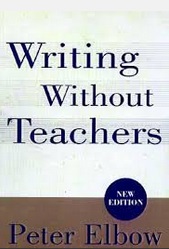
“Think of writing as an organic, developmental process in which you start writing at the very beginning – before you know your meaning at all – and encourage your words gradually to change and evolve. Only at the end will you know what you want to say or the words you want to say it with.” –Peter Elbow
-
See your story and tell it.
Relax into your chair.
Escort your inner critic . . . your editor out the door.
Shed your ideas about what perfect writing means.
Give yourself permission to write the worst stuff possible.
Writing isn’t about talent, it’s about practice.
Creative writing is an act of discovery.
Take a deep breath. Relax into your breathing.
Rather than write for an audience, write from an instinctual level.
Immerse yourself in writing. Let go of your worries. Just let go.
Write to satisfy an inner desire and to go to a meaningful place, that’s all your own.
Go deeper into the recesses of your mind and really write.
Write to get to a powerful level – not for an audience.
If you notice thoughts and feelings that cause discomfort, take a deep breath and exhale. Look around the room. Get up and walk to a window, or get a drink of cool, refreshing water. Then get back to writing.
Write from the well that stores the fears. Let the tears come, let the stomach tie up in knots. It’s okay to write the story that is difficult to tell.
When you are writing, if you run out of things to say, or don’t like the direction your writing is taking, write “What I really want to say . . .”
If you want ideas about what to write, click on Prompts on The Write Spot Blog.
-
100 Word Story
Do you like to write short pieces? If yes, then Grant Faulkner’s 100 word story is for you!
From the 100 word story website:
“One hundred seems perfect. It’s the basis of percentages, the perfect test score, the boiling point of water (Celsius), purity. Pythagoreans considered 100 as divine because it is the square (10 x 10) of the divine decad (10). Even a Scrabble set has 100 tiles.
And yet 100 is a fragment. It’s an arbitrary marker, like the ‘First 100 Days’ of a president’s term—merely a promise of what’s to come, or a whiff of what has passed.”
Submit: 100 words … no more or no less. Tell a story, write a prose poem, pen a slice of your memoir, or try your hand at an essay.
-
Zazzle. . . . Prompt #186
Today’s writing prompt: Zazzle
You can write about something that happened to you, something that happened to someone else, or write fiction. I look forward to reading your writing about Zazzle.
-
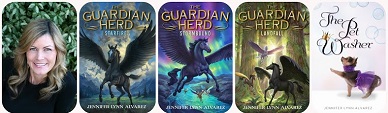
Jennifer Lynn Alvarez: The Book You Were Born to Write
Guest Blogger Jennifer Lynn Alvarez writes about The Book You Were Born to Write.
I recently read The Martian, by Andy Weir. It’s a unique, thrilling, and detailed survival story described as “Apollo 13 meets Cast Away.” I thoroughly enjoyed the book, in spite of all the math equations and the use of the metric system (English Lit. major here). But I’m not writing about Andy Weir to review his wonderful book, I’m writing about him because of something he said in an interview:
“I love reading up on current space research. At some point I came up with the idea of an astronaut stranded on Mars. The more I worked on it, the more I realized I had accidentally spent my life researching for this story.” Andy Weir (Book Browse online interview)
You see, Mr. Weir is a self-proclaimed space and science fanatic inspired by the idea of humans someday traveling to Mars. While penning the novel, Mr. Weir wrote his own software program to calculate the constant thrust trajectories of his imagined mission—all based on real-life technology. He crafted the main character’s wisecracking personality after his own, and supplied him with entertainment on Mars in the form of a crewmate’s recorded 70’s shows, which happen to also be the author’s favorites.
The fact that this book is grounded in the passions and education of Andy Weir is what makes the tale ring true. He used what he knows; space travel, computer science, his own personality, and his childhood interests to imagine a story that is pure science fiction. And The Martian has taken the world by storm. Mr. Weir originally self-published the book, but quickly sold the rights to Crown Publishing. The novel debuted on the New York Times bestseller list. Film director, Ridley Scott, and actor, Matt Damon, will bring this story to life next month in theaters everywhere. (Source: Wikipedia)
So how does Andy Weir’s success apply to us as writers? It all goes back to his sentiment from the interview: The more I worked on it, the more I realized I had accidentally spent my life researching for this story. While the author didn’t set out to write the story he was born to write, he accomplished it by pursuing his passions and his expertise with his pen.
We all have a passion for something, right? I hope so. And we all have expertise, whether it’s studied or acquired through life experience. And the intimate knowledge we have about people, places, things, or relationships can be used to bring our books to life for others.
Readers, literary agents, publishers—they respond to authenticity no matter how outrageous the tale. Personally, I wrote and queried four novels before I sold my first book, The Guardian Herd, to HarperCollins. In hindsight, it makes perfect sense that this fifth book is the one that broke through because it’s the book I was born to write. I’m a lifelong horse-lover, I’m fascinated by politics, and I love reading fantasy. My book series is about five herds of flying horses at war with one another and the special black pegasus foal who will inherit the power to either unite or destroy them. As you can imagine, this upsets the leaders who stand to lose their power. It’s politics, horses, and fantasy all rolled into one.
But what do I really know about pegasi: Very little. What do I know about horses: A lot. I grew up riding and I own a horse now. I applied my knowledge of stallion behavior to all my pegasi, male and female, making them fierce, protective, and territorial. But I also used my imagination to give them ninety-year lifespans, emotions, speech, and strict rules of power. It’s an imaginary world, but it’s informed by my real experiences with horses, my studies of politics, and my formative years of reading animal fantasy novels.
This brings me to my last point, which is about genre. I believe that the book we’re born to write is also the book we’re born to read. When you hit the sweet spot of combining your passions with your knowledge and adding that to your favorite book genre, you will write something truly magical. I can’t promise it will become a bestseller, but I do believe it will find a devoted audience of like-minded readers.
How about you? What are your areas of expertise, your passions? What type of book are you dying to read? Well, don’t wait for someone else to write it, that’s your book.
Here are some equations to help you get started (in honor of Mr. Weir who loves math):
Knowledge + Passion + Genre = Book You Were Born to Write
Computer Science + Traveling to Mars + Science Fiction = The Martian (Weir)
Horses + Politics + Fantasy = The Guardian Herd Book Series (Alvarez)
But don’t worry if the book you were born to write doesn’t immediately pop into your head. I loved horses and knew I wanted to write about them long before I tried it. Instead I filled my time writing practice novels, studying the craft of writing, and daydreaming, and so when inspiration struck, I was ready to act! I encourage all writers to set regular hours, don’t judge your first drafts, and to seek feedback. One day, the big idea will come, and when it does, you’ll be ready.
Note from Marlene: Figure out your equation and just write! Jennifer will be the Writers Forum presenter in Petaluma on Sept. 17, 2015. Join us, if you can. Jennifer will talk about World Building: How to Create Fiction That Feels Real. The Guardian Herd Series Starfire and Stormbound will be available for purchase.
Jennifer Lynn Alvarez is the author of The Pet Washer and The Guardian Herd Series: Starfire and Stormbound and the soon to be released, Landfall.
Jennifer is an active horsewoman and volunteer with U.S. Pony Club. She draws on her love of animals for inspiration when writing her books. Jennifer graduated from U.C. Berkeley with a B.A. degree in English Literature. Jennifer lives on a small ranch in Northern California with her husband, three children, and more than her fair share of pets. Please visit her website for more information.
Follow Jennifer on Twitter @JenniferDiaries
Visit her Facebook page: Jennifer Lynn Alvarez