Fourteen Hills Press ready for your submission

  • Fourteen Hills Press ready for your submission


    Since its inception in 1994, Fourteen Hills: The SFSU Review contributes to a vibrant literary tradition on the West Coast centered in the San Francisco Bay Area. Its commitment to presenting a diversity of experimental and progressive work by emerging and cross-genre writers, as well as by award-winning and established authors, has earned it a reputation for literary excellence. Being independent means its aesthetic is dynamic and fluid, ever changing to meet the needs of the culture and the historical moment as the staff perceive them. As an international literary magazine, Fourteen Hills has developed a reading audience that goes beyond the San Francisco Bay Area to the international community.

    Staffed exclusively by graduate students in the creative writing program at San Francisco State University with the oversight of a faculty advisor, Fourteen Hills publishes original poetry, fiction, literary nonfiction, and cross-genre work created by writers in the US and abroad. It also welcomes and prints representative contributions from visual artists.

  • Winner! Winner! Chicken Dinner. Prompt #195

    AwardWriting Prompt: Tell about an award or a prize you won.

    You can write about what really happened, or write as if your fictional character won a prize.

  • Become The Writer You Want To Be

    “Writing is an act of courage.” — Ta-Nehisi Coates

    “I always consider the entire [writing] process about failure, and I think that’s the reason why more people don’t write.” — Ta-Nehisi Coates

    Ta-Nehisi Coates’s latest book, Between the World and Me, is a “searing meditation on what it means to be black in America today.”  The New York Times Review

    Upon receiving the 2015 MacArthur ‘Genius’ Award Winners, Coates said, “When I first got the call from the MacArthur foundation I was ecstatic. . . if anybody even reads what I’m doing, that’s a great day.”

    Between the World and Me is a finalist for the Kirkus Prize for nonfiction.

    Between the World and Me is in the form of a letter to Ta-Nehisi’s 14-year-old son. He speaks of the dangers of living in a country where unarmed black men and boys are dying at the hands of police officers.

    His evocative 2008 memoir, The Beautiful Struggle, is a “. . . compelling a portrait of a father-son relationship . . . and a showcase for his emotional reach as a writer and his both lyric and gritty prose.” – The New York Times Review

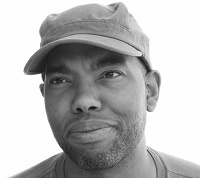
    Ta-Nehisi CoatesTa-Nehisi’s chatty and thoughtful video drew me in. He said the key to writing is perseverance. He talks about learning to be a writer and that being stressed led to writing that had much more power. “Repeated practice to become the writer you want to be. Revise over and over until [your writing] goes from really bad to okay to acceptable.

    Ta-Nehisi Coates writes from the heart. My favorite kind of writing.

  • Essential Wound Prompt #194

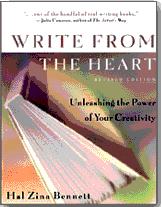
    Write From The Heart by Hal Zina Bennett is one of my all-time favorite books on writing.

    The following is an excerpt from Write From The Heart.

    “I am convinced that every essential wound, by its very nature, has the potential for opening each of us up to the full potential of our very soul. I do not mean to be Pollyannaish about it, either. It’s not a matter of the universe providing us with the challenges we supposedly need for our spiritual growth. I tend to believe in the universe’s ‘benign indifference,’ as Camus once put it, and that God is something like a courageous and loving parent who gives us all we can take in, then lets us go on to live our lives the best we know how. I think that must have been what Joseph Campbell was talking about, too . . . ‘the world is a match for us and we’re a match for the world. And where it seems most challenging lies the greatest invitation to find deeper and greater powers in ourselves.’

    Our own perceptions of the world, the inner vision of what we think life is about, gets challenged in every essential wound. Our true creativity comes about when we think life is about, get challenged in every essential wound. Our true creativity comes about when we start trying to sort all that out, asking what the wound mirrors back to us, what it tells us about ourselves, what we need to let go of, and what we need to learn to embrace. When we do that, we take ourselves out of the role of victim. We see that there’s an alternative to the way we ordinarily look upon our grievances — that we can literally mine even our worst errors for the treasures they contain. When we look at our wounds in this way, we invariable discover turning points, breakthroughs that carry us beyond the limits of everyday thinking. And we can go forth to tell the stories that are truly important to tell, that reveal the hidden truths of our lives and the lives of others, thus building spiritual bridges between our own consciousness and theirs.

    write from the heartThe essential wound is a particular kind of experience that happens off and on throughout our lives and goes to the very core of our being. These wounds are important to writers for the same reasons that peak experiences are — they are the resources that lend authenticity to our writing. Essential wounds have an added element in that they reveal our humanness. They reveal that we each create our own inner worlds, mental models of the way we believe things should be. The wound occurs when something happens to reveal the difference between how you see the world and the way the world really is. You may feel shattered, hurt, disappointed, or depressed, but if you keep your eyes open those moments can lead to dramatic revelations.”

    Prompt: Write about an essential wound.

  • Everybody Is Talented, Original and Has Something Important to say.

    So says Brenda Ueland and I agree with her.

    Her book, If You Want to Write, is one of my all-time favorite writing books. She is practical, straightforward and delightful.

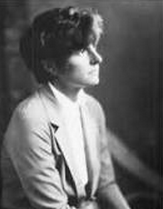
    Brenda UelandFrom the preface:

    For many years I had a large class of people at the Minneapolis YWCA. I think I was a splendid teacher and so did they.

    My teaching differs from that of others in this way: I am blessed with a fascinated, inexhaustible interest in all my pupils — their thoughts , adventures, failures, rages, villainies and nobilities, “Tell me more. Tell me exactly what you feel when you tried to kill the man.” . . . “You say his muscles rippled through his shoulders.” Did they really ripple? Did you really see that?” Then the young novelist’s excited defense: “Yes, they did! His muscles were so big they seemed to burst the seams of his coat!” Myself: “Well say that! Hurrah! Put it that way. That’s alive, great!”

    Marlene’s Musings: Write your story as you remember it. Tell the tale as it wants to be told. Truth? Yes, sometimes you will write the truth, other times just write whatever you want.

    Think of yourself as a story teller. . . whether you are writing about something that really happened or fiction. . . you are telling a story.  Tell it however you want . . . just write!  Seems like Brenda and I think alike. Click here for another of her quotes.

  • How to flesh out villains.

    Do you have a villain in your story? Is this scoundrel executing gruesome acts? Is it hard for you to get into the head and heart of the “bad guy?” Does he or she have a heart?

    Here’s an idea about how to flesh out your baddie. . . so that he/she is someone you can live with for the duration of your writing.

    Do a freewrite. The antagonist was once a child. What were his/her passions as a teenager? What games did they play as children? What delighted this child? Write about his/her first car.

    Choose a prompt and write as if you were answering from the villain’s point of view. Imagine you are a neighbor or a relative of the undesirable person. Write about the mean person from someone else’s point of view.

    What is the turning point, or the chain of events that changed this innocent toddler into a dreadful creature?

    Probably not much of this brainstorm writing will make it into the final cut, but it will help you understand this despicable creature and make him/her come alive.

    Remember: There usually is a wicked character in stories. . . that’s what gives stories their heft, their meatiness.

    An example is Anna Quindlen’s “Every Last One.” We meet an individual who is charming, likable . . .lovable. Then an event changes everything and everyone. Use a book of your choice as your textbook. Study how the author developed the character of the “bad” guy.

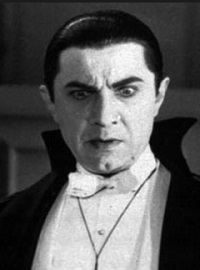
    Count DraculaNo one was born bad. How did they get that way? You are the puppet master . . . create and control your characters, even the evil ones. Just write!


  • Big Brick Review – ready for your submission

    The Big Brick Review Annual Essay Contest open for submissions from now until February 17, 2016.

    The Big Brick Review seeks personal essays that build on the narrative of our lives, finding new insight to old struggles . . . old insight to new struggles . . . and all shades-of-gray in between.

    The Big Brick ReviewFor 2016, the contest theme captures the color of brick and is loosely based on the concept of ‘red/read’—which authors can interpret as creatively as they choose (it’s an adjective! it’s a verb! It means different things in different contexts!).

    Essays must be narrative non-fiction (that is, they must explore a truth of a human experience as interpreted/experienced by the author) and will be judged on overall strength of writing, compelling content/theme, and interesting style/voice. For more info, visit Contest.

  • The Zipper . . . Prompt #193

    “When we seek closure, we reach out to the zipper. it keeps us warm, prevents things from falling out of purses and lets us cram way too much into our suitcases. When it gets stuck, so do we. Without it, life would be filled with the endless ennui of buttoning and snapping.” — Helen Anders

    Today’s writing prompt:  ZipperZip it

  • Guest Blogger Rayne Wolfe: Trust your first readers.

    Guest Blogger Rayne Wolfe, Author of Toxic Mom Toolkit, talks about the pain and acceptance of comments and criticism when others critique your writing.

    “Listening to criticism with an open heart is hard, but it always pays off.”

    Rayne WolfeLearning to Love Our First Readers

    I was in a classroom at the Catamaran Literary Conference in Pebble Beach, my first writing conference ever, and a fellow writer was ripping my work apart. I could feel the shame rise up in my chest, coloring my neck and face with a dark blush.

    Sitting there among very accomplished writers, including literary prizewinners, even college professors who were all certainly better writers than me, my ears began to ring. Nerves.

    This fellow writer, who ran her own popular writing conference each summer, was picking apart a chapter from my new book.

    After publishing my memoir, Toxic Mom Toolkit in 2013, I was tackling a companion workbook on going “no contact” with very toxic people, including toxic mothers.

    My chapter draft began:

    You’ve told losers to hit the road.

     You’ve left jobs that were demanding demoralizing dead-ends.

     You’ve even moved from one end of the country to the other – one of the most stressful things you can do – other than giving a Ted Talk. So why is it to hard to break up with your toxic mother?

    As my blush rose past my chin and raced up towards my eyebrows, the writer was saying in front of everyone,

    As I was reading this, my first thought was, well, don’t a lot of people who were raised in toxic families have a hard time asserting themselves? Some of these things you’re assuming everyone has done –- I haven’t done, when maybe I wanted to. Some people are timid and I think you should mix these up with much smaller life victories…

    Trying to listen and smile at the same time, a wonderful thought hit me: Yeah, this might feel bad in the moment but it was no different than notes from a first reader.

    Plus – dang it! – She was absolutely right. My opener needed work.

    Over my ringing ears I visualized a slew of very personal essays I’ve written for newspapers and magazines. I recently contributed a story about my father to The Adoptee’s Handbook. My memoir about growing up with a toxic mother includes neglect and abuse. With over 5,000 printed articles under my byline, I’d earned my writer’s thick skin, hadn’t I?

    First readers, those smart people you pick to be your second set of eyes, are usually trusted fellow writers. They should understand you and your topics but also look at life a bit differently than you.

    Native Cover.4417111.inddWhen I was writing Toxic Mom Toolkit, I chose five first readers. My team included a couple of writers I’ve known for over 15 years, then I added some wild cards: my friend the dairy rancher who is an avid reader, my friend the landscaper who always wins at Trivia Pursuit, and my husband, Mr. Logical. After three years of writing and double-checking and editing, they each found typos and logic breaks and repetitions of parts of stories I had missed.

    It is in trusting first readers to help you, that you can feel confident with your final manuscript.

    I looked up and made eye contact with the woman giving me feedback. Realizing she was no different than a blessed first reader, I smiled and felt the rush of nerves subside.

    Listening to criticism with an open heart is hard, but it always pays off. At the end of the four-day conference I drove home with a big smile and a folder full of great feedback from very generous fellow writers.

    Rayne Wolfe will be the presenter at the October 15, 2015 Writers Forum, talking about The Art of the Interview.
  • I want to tell you about . . . Prompt #192

    Set your timer for 15 minutes and write. Write freely. Write as though you have only 15 minutes left to live. What do you really want to say? What do you want tell us?

    WhisperToday’s writing prompt: I want to tell you about . . .