Our imaginary selves. Prompt #151

  • Our imaginary selves. Prompt #151

    Excerpt from Simple Abundance by Sarah Ban Breathnach, April 3:

    Court JesterWhat are you going to be when you grow up? Today, let’s think about paths not yet taken—the paths of our secret imaginary selves. Each of us leads many lives vicariously and often simultaneously. By acknowledging our secret lives and tapping into the wisdom of our imaginary alter egos, we can glean tips to help us develop our own personal sense of style.

    If you had ten other lives to lead, what would you be doing?

    You might want to be a radio disc jockey, a mountain climber, a Broadway lyricist, a filmmaker, a romance novelist, a brain surgeon, a syndicated newspaper columnist, a psychic, a horticulturist, a holistic veterinarian, or a potter. . . Now write down your secret selves. How do they live? How do they dress? What can you do to bring some of the magic of your imaginary lives into your everyday existence? Brainstorm with your authentic self.

    Look within today and have fun. . . one of your secret selves might reveal a passionate wish.

    Note from Marlene: One of your secret selves might reveal a fictional character, who just might lend mystery and magic to your writing.

  • Before you publish, take one more vital step: Invite a very important person to the party.

    Guest Blogger Linda Jay writes about copyediting.

    In 2012, Joel Friedlander asked Linda Jay to offer readers of his popular blog, The Book Designer, advice at that time, on “one of the most important decisions a self-publisher makes: hiring a copyeditor.” Here’s her reply, still pertinent today:

    Agreed.  You’ve spent months (or possibly years) writing the manuscript that will one day be your book. You’ve distilled all those handwritten notes from pages or scraps of paper, those often-incoherent e-mails to yourself, and those ideas racing around in your brain, and typed every one of them into the computer, in some loosely organized format that vaguely resembles a book. Then one day… hooray… it occurs to you that… you’re done!

    Now you can’t wait to get your little gem “OUT THERE” for all the world to marvel at. You are indeed a writer (which nobody can deny, which nobody can deny)!

    Oh, yes, you’ve given a sneak peek at your masterpiece to a few people whose opinion you trust—relatives, longtime friends, business colleagues. And, sure, they may have spotted a few misspellings, or a weird sentence construction here or there, but what the hey—everybody makes mistakes.

    They’re just tickled that you’ve had the audacity, capacity and tenacity to write a book; a few glitches only show that you’re human. After all, who’s perfect?  It’s time to send your “baby” on its way to possible fame, and reap the glories of being a published author!

    Are You Serious?

    Oh, but wait… if you really want to be taken seriously as a writer, stop and listen to that little nagging voice in your head that keeps saying, “Shouldn’t you be running the manuscript past an experienced professional copyeditor before you send it out?”

    Yes, you’ve read that in order to make your book as good as it can possibly be, you must take that vital step of investing in the services of an editorial pro. And just think—in the twinkling of a well-trained eye, a topnotch editor could burnish your precious prose so it sparkles in the sunlight.

    But if you submit (interesting, the ramifications of that word “submission” when it refers to sending in a manuscript, isn’t it?) your pages to the hyper-scrutiny of a nitpicky copyeditor, won’t your authentic voice be changed or deleted or mangled beyond recognition?

    The answer is… no, not if you properly vet the copyeditor to make sure you can work together well, and if the copyeditor stipulates that one of his or her goals is to make your manuscript publisher-ready… but not change your unique voice.

    A good copyeditor will offer to edit a few pages of your work as a sample, to see if you two are, literally and figuratively, “on the same page.”  You can usually judge from his or her edits whether you would be able to work together happily or not. For example, if you question some of the edits and the editor responds in a haughty or rigid “only my way is right” tone, run as fast as you can toward another editor.

    If your manuscript is about the life and times of the artist Edward Gorey, and the editor you’re considering has never heard of Edward Gorey and, furthermore, has no interest in learning anything about Edward Gorey, bid farewell and turn quickly on your heels.

    6 Ways Copyeditors Make Your Book Better

    A good copyeditor brings so much to the party. He or she can:

    1. go over grammar, punctuation, spelling, and sentence structure with a fine-tooth comb;
    2. check for consistency of verb tense, tone, and mood;
    3. find instances where sentences or paragraphs could be moved to make more logical sense;
    4. ask questions about clarity of idea, or accuracy of fact;
    5. call attention to parts of the text that could be tightened, expanded, livened up or deleted;
    6. make suggestions — synonyms for overused words, deletions of redundant words or phrases.

    With a good copyeditor on your team, misplaced modifiers, dangling participles, its/it’s, to/too and other hair-raising/hare-raising errors will melt away. Skilled editors say that mistakes “leap off the page” at them. And potential readers of your book will not be distracted by sloppy copy.

    You can find professional book manuscript copyeditors through organizations such as BAIPA and the Bay Area Editors’ Forum (BAEF), through online editorial sites, through ads in magazines that are targeted toward writers, and through looking up “copyeditor” on search engines.

    A good copyeditor can make your book’s message shipshape—and that’s not just editorial spin!

    Originally published as “6 Ways Copyeditors Make Your Book Better,” a guest post on Joel Friedlander’s popular blog, The Book Designer, on May 25, 2012.

    Linda Jay is a manuscript copyeditor with decades of experience, specializes in business, novels, memoirs, spirituality, women’s issues, academic topics and fantasy (vampires, zombies).

    Linda Jay will be on a panel of editors at Writers Forum in Petaluma, California on May 21, 2015.

  • This time next year . . . Prompt #150

    crystal ball at night.drake


    Today’s prompt:  This time next year . . .

    Write whatever comes up for you. No thinking. No analyzing. Just write!

  • Your Story Is Buried Treasure.

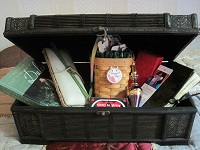
    Chest box“Writing is therapeutic. It saves lives. Your truths are eager to come out. Let them spill onto the page, and see what doors writing opens for you. Your story is buried treasure.

    One of the simplest, most private places to write is in a journal. It allows you to vent, delve into issues, and untangle messes. It lets you analyze or celebrate. It allows you to finish a thought without interruption. The journal validates your right to be who you are.” — B. Lynn Goodwin, “Celebrate Your Uniqueness” in Inspire Me Today.

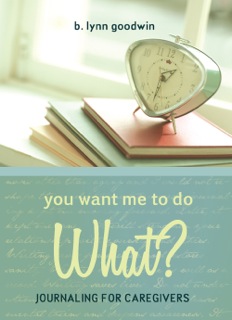
    B. Lynn Goodwin is the owner of Writer Advice, which is currently holding its 10th Flash Prose Contest. She’s the author of You Want Me to Do WHAT? Journaling for Caregivers, and a YA called Talent, which Eternal Press will be publishing this year. Her short pieces have been published in local and regional publications.

    Lynn will be on a panel of editors at Writers Forum in Petaluma, California on May 21, 2015.

  • Write authentically about difficult subjects

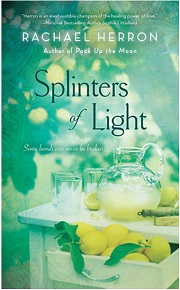
    Splinters of Light.180I recently read an outstanding novel, Splinters of Light, by Rachael Herron, “a poignant and beautiful novel about love, loss, and the unbreakable bonds of family—particularly those between mothers, daughters, and sisters.” — Amazon

    In this full-of-heart novel, the mother has early onset Alzheimer’s disease. I wondered how Rachael could write so authentically and intimately about something she didn’t have personal experience with. This is the gift of a writer who knows how to research and turn that information into a compelling story.

    I asked her how she wrote so authentically about early-onset Alzheimer’s disease (EOAD). Her answer:

    “I love immersing myself in the worlds I write about, but I’ll admit this was a hard one. Because there’s no cure for early-onset Alzheimer’s, there are really no happy endings. So I had to read about and research families that were breaking apart, but still focus on the happy parts of the love that remained. Luckily, it was easy to find. Memories are precious, and almost every family has precious stories of love. I borrowed the feelings, not the particulars, and imagined myself in each scene. I’m so pleased if it worked.”

    Herron’s dialogue is spot-on, from the mother and her age-range friends to the teenage daughter and her friends. Rachael responds, “I love writing dialogue — if it rings right to my ear when I read it out loud, then I’m satisfied.”

    Excerpt from the Conversation Guide in Splinters of Light:

    Q. How did you get the idea for Splinters of Light?

    A. I was sitting on my couch, my feet up on the coffee table, the cat on my stomach, reading a People magazine that featured an article about a teenage boy who was taking care of his forty-six-year-old mother as her EOAD progressed.

    Note from Marlene: Notice how specific Rachael is. . . sitting on couch, feet up on coffee table, cat on stomach, People magazine, ages of boy and mother. These specific details enable readers to “see” this scene.

    More from Rachael: “That boy’s story—that glossy page-and-a-half write-up—was something I couldn’t let go. . . I began to play with ideas, slipping them around in my mind much the same way Nora does with the sea glass in her pocket.

    As this book took shape in my mind, the characters became real and the plotline began to twist its way through my imagination like a river twists to the sea. At the same time, I was deeply aware that I had to get it right. I was entering a conversation that I needed to be part of . . . the truth is that we are the ones responsible for raising awareness for Alzheimer’s disease, and this book is my method of doing that, of opening the dialogue.”

    Note from Marlene: I think Rachael Herron does a fantastic job of opening the dialogue on this difficult subject. I encourage you to read Splinters of Light . . . for this important topic and for the gorgeous writing.

    Your Turn:  Do you have something difficult you want to write about?  Go for it!  Sit down and start writing. You can always toss what you have written. No one ever has to see it, unless you invite them.  Just write!

  • Two-Minute Memoir, Psychology Today

    Two-Minute Memoir focuses specifically on a personal story of growth.

    Typically told in first person, the selected essays should have a beginning, middle and end. Like most good essays, selected essays feature important internal change or revelation.

    As mentioned in the March/April 2015 issue of Writer’s Digest magazine: “Write something unusual.”

    Not the usual: mental illness, grief, divorce, falling in love, etc . . . unless there is something “distinctive or unusual about the story to make it work.”

    How to submit:

    Past your 1,500 word essay (or fewer words) in an email to: jennifer.blyer -at- psychologytoday.com

    Include a brief introduction and a one-sentence summary.

  • Last . . . Prompt #149

    Fun.112Sometimes writing prompts are fun and playful.

                            Akeret.Family tales.100    Sometimes they inspire memoir type writing.

    My Journal.1Other times they work well for fiction writing.

    Mostly the prompts are what you make of them . . . you can go light and stay on the surface, skating on the edge, or you can go deep.

    This quick type of writing is an opportunity to explore and perhaps come up with ideas for writing, or . . .for solutions to situations . . . or, for personal growth and transformation.  Butterfly.100


    Shed your ideas about what perfect writing means.   Give yourself permission to be open to whatever comes up. Writing isn’t always about talent, it’s about practice and going into another dimension. Rather than write for an audience, write from an instinctual level.

    Creative writing is an act of discovery. Immerse yourself in writing. Let go of your worries and write. Write to a satisfying inner desire to go to a meaningful place.

    Go deeper into the recesses of your mind and really write. Write from the well that stores the fears. Let the tears come, let the stomach tie up in knots. It’s okay to write the story that is difficult to tell.

    Get through the barriers to go to a deeper level. See your story and tell it.

    Today’s Prompt: Last

  • Take Your Writing to the Next Level

    Guest Blogger B. Lynn Goodwin talks about Taking Your Writing to the Next Level – A Look at Editing and Polishing

    So you’ve been inspired, found the time, and drafted a story or memoir that you really want to share with the world. Maybe you’ve even shared it with a critique group, or had a good friend read it to you so you could hear your own glitches.

    What do you need to do to take it to the next level and make it ready for publication?

    1.  Look at the content. Does everything contribute to the story you’re telling, or do you have extraneous material?
    2. Do your characters struggle, try, and give it their all? If not, is there a clear reason not to? Does that change before the end of the story?
    3. Now that you’ve drafted it, what is your story about? It might have several themes or messages. Make a list.
    4. How does the story end? Is there an epiphany? Does the ending reinforce your message? Has the protagonist changed?
    5. Do you feel stuck? Try listing 5-20 things that aren’t likely to happen. It’s a circuitous route for opening yourself to new ideas.
    6. Why is this story important? What matters? What’s at stake?
    7. What makes this story unique and what makes it universal?
    8. Is there some kind of tension and how does it enhance the story? Does the pace work?
    9. Are your mechanics polished until they shine? Do they make you look professional?
    10. Who is your audience and why will they care about these characters and their situation?
    11. How will your audience find this story? Who can help you bring it to them?
    12. Condense your story into 45 words or less. That’s your pitch, the speech you use to tell your story. If you can’t do that, what do you need to cut, and what do you need to sharpen?

    Sharing with readers is different from sharing with writers. Readers can tell you what they like and what troubles them. Writers and editors can tell you how to fix those problems. You might consider sharing with both before you submit.

    Then make a list of ten magazines or e-zines or editors you’ll send it out to. As soon as it’s gone out, make a list of another ten. That way if you get a rejection, you can keep sending it out. Be sure you send to places that are looking for your subject matter, your style, and your level of skill.

    Be courageous, not arrogant, whether you’re responding to acceptances, fan mail, or even rejections. And keep writing, even on the days when you’re down and discouraged. As my husband says, “You don’t lose until you quit trying.”

    !cid_5B86196A-44C5-4B34-805E-083B7A5FCE2C@hsd1_ca_comcast_netLynn Goodwin is the owner of Writer Advice, www.writeradvice.com, which is currently holding its 10th Flash Prose Contest. She’s the author of You Want Me to Do WHAT? Journaling for Caregivers,  and a YA called Talent, which Eternal Press will be publishing this year. Her short pieces have been published in local and regional publications.

    Lynn will be on a panel of editors at Writers Forum in Petaluma, California on May 21, 2015.

  • Hardest thing to give up. Prompt #148

    Write about a hard thing to give up . . . either something you gave up, or kinda, sorta want to give up.

    Prompt:  The hardest thing to give up.

    Set your time. Go. Write.

    Go write!

    cup of joe    Wineglass   bookshelf           birthday cake + candle         Shopping and boots

  • I write to understand . . . — Elie Wiesel

    Elie WieselI write to understand as much as to be understood. Literature is an act of conscience. It is up to us to rebuild with memories, with ruins, and with moments of grace. — Elie Wiesel