Let’s Ban ‘Of Course’ by Guest Blogger Elaine Silver

  • Let’s Ban ‘Of Course’ by Guest Blogger Elaine Silver

    Guest Blogger Elaine Silver writes about why writers should reconsider using “of course.”

    With growing concern I am noticing sentences in my clients’ books that begin with the words “Of course.” These sentences sound like this: “Of course, I was devastated that I had to move.” Or, “Of course, I knew I shouldn’t look but I did.” Or “Of course, he was overjoyed to see her again.” As a developmental editor, it is my job to serve as the eyes and heart of the author’s future readers and to make sure that those readers get the most bang for their reading buck.

    So, loudly and emphatically (and with a lot of hand gesturing) I let these authors know that each time they use the words “of course” they are essentially cheating the reader out of a full exploration of the experience of the book’s character (this goes for fiction as well as memoir). “Of course” implies that the author assumes the reader understands the emotional life of the character and probably feels the same way. We can never make that assumption as writers, nor should we. One of the more delicious pleasures of reading is to experience the inner lives of others. To use “of course” is to diminish the uniqueness in the way we each meet the world.

    Let me give you an example. A client of mine is writing a memoir about her short marriage to a sociopath (it’s actually a very funny book!). In one pivotal scene, she accidentally discovers a box of papers that provides all the proof she needs to confirm her suspicions that he has lied to her about pretty much everything. Her original line in the book was “Of course, I should have just closed up the box and not looked, but I am not that virtuous.” In our discussion about this chapter, I pointed out to her that assuming that the reader would share her point of view both diminishes her particular experience and she loses out on an opportunity to enrich the story.

    She could, instead be sharing her particular truth: how she was very timid even in the face of all the misery her husband had caused her.  She still felt like it was wrong to look through his personal papers.  She considered sacrificing her own sanity in order not violate his privacy. There is no “of course” about this.

    This is a very specific response to a specific situation by a unique individual. It is the author’s obligation to unpack and explain these emotions with no mitigating phrase like “of course.”

    When you are writing, claim and proclaim your characters’ interior experiences. They are the jewels of your writing. And whether it is actually written or just implied, of course, please ban ‘of course!’
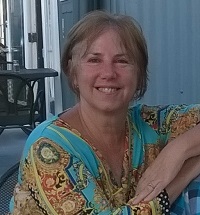
    Elaine SilverElaine Silver, Conceptual/Developmental Editor, AKA: Book Midwife

    Elaine S. Silver is a writer, editor, journalist, playwright, storyteller and performer.  She has written for The New York Times, BusinessWeek Magazine and a bevy of design and construction magazines and newsletters for worthy not-for-profit organizations.  One of her most unusual and fun gigs was ghostwriting for the media sex therapist Dr. Ruth Westheimer. Click here to find out more about Elaine.

    Elaine Silver She will be on a panel of editors at Writers Forum in Petaluma on May 21, 2015.
  • It takes all kinds. . . Prompt #154

    Today’s prompt is inspired by the May 6 theme for West Side Stories in Petaluma.

    “West Side Stories believes that everyone has a story.   Our goal?  To give those stories a forum.   After producing successful shows where stand-up comedians told their stories, former comic turned storyteller, Dave Pokorny sought to accommodate all those people who asked, ‘When can I tell my story?’ And to encourage those people who doubted they had a story worth telling.”

    If you are in the Petaluma area . . . join these storytellers at West Side Stories.  Get your ticket early . . . these shows sell out!

    How about you?  Are you ready to share your story?  Write and post on The Write Spot Blog.

    Prompt:  It takes all kinds . . .

  • Everything will be okay in the end. If it’s not . . .

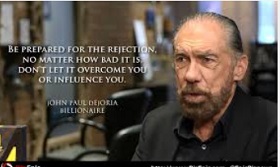
    “Everything will be okay in the end. If it’s not, it’s not the end.” — John Paul DeJoria, Co-founder of Paul Mitchell hair products and Patron Spirits companies.

    John is referring to his early life knocks, but he could also be referring to writers, especially when he says, “Be prepared for rejection.”

    Writers are given rejection advice all the time.

    “Don’t take it personally.”

    “Rejection slips means you are submitting.”

    “At least you’re trying.”

    All these words . . . do they really help when you receive a rejection notice?

    I worked hard a few months ago refining a piece I’ve been working on for a long time. I felt confident and satisfied when I hit the “submit” button.

    And then waited. And waited. Waited some more. You probably know this story. Finally, the notice arrived that although my piece was well-written, it wasn’t accepted. I felt . . . rejected. Yes, I felt personally rejected. “Buck up,” I told myself. “You did the best you could.”

    Later that day, I read John Paul DeJoria’s story. . . “From Foster Care Kid to Billionaire,” in the April 23, 2015 issue of People magazine.  I realized that things could be worse and a publication’s non-acceptance of my writing is only one rejection and their lack of interest isn’t a reflection of me nor my writing.

    John Paul DeJoria.2As John Paul says, “Open yourself up to what is possible.”

    And I say: Because you never know . . . sometimes great things happen in the unlikeliest places!

    So, keep trying. Keep writing and continue submitting. Good things are bound to happen. Click here for Places to Submit.

  • The 2015 Voices of Lincoln Poetry Contest

    April is Poetry Month!

    Lincoln Library Poetry contestThe 2015 Voices of Lincoln Poetry Contest is sponsored by the Lincoln Library and Friends of the Lincoln Library. You do not have to be a resident of Lincoln to enter contest.

    You may submit a maximum of three (3) poems: one poem in each category, for a total of three poems.

    Poems may be in rhyme, free verse, Haiku or other accepted poetry forms and of any length, up to a maximum of 60 lines.

    Young Poets, 18-years of age or under, are encouraged to submit poems and will compete in a special “Young Poets” category.

    The 2015 Contest includes Five Categories:

    Only In America

    Happy Endings

    Strange But True

    Unforgettable

    If Pets Could Talk

    1st, 2nd and 3rd place winners selected in each category.

    Poems should be typewritten and not centered. Use Arial font 12-point. List the title of the poem and the category at the top right corner. The name of the poet should not be included on the poem.

    Contest Deadline: Poems must be received no later than Saturday, July 25, 2015. Early submissions are appreciated.

    For entry form and any questions: Please contact Alan Lowe:  slolowe – at – icloud.com

  • Why Keep Writing When No One Is Listening

    Guest Blogger Brooke Warner writes:

    One of the most powerful things an author has ever said to me was a comment by Mark Nepo, reflecting on his personal journey over the past three years, which, due to the support of Oprah, has been pretty meteoric in nature. He told me, “I’m just so glad that I kept writing back when no one was listening.”

    This reverberated in me, perhaps most profoundly because of the number of clients I work with every year who reach a crisis point, led by the voices of their inner critics that say things like, “Why are you bothering?” “No one is going to want to read this.” “Who cares?!”

    In my work as a writing coach, I’m pretty hard-pressed to think of a single client who hasn’t struggled with messages like this at some point in their process—some more than others of course.

    Mark’s simple statement spoke to me for a number of reasons:

    1. You never know when people are going to find your work. Oprah found Mark’s book, The Book of Awakening, ten years after its first publication. The fact that he had so much work already out in the world is undoubtedly what’s allowed him to soar. You can get a big break like an endorsement from Oprah, but even with a big break, you have to have done (and continue to do) the hard work and discipline of writing.
    2. If you let the critical voices get the best of you, you’re accepting defeat on someone else’s terms. Your inner critic is a bastard, so let’s just get that out of the way. It does not want you to succeed. It wants to keep you small. I’ve witnessed a lot of writers allow the inner critic to talk them out of pursuing their creative dreams. It’s the single most widespread creative tragedy I know of.
    3. It’s important to find your own grounding in your work. This one is big. So many writers want to be heard, but they’re looking for outside validation to tell them that they’re good enough, or they’re only measuring success based on who else cares about their work. Writing whether or not anyone is listening means that you are writing for your own expression, desire, creativity, gifts—and people finding it, and/or finding it important, is secondary.
    4. The only way to be successful as a writer is to publish. This is obvious in terms of how we measure success, but so many writers are just sitting on their work—waiting for what? Mark published lots of works on very small houses over the years. He’s incredibly prolific, and he writes to publish, as well as to process, to teach, to connect, to commune. But in this mix must be publishing because this is the only way to gain readers (listeners). Be consistent about getting content out into the world. (And it’s good that social media, blogging, guest posting, or digital only strategies be a part of this—content is content!)
    5. You have to be your own best listener. If and when no one is listening, and whether it’s true or not that no one is, you need to feel the way your message affects you. If you know the feeling of flow, then you know the feeling of connection and resonance with your own words. It’s powerful stuff. Addictive even. Feed on this rather than the words of your inner critic.

    Of course, the number of people who are listening is going to shift as you grow. Part of your growth will come from practice; part of it is gaining confidence that what we say matters; part of it is owning that we want to be successful and that’s okay. You may start with ten listeners and grow to a few hundred and then to a few thousand and then much more. Even the most famous and widely published authors started with a first piece of writing and a first published book.

    Brooke WarnerBrooke Warner is publisher of She Writes Press, president of Warner Coaching Inc., and author of What’s Your Book? and How to Sell Your Memoir, and the co-author of Breaking Ground on Your Memoir. Brooke’s expertise is in traditional and new publishing, and she is an equal advocate for publishing with a traditional house and self-publishing. She sits on the board of the Independent Book Publishers Association, the Bay Area Book Festival, and the National Association of Memoir Writers.  Her website was selected by The Write Life as one of the Top 100 Best Websites for Writers in 2014 and 2015. She lives and works in Berkeley, California.

    Brooke will be a presenter at Writers Forum in Petaluma, California on April 16, 2015

  • Who would you like to chat with? Prompt #152

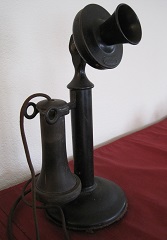
    Old time phoneWho would you like to chat with? If you could converse with anyone in the world, dead or alive, who would you like to sit down and yak with? Or, maybe you would rather lean against a bar or a counter and chew the fat, or drive and talk, or ride and shoot the breeze. Who would you like to have a conversation with . . . a one-to-one, a heart-to-heart, a tête-à-tête, a rap session, a discussion.

    Hmmmm ???

  • You cannot change the past nor control the future.

    “Live in the present, since you cannot change the past or control the future.” — B. Lynn Goodwin

    Marlene’s Musings: Good advice for anyone, especially writers. Just do your best to be the most authentic writer you can be. Your truth and your genuineness will come out in your writing. Your poignancy, your humor, your unique “you-ness” will bring a freshness and honesty to your writing.

    Be your best self . . . who else can you be?

    Except from “Celebrate Your Uniqueness,” by B. Lynn Goodwin

    B. Lynn GoodwinB. Lynn Goodwin is the owner of Writer Advice, www.writeradvice.com, which is currently holding its 10th Flash Prose Contest. She’s the author of You Want Me to Do WHAT? Journaling for Caregivers, and a YA called Talent, which Eternal Press will be publishing this year. Her short pieces have been published in local and regional publications.

    Lynn will be on a panel of editors at Writers Forum in Petaluma, California on May 21, 2015.

  • Open your heart and turn on creativity.

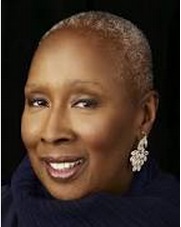
    Judith JamisonLearn the craft of knowing how to open your heart and to turn on your creativity. There’s a light inside of you. — Judith Jamison


    Marlene’s Musings: Once you open your heart to your creativity, you can explore many options for expressing your creativity: Painting, sculpture, song-writing, fabric art, stenciling, sketching and more and, of course, my favorite: Freewrites.

    What are freewrites? Time spent freely writing whatever your heart desires and whatever your creativity suggests to you. Just write!

    Let your light shine. Share your work, share your passion.  Post your writing here, on The Write Spot Blog.  Click here for writing prompts and more writing prompts here.

  • WriterAdvice seeks flash fiction, memoir and creative non-fiction

    WriterAdvice  seeks flash fiction, memoir, and creative non-fiction, 750 words or less. “Enlighten, dazzle, and delight us.” Finalists receive responses from all judges.

    DEADLINE:  April 21, 2015

    PRIZES: First Place earns $200; Second Place earns $100; Third Place earns $50; Honorable Mentions will also be published.

    FOR BEST RESULTS:  Include your name, contact information, and title in the cover letter, but only include your title in the submission so it remains anonymous.

    Indicate if the submission is fiction, non-fiction or memoir in the cover letter.

    Double-space your submission, 14-point font that is easy to read.  Times New Roman, Cambria, and Ariel all spring to mind.

    Submissions are read as blind submissions so put both your name and your title in your cover letter but leave them off your manuscript.

    SUBMISSIONS: All entries should be submitted through Submittable. Click here for the Submission Details.

    You may enter UP TO THREE stories, but each is a separate submission with a separate fee of $15.

    Names of all winners will be announced in the summer issue of WriterAdvice.

    B. Lynn GoodwinE-mail questions, but not submissions to editor B. Lynn Goodwin at Lgood67334@comcast.net