Keep Calm, Carry On And Let the Magic Begin

  • Keep Calm, Carry On And Let the Magic Begin

    Guest Blogger Karen Hart reveals secrets about how to Keep Calm, Carry On and Let the Magic Begin:  How To Breathe Life Into Your Work Through Revisions.

    During my thirties, I wrote my first novel, Butterflies in May. It tells the story of a 17-year-old high school senior, Ali Parker, who discovers she’s pregnant. I gave her characteristics, created a family, a best friend and boyfriend, and described where she lived. I effectively created a situation and characters, and the mechanics were in place. After nine months of work, I had a novel, but the story was flat. It was discouraging after all that effort, but in the words of Hemingway: “The first draft of anything is shit.”

    The goal in writing a novel (or any body of work) is to capture the magic, give it a heartbeat and touch your readers in a relevant way. Revising and editing are essential to breathing life into your words.

    So how to capture the magic?

    There’s no clear formula other than to learn how the magic manifests for you. For me, it begins with the mechanics, then somewhere along the way, an idea takes hold and takes over. That “idea” could be a word, a phrase, a scene, a scent or snatch of dialogue. While revising Butterflies in May, a scene between Ali and her newborn baby woke me up at 5 in the morning. I got up, went to my computer and started writing. Today, teen girls often tell me that passage makes them cry. The passage still brings tears to me, because I cried as I wrote it. Here are a few ideas to get your writer mojo on and capture the magic.

    • Set your first draft aside. Save your original, then save it again under a different file name so you can be freely ruthless with changes later. Refrain from showing it to your friends who will most likely find a polite way to tell you it’s awful. (Remember what Hemingway said? It’s not ready.) Return to it one day at the time you work best.
    • Take a look at your book chapter-by-chapter. Print it out and pull it apart. Eliminate slow starts, and tighten descriptions. Check for the following: Does the story move forward at a good pace? Do the characters engage you? Do they have flaws your readers can relate to? Can you clearly see who they are? Next, fill in sensorial details to breathe life into your work. Can you smell the coffee brewing? Feel the sweat along your character’s hairline? Hear the door creak open?
    • Make sure your dialogue flows. Eliminate unnecessary dialogue. Make sure your characters sound natural, not stiff. Be sure your characters don’t all sound the same. Let their use of language, word choice, slang or cursing set them apart.
    • Follow your instincts. Trust what comes to you. In my first novel, I gave Ali’s newborn son a name, Jonah. I’d heard it one day, liked the sound of it, not giving it any more thought than that. Later, Ali has a dream in the hospital about him. In the dream, Jonah is a young boy and says, “It’s okay, Mommy. I’ll always love you.” Then I wrote that he turned into a bird and flew away. Months later, I learned that “Jonah” means dove and made changes so Ali would discover this, too. (This is the stuff of magic, and a story writing itself.)
    • Allow your characters to take over. In my second novel, I’d written about a character named Beau, whom I originally planned to be an all-around nice man. Later, as I worked on revisions, Beau came more fully to life and I didn’t like his behavior. I stopped writing; the novel came to an abrupt halt. When I allowed Beau to take over, the writing flowed, I followed Beau’s lead and the story changed for the better.

    Karen will be on a panel of editors at Writers Forum in Petaluma on May 21, 2015.

    Join us and learn how to keep calm, carry on and catch the magic.
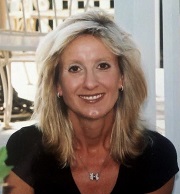
    Karen Hart.180Award-winning writer, editor and novelist, Karen Hart, has served as the editor for two corporate magazines and a newsletter and continues to be slightly obsessive-compulsive about all writing endeavors.


  • An editor can offer a valuable worthwhile assessment . . .

    An editor can offer a valuable worthwhile assessment of writing that can help move the manuscript closer towards publication. — Brian A. Klems, Writers Digest Magazine, October 2012

    Note from Marlene: Editors are totally valuable and necessary to fact-check, spot-check, double-check and make you, the writer, look good.

    What does an editor do? Click here to check out the series of April 2015 blog posts by editors on The Write Spot Blog.

    So . . .  Just Write!   Give those editors something to think about!  Then work with an editor to whip your manuscript into shape.

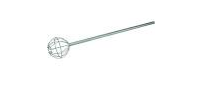
    whipDoesn’t this kitchen whip look like a magic wand?  With the help of an editor to shape your writing. . . it just might feel like a magic wand was waved!


  • Redwood Writers, a branch of oldest writers’ organization . . .

    Redwood Writers, a branch of the California Writers Club (CWC), has ongoing writing contests. Click Redwood Writers Contests to read about the current contest.

    “Whether you’re a traditionally published author or ‘just always wanted to write,’ there’s a place for you at CWC Redwood Branch.”

    CWC is one of the oldest writers’ organizations in the nation. Members are poets, journalists, essayists, technical writers, and creators of genre and literary fiction, as well as editors, booksellers, and others involved in related fields.

    There are branches throughout California. Click California Writers Club to find a branch near you.

    To enter a Redwood Writers branch contest, you must be a member. California residence is not required to be a member. Click Redwood Writers Membership for member information.

    Submit! You never know. . . the next contest winner could be you!

    Redwood Writers

  • What really happened? Prompt #157

    What really happened?

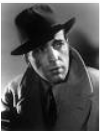
    Humphrey BogartYour story could start out like this:  [Read in a Humphrey Bogart nasally voice]:

    “This is what really happened. . . See. . . .”

    Got it?  Now write it!

    Prompt: What really happened?

    Humphrey Bogart [actor]:  Maltese Falcon, CasaBlanca, The Treasure of Sierra Madre, High Sierra and many more unforgettable movies.

  • Just What Does an Editor Do for Me, Anyway?

    Guest Blogger Mark Burstein elucidates about the different types of editors.

    “Editor” is a catchall term for a host of different functions in the publishing business; here we will look at six different kinds. It’s an amorphous field, one in which our roles and definitions are moving targets. Sometimes we are hired by the author, sometimes by the publisher. Often the same person can take on diverse roles for different clients, or even the same client. So, in more or less chronological order:

    The first, at the top of the food chain if you will, is known simply as the “editor,” but is also called the “book,” “project,” “literary,” “substantive,” or “developmental” editor. S/he is the person who is in charge overall, helping with organization, the story arc, consistency, features, structure, transitions, “assets” (images), permissions, and possibly even advising on design and layout. S/he is also your friend, ideal reader, collaborator, spouse, sparring partner, babysitter, psychologist, cheerleader, hand-holder, slave driver, and/or therapist … doing whatever is necessary to pull those lovely words out of your head and onto pages.

    When the editor and the author are satisfied, the manuscript (ms.) then goes to a copyeditor, whose functions were well described by Linda Jay in an earlier post on the Write Spot Blog. In brief—copyedits range from “light” to “heavy”—s/he checks grammar, spelling, punctuation, consistency, usage, continuity, facts, voice, phrasing, tone, and the like. On the “heavy” end of the scale, s/he might suggest rewording, moving sentences and paragraphs around, or adding to or eliminating text.

    The third kind of editor is your publishing and proposal consultant. S/he will help you craft a proposal and get it looked at by appropriate publishers or literary agents. (Many small-to-medium houses will look at unsolicited mss., but the larger houses need to go through known literary agents.) Both of these kinds of submissions require a polished proposal.

    Number four is the acquisitions editor who works for a publisher. S/he will be the one who decides if the proposal warrants further attention, and ultimately decides if it is right for the house. S/he may also say that it would be perfect for them, if only it had a bit more of (a) and (b) and a little less of (c), in which case it goes back to step one (the “editor”) to work with you for resubmitting.

    Once a book has been accepted for publication, it goes to a designer. The designer will put the text and assets into layout (aka galleys) and will send it back to you for approval or tweaking. Having secured that, it will go to a proofreader who will again read the ms., but also specifically look at things that may have gone awry in layout: headings, page numbers (folios), missing lines, bad line breaks, “widows and orphans,” spacing, figures, captions, etc.

    Category six is the production editor. In a major house, s/he is responsible for reviewing all aspects of the editorial and production process, including hiring editors, copyeditors, proofreaders, and designers; plus scheduling, shipping, warehousing, and distribution. For an “independent” (formerly known as “self-”) publishing title, this can also be one of the editor’s responsibilities, that is, finding a designer and printer/binder—or formatting your ms. so that it can be accepted by a POD (print on demand) house like CreateSpace, Lightning Source, Blurb and so on, and leading you through that process.

    Sometimes these functions can be the province of just one person. Or up to six or more individuals. But each stage of the editorial process is necessary—to greater or lesser degree, depending—and will do wonders for your book.

    Mark Burstein.200Mark Burstein is a freelance editor of both nonfiction and fiction. His clients include Chronicle Books, Insight Editions, Harry N. Abrams, and Welcome Books, as well as many authors.

    Mark will be on a panel of editors at Writers Forum in Petaluma on May 21, 2015.

  • If you have built castles in the air . . .

    “I learned this, at least, by my experiment: that if one advances confidently in the direction of his dreams, and endeavors to live the life which he has imagined, he will meet with a success unexpected in common hours. He will put some things behind, will pass an invisible boundary; . . . If you have built castles in the air, your work need not be lost; that is where they should be. Now put the foundations under them.” — Henry Thoreau, Walden or Life In the Woods

    Marlene’s Musings:  In order to advance confidently as a writer. . . you need to think like a person who is in the business of writing.  It’s one thing to be a writer, it’s another thing to be a published author.  And if you don’t care about being published. . . then I hope you are enjoying your writing.

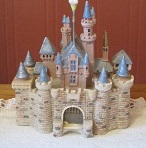
    CastleBuild those castles with word pictures, include a moat, a forlorn prince or princess, a formidable problem to overcome.  Throw in a fire-breathing dragon, a jealous cousin. . . Just Write!

  • You are the person you are intended to be . . .

    “Do not obsess about flaws and shortcomings. You are the person you are intended to be . . . You were put here for a reason. No one else has your unique talents. No one else sees the world through your eyes and experiences. Be yourself and share with others. No one can tell your story but you.”   B. Lynn Goodwin, “Celebrate Your Uniqueness.” Originally posted in Inspire Me Today, January 2, 2014

    bookshawlNote from Marlene: Do not obsess about whether or not you are a writer. If you have something you want to write about . . . simply pull out a chair, sit down and . . . Just write!

    Lynn Goodwin is the owner of Writer Advice, www.writeradvice.com, which is currently holding its 10th Flash Prose Contest (deadline 4/21/15). She’s the author of You Want Me to Do WHAT? Journaling for Caregivers, and a YA called Talent, which Eternal Press will be publishing this year. Her short pieces have been published in local and regional publications.

    Lynn will be on a panel of editors at Writers Forum in Petaluma, California on May 21, 2015.

  • Beloit Poetry Journal wants your poems

    April is Poetry Month

    Beloit Poetry Journal is looking for “a wide range of forms and styles in contemporary poetry. We are always watching for new poets, quickened language, and poems that offer a new purchase on the political or social landscape.”

    Hand & Pen“The editors at BPJ offer personal notes on almost all the submissions they receive, whether accepted or rejected for publication. In return, they ask potential contributors to study the guidelines on the website, resist the urge to send simultaneous submissions. . . and read numerous poems in the online archived issues.” — The Writer Magazine, April 2015

    Click here for submission guidelines.

  • The Language of Your Childhood is Poetry. Prompt #155

    April is Poetry Month. Let’s talk about poetry.

    The following is inspired from a workshop with Pat Schneider.

    Poetry is about music of language and comes in all forms: Music, nursery rhymes, hymns, jump rope rhymes.

    Look in anthologies for different kinds of poetry, different styles, different authors as poets.

    Guess what . . . You don’t have to like all poetry.

    Think about the language of your childhood. Imagine sitting around your kitchen table, or the living room couch or sofa . . . depending on where you grew up, you might call this item of furniture ” the davenport.”

    Remember your family’s way of talking. Hear poetry in music that was spoken around the kitchen table. Remember the language of your childhood.

    When writing poetry, don’t strain the language. Use normal words. Fall into the poetic playground.

    One way to write poetry: Take the melody from a song that you know and sing new words to make up your own song.

    Lola.200Prompt: Write a short poem – using a theme running in your head – a song you like, a rhyme, hymn, nursery rhyme, jump rope rhyme. Or, don’t even worry about a rhythm. Just go with whatever comes up.

    Write a poem about a time at the kitchen table when you were little.

    Or a poem about night time.

    Or a summer memory.        Just Write!