Ukiah Haiku Festival 2015

  • Ukiah Haiku Festival 2015

    Ukiah Haiku

    THE THIRTEENTH ANNUAL

    ukiaHaiku festival 2015  – A celebration and competition devoted to the haiku form of poetry

    Postmark Deadline for Submissions: Saturday, March 22, 2015

    Awards will be presented in the following categories:

    General Topics (Regional*)

    1) Children, grades K-3
    2) Children, grades 4-6
    3) Youth, grades 7-9
    4) Youth, grades 10-12

    Haiku about Ukiah (Regional*)

    5) Haiku about Ukiah, grades K-6
    6) Haiku about Ukiah, grades 7-12
    7) Dori Anderson Prize** — Haiku about Ukiah, Adults

    Haiku en Espanol, Temas Generales (Sumisiones Regionales*)
    8) Para menores de 18 anos
    9) Para mayores

    International, General Topics, Adult:

    10) Jane Reichhold International Prize***

    *Regional categories are open to residents of Mendocino, Humboldt, Lake, and Sonoma Counties in northern California. Winners in the regional categories receive a certificate, publication in a booklet of winning haiku, and a copy of the booklet.

    **The Dori Anderson Prize honors the memory of Dori Anderson, former head librarian of the Ukiah Branch Library, who originally suggested the idea of the ukiaHaiku festival.

    ***The Jane Reichhold International Prize is named in honor of internationally renowned haiku poet Jane Reichhold. The Jane Reichhold International Prize Category is open to submissions from the entire planet.

    Winners in the Jane Reichhold International Prize Category receive monetary awards: $100 first place, $50 second place, $25 third place, plus a certificate, publication in a booklet of winning haiku, and a copy of the booklet.

    ukiahaiku Submission Guidelines:

    ~ Haiku submitted are to be previously unpublished original work by the author submitting.

    ~Entrants may submit up to three haiku per category. Each entrant, however, may win only one award per category.

    ~Submit each haiku using either a printed form or the online submission form.

    ~All category submissions are free of charge.

    ~ Do not include a title.

    ~ Authors retain copyright to their work.

    Haikus are judged anonymously. If submitting on paper, the Haiku Submission Form will be folded in half to allow anonymous judging. Your name MUST NOT appear on the half of the form with your haiku poem. If submitting via the online Haiku Web Submission Form, your submission will be printed out in a way to ensure anonymous judging.

    Mail submissions to:

    ukiaHaiku festival
    Post Office Box 865
    Ukiah, California 95482

  • Do you Haiku? Prompt #137

    CraneHaiku is one of the most important forms of traditional Japanese poetry. Haiku is  a 17-syllable verse form consisting of three metrical units of 5, 7, and 5 syllables.

    Another definition:

    “Haiku (俳句 high-koo) are short poems that use sensory language to capture a feeling or image. They are often inspired by an element of nature, a moment of beauty, or another poignant experience. Haiku poetry was originally developed by Japanese poets, and the form was adopted (and adapted) by virtually every modern language, including our own. The secret to writing great haiku is to be observant and appreciate nature.” — Wikihow-Write-a-Poem

    Haiku by Penelope La Montagne:

    Pruned vines stand in rows

    those charred Venus de Milos

    posing with mustard

    Penelope La Montagne (1948-2018), author of River Shoes by Running Wolf Press and Jigsaw Heart by Finishing Line Press, was a Poet Laureate of Healdsburg.

  • Is it Safe to Post Your Work on Critique Sites? Helen Sedwick

    Guest post by Helen Sedwick

    Every writer knows the challenge of finding readers willing to critique our works-in-progress. We beg, barter, and guilt loved ones into reviewing just one more draft.

    But there’s an easier and faster way to get a fresh pair of eyes to look at your work; online critique sites such as Scribophile, Writer’s Café, and Critique Circle. Some of these sites operate on a credit system; you earn credits by giving critiques and spend credits by posting your work for feedback. Others use an honor system. Some, such as Inked Voices, set up cloud-based, on-going groups. In my experience, these online communities are incredibly helpful and supportive.

    But many writers worry about posting their work online. Will they lose their copyright? Will someone steal their work?

    Good questions and an opportunity to explain what to look for when giving anyone rights to use or display your work, including critique sites.

    Will you lose your copyright by posting online?

    First, be assured that you own the copyright in your work as soon as you put it down on paper or type it into a computer. Posting the work online does not void your copyright, even if you don’t include a copyright notice.

    Years ago, you could lose your copyright by publishing a work without a copyright notice or by failing to register it. That is no longer the case. Copyright attaches automatically.

    What rights are you giving away?

    When you post work on a critique site, you are giving the site limited permission to display your work. But it’s important to look at their terms of service or FAQs to make sure. Look for the following:

    • You are granting them only a non-exclusive right to display your work.
    • Their use is limited to their own site and the site’s business.
    • You may terminate their rights at any time.
    • When you terminate, the site may retain an archival copy only.

    That’s it. No transfer. No right to publish. No right to resell your work.

    Scribophile has a fun way of explaining it:

    You keep all rights to the work you post at Scribophile. The short version is that by posting on Scribophile, you grant us the non-exclusive right to display your work (we have to display it, otherwise nobody could critique it!), and that’s it. We’re here to help you improve, not to cruelly steal your rights while twiddling our moustaches and cackling madly.

    Writers Café, owned by Aresta Enterprises, is a little more formal, but just as clear:

    Aresta Enterprise does not claim ownership of Content you submit or make available for inclusion on the Service. However, with respect to Content you submit or make available for via the Service, you grant Aresta Enterprise a perpetual, irrevocable, world-wide, royalty free and non-exclusive license to use, distribute, reproduce, modify and publicly display such Content on the Service.

    About the broadest provisions are those of WEbook which say: Member grants WEbook a non-exclusive, worldwide, unlimited license to copy, display, render, distribute, transmit, store, and otherwise use the Content covered by this section for all purposes associated with WEbook’s operation of the Site and WEbook’s business.

    Those last three words “and WEbook’s business” permits them to use your work to advertise and promote the site. WEbook has a broader business model than most. It hosts collaborative projects where writers jointly contribute to a work. Online collaborative projects create a hornet’s nest of legal issues, and I would avoid them.

    Can you still offer a publisher first-publication rights?

    Yes. Because copyright law lags behind technology, posting work online is generally not considered “publication,” but is treated as a “display.” It cannot hurt to tell a publisher the work was posted on a critique site, but I have never heard of anyone treating postings of works-in-progress as a first publication.

    Will someone steal the posted work?

    Possibly. Someone could cut and paste your work. In reality, however, outright stealing of copyrighted work is rare. For most writers, obscurity is a bigger problem than piracy. Generally, these sites require people to log in to view postings, so if you find your work stolen, you may be able to trace who has read it.

    Which critique site is right for you?

    Writers may have to try several sites before they find they one that suits them best. Each organizes content differently and draws a different crowd. In addition to the sites mentioned above, take a look at:

    Writing.com

    YouWriteOn.com

    Absolute Write Water Cooler, a huge and active forum that also facilitate critiques.

    And there are many informal groups on Facebook, Goggle Plus, and LinkedIn.

    If you don’t find a site you like this week, try again in a month or so. New sites keep popping up.

    Bottom line, there is much to gain and little to lose by posting your work online, although I recommend you take a look at the site’s fine print before you submit. And until your most loyal friend, the family dog, is willing to read your latest draft, these online communities may be the more consistent source of valuable feedback.

    For more information about the legal issues of self-publishing and blogging, check out my book and my blog at http://helensedwick.com/blog/.

    Website http://helensedwick.com/

    Google+: https://plus.google.com/u/0/+HelenSedwick/posts

    Twitter:   https://twitter.com/HelenSedwick

    Disclaimer: Helen Sedwick is an attorney licensed to practice in California only. This information is general in nature and should not be used as a substitute for the advice of an attorney authorized to practice in your jurisdiction.

    Sedwick.HeadshotHelen Sedwick is a California attorney representing small business and entrepreneurs. She recently released Self-Publisher’s Legal Handbook to help writers navigate the legal minefields of blogging and self-publishing. Her historical novel Coyote Winds earned five-star reviews from ForeWord Reviews and Compulsion Reads and is an IndieBRAG Medallion Honoree.

    Self-Publisher’s Legal Handbook was recently listed in the top five Publisher’s Weekly!
  • Things that are meaningful to you . . . Prompt #136

    Write whatever comes up for you. No judging, no criticizing yourself!

    Merlin & StarHave fun with this prompt! Let yourself go. Be silly. Be creative. Be humorous. Be serious. Just write!

    Make a list of things that are meaningful to you, starting with the letter “A” . . . then go through the alphabet to the letter z. Write one sentence, or a few words, why this is meaningful to you. For example:

    A –   A deck of cards – playing gin rummy and hearts

    B – Balloon game in the old living room

    C – Crafts – glitter glue, making things with the kids

    continue to the end of the alphabet

    W – Wizard puppet

    X – X-rays that saved my life

    Y – “Y” always reminds of  watching the Micky Mouse Club. “Why? Because we like you!”

    Z – Zebra in orthodontist’s office

    ~ Now you have a list of things you can write about!  Anytime you want to write and need an idea, look at your list and Just Write!

  • “We write to exert power. . . ” Nellie Hermann

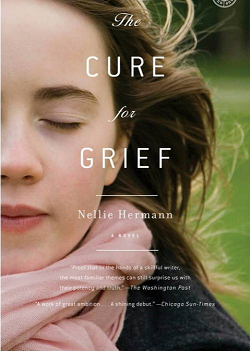
    Nellie Herman. Cure.1“We write to exert power over something we can never control . . . The past.”  —Nellie Hermann

     — excerpted from “Why We Write,” by Carolyn Roy-Bornstein, Jan/Feb 2015 Poets & Writers


  • Failure is necessary to find “wondrous and magical moments”

    “A rough draft is inherently an experiment, or, rather, a series of experiments. each novel, each piece of writing, is a new thing with different possibilities that demand to be explored. Many of these experiments will fail, but failure is necessary to find those wondrous and magical moments of success.” — “More Ideas Faster, Writing With Abandon” by Grant Faulkner, Jan/Feb 215 Poets & Writers magazine.

    Grant FaulknerGrant Faulkner is: Executive Director of National Novel Writing Month, co-founder of 100 Word Story, writer, tap dancer, alchemist, contortionist, numbskull, preacher. Click here to read more about Grant Faulkner.

    Note from Marlene: Click here for ideas of what to write about. Choose a writing prompt, set your timer for 12-15 minutes and Just Write!

  • The Bohemian’s Challenge

    BohemianThe Bohemian invites you to “Step Up to the Mic.”

    The Bohemian is “an award-winning alternative newsweekly serving Sonoma, Napa and Marin Counties [in Northern California].”

    However, you don’t have to live in Northern California for this challenge.

    The Bohemian wants to hear from you!

    From The Editors:

    “Ah, the Open Mic. This is the one space in the paper, besides the letters section, where we don’t just want your input—we rely on your input. It’s a space we leave open and free to all comers, where a fiery and well-turned argument will always find a home.

    Please don’t take this as a threat, but—you really do not want the Bohemian staff to start filling the Open Mic with half-baked opinions about everything and everything.”

    Click here to read the challenge from the editors in its entirety.

    The Bohemian wants to “hear from our readers—all of our readers—who have an opinion to share, and the ability to do so in 350 words more or less. We want fresh perspectives on hot-button issues, well-turned screeds and savage indictments of the odious and the corrupted.

    So next time you’re about going to go on a ranting spree at Craigslist, check those contrails, adjust your tinfoil hat and crank it out for the Bohemian instead.

    We’ll run it, unless you stray from common decency and into libelous waters. We’re trying to keep an open mind—and more to the point, trying to keep the Open Mic true to its original vision.”

    Open Mic is a weekly feature in the ‘Bohemian. To have your topical essay of 350 words considered for publication, write openmic@bohemian.com.

    Note from Marlene: This is your chance to be heard! Go for it.

  • Own up to it. Prompt #135

    regret1Write about a time you swallowed your pride and admitted to something you did that you regret. . . or a time you wish you had spoken up.

    You did it, now feel free to own up to it. . . . you don’t have to actually tell anyone what you did or didn’t do . . . just write about it here and now.

  • Special object to give. Prompt #134

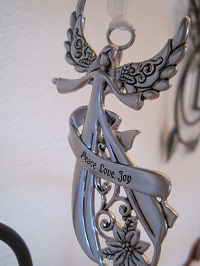
    Angel.SilverWalk through your house, apartment, garage, barn . . . look at your knick-knacks, trinkets, souvenirs, keepsakes, treasures. . . pick one item to pass on to someone, perhaps a grandchild, or great-grandchild, or a beloved friend. Write about a special object you want to give to someone in the future.

    You can respond to this prompt as your fictional character would respond, or write as if you are going to give this item to someone.


  • Roseanne Cash—feeling alive when immersed in her work

    Roseanne Cash1

    ” . . . [my] profession, like anyone’s, requires constant innovation if it is to remain fresh. I feel alive when I’m immersed in my work—when I’m fully employed, as Leonard Cohen says, as a songwriter, ‘You have to keep cracking yourself open or you become a parody of yourself. ‘” —Roseanne Cash in an interview by Geoffrey Himes, “The Long Way Home, Smithsonian, November 2014

    Note from Marlene: How about you? What keeps you immersed in your work? If your writing has hit the doldrums, how about mixing it up? If you usually write memoir, try fiction. If you are a fiction writer, try poetry.   If you want ideas for freewrites, click here for writing prompts.